

The future of nations is no longer measured only by oil reserves or financial strength, but by their mastery of data. In today’s world, servers are not just machines tucked away in data centers — they are the engines of intelligence, powering everything from artificial intelligence and cloud computing to financial security and healthcare breakthroughs.
That’s why the launch of Saudi-made HPE ProLiant servers, built with AMD EPYC processors at alfanar’s Riyadh facility, is much more than a corporate announcement. It’s a statement: Saudi Arabia is not just consuming technology — it’s building it, shaping it, and exporting digital power to the world. This moment marks a leap toward Vision 2030’s ambition of making the Kingdom a global hub for the digital economy.
Saudi-Made Servers: How HPE and AMD Are Rewriting the Middle East’s Digital Future
In August 2025, something happened in Riyadh that went beyond a product launch. Hewlett Packard Enterprise (HPE), AMD, and Saudi-based alfanar came together to unveil the first “Saudi Made” servers powered by AMD EPYC processors. At first glance, it might sound like another tech announcement — but in reality, it’s a turning point for the Middle East’s digital independence.
Why this matters
The world is moving at a pace where data isn’t just numbers stored in machines — it’s the new oil, shaping decisions, economies, and even national security. For Saudi Arabia, building high-performance servers locally isn’t just about faster processors. It’s about sovereignty, skills, and creating a digital backbone for Vision 2030.

HPE and AMD Are Rewriting the Middle East’s Digital Future
Meet the new HPE ProLiant DL365 & DL385
The servers at the heart of this story — HPE ProLiant DL365 and DL385 (11th generation) — aren’t ordinary machines. They’re designed for heavy data workloads, powered by AMD’s 4th and 5th generation EPYC CPUs. Think thousands of cores, large memory bandwidth, and energy-efficient performance that can handle everything from AI model training to real-time financial transactions.
For businesses in Saudi Arabia, Egypt, Jordan, and across the Gulf, these servers mean:
-
Speed & scalability: The ability to analyze massive datasets in seconds.
-
Energy efficiency: Lower costs and a greener footprint, vital in a region investing heavily in sustainability.
-
Security by design: Built-in protection for sensitive workloads, from government projects to fintech apps.
-
Flexibility: Adaptable storage and compute for industries as diverse as oil & gas, healthcare, telecom, and smart cities.
Beyond the hardware: building skills and ecosystems
What makes this launch especially meaningful is the ecosystem impact. HPE and AMD aren’t just selling servers; they’re investing in training Saudi talent, including women in tech, to build and run these systems. This is how a country transitions from being a technology consumer to a technology creator.
By embedding advanced manufacturing within Saudi Arabia, alfanar and its partners are helping shape a new industrial reality — one where local expertise grows alongside global technology.

HPE ProLiant DL365 وDL385
How it ties to Vision 2030
Saudi Vision 2030 is about more than economic diversification; it’s about positioning the Kingdom as a global hub for data-driven industries. Locally made high-performance servers are a cornerstone for that vision. They support:
-
Artificial Intelligence: Training models locally instead of relying on foreign data centers.
-
Digital healthcare: From genomic research to AI-driven diagnostics.
-
Fintech & smart banking: High-speed, secure transaction processing.
-
Smart cities: Real-time data analysis for energy grids, transport, and public safety.
Looking ahead
The launch of these servers is a signal. It shows that the Middle East isn’t waiting to import the future — it’s building it. With AMD’s efficiency, HPE’s global expertise, and Saudi Arabia’s ambition, the region is carving its own place in the global data economy.
And for businesses across the Gulf, it means more choice, faster innovation, and the chance to stand on a stronger digital foundation built at home.
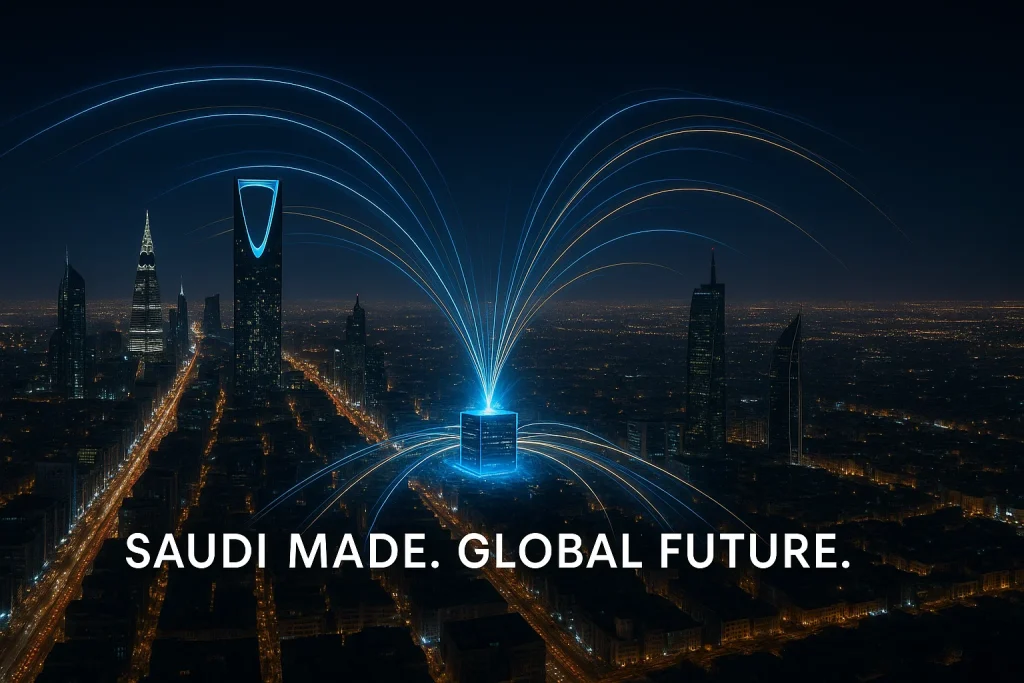
Vision 2030
FAQ
Q1: Why are Saudi-made servers important?
Saudi-made servers represent digital sovereignty, giving the Kingdom and the region more control over critical infrastructure, data security, and local innovation.
Q2: What are HPE ProLiant DL365 and DL385 servers used for?
They’re designed for heavy data workloads such as AI training, cloud services, financial transactions, healthcare systems, and smart city applications.
Q3: How do AMD EPYC processors add value?
AMD EPYC CPUs provide high core counts, energy efficiency, and strong security features — making them ideal for high-performance computing and sustainable IT.
Q4: How does this project support Vision 2030?
By enabling local manufacturing, building Saudi talent, and supporting AI, cloud, and digital infrastructure, the servers directly contribute to Vision 2030’s goals of economic diversification and tech leadership.
Q5: Will these servers benefit other Middle Eastern countries?
Yes. Alongside Saudi Arabia, the servers are available in Egypt, Jordan, and across the GCC, supporting the region’s growing digital economy.
