

Huawei
Redefining the Future
When Innovation Meets Inspiration
For over a decade, Huawei has been quietly—yet profoundly—reshaping how the world approaches health, fitness, and human potential. With more than 200 million wearable devices shipped globally by June 2025, the company has established itself not merely as a technology provider but as a catalyst for healthier, more connected living. From bustling metropolitan centers to remote villages, Huawei’s ecosystem of smart devices has empowered millions to monitor their health, optimize their performance, and embrace wellness as a lifestyle rather than a luxury.
But Huawei’s vision extends far beyond numbers and market share. At its core lies a commitment to democratizing access to cutting-edge technology—ensuring that whether you’re a professional athlete chasing world records or a weekend jogger taking your first steps toward fitness, you have the tools to succeed. This philosophy is woven into every product the company creates, every partnership it forges, and every innovation it pursues.
The company’s research and development infrastructure is nothing short of extraordinary. With fourteen R&D centers strategically positioned across Germany, Sweden, China, and beyond, Huawei has cultivated a global network of innovators dedicated to pushing the boundaries of what’s possible in artificial intelligence, Internet of Things (IoT), and wearable technology. These aren’t abstract investments in technology for technology’s sake—they’re purposeful endeavors aimed at solving real-world challenges: improving cardiovascular health monitoring, enhancing athletic performance through predictive algorithms, and creating seamless ecosystems where devices communicate intelligently to serve the user’s holistic wellbeing.

Huawei’s leadership in health enhancement and sports initiatives has manifested through groundbreaking systems like TruSense—a comprehensive health and fitness tracking platform that delivers clinical-grade accuracy—and the Sunflower positioning system, which represents a quantum leap in GPS precision. These technologies aren’t developed in isolation; they’re refined through rigorous testing, real-world feedback, and an unwavering commitment to user-centric design.
Now, as we stand at the threshold of 2025, Huawei is poised to unveil something extraordinary: a cutting-edge professional running watch that marks the company’s bold return to the elite running arena, five years after the groundbreaking debut of the HUAWEI WATCH GT Runner in 2021. But this isn’t just another product launch. It’s the culmination of half a decade of innovation, refinement, and collaboration with some of the world’s most accomplished athletes.
And at the heart of this moment stands a partnership that feels less like a business arrangement and more like a meeting of kindred spirits: Huawei and Eliud Kipchoge, arguably the greatest marathoner the world has ever witnessed.
Kipchoge’s philosophy—”No Human Is Limited”—mirrors Huawei’s own ethos. When he shattered the two-hour marathon barrier in Vienna in 2019, completing the distance in 1 hour, 59 minutes, and 40 seconds, he didn’t just break a record; he redefined what humanity believed was possible. That achievement wasn’t born from natural talent alone—it was the product of intelligent training, data-driven optimization, and an unwavering belief that barriers exist only until someone has the courage and tools to transcend them.
Now, as Kipchoge embarks on his ambitious new chapter—running seven marathons across seven continents—he’s partnering with Huawei to bring that same spirit of possibility to millions. This collaboration represents more than an endorsement; it’s a shared mission to inspire healthier lives, smarter training, and a universal passion for running that transcends borders, ages, and abilities.
TruSense: Redefining Health and Fitness Tracking
Where Elite Performance Meets Accessible Innovation
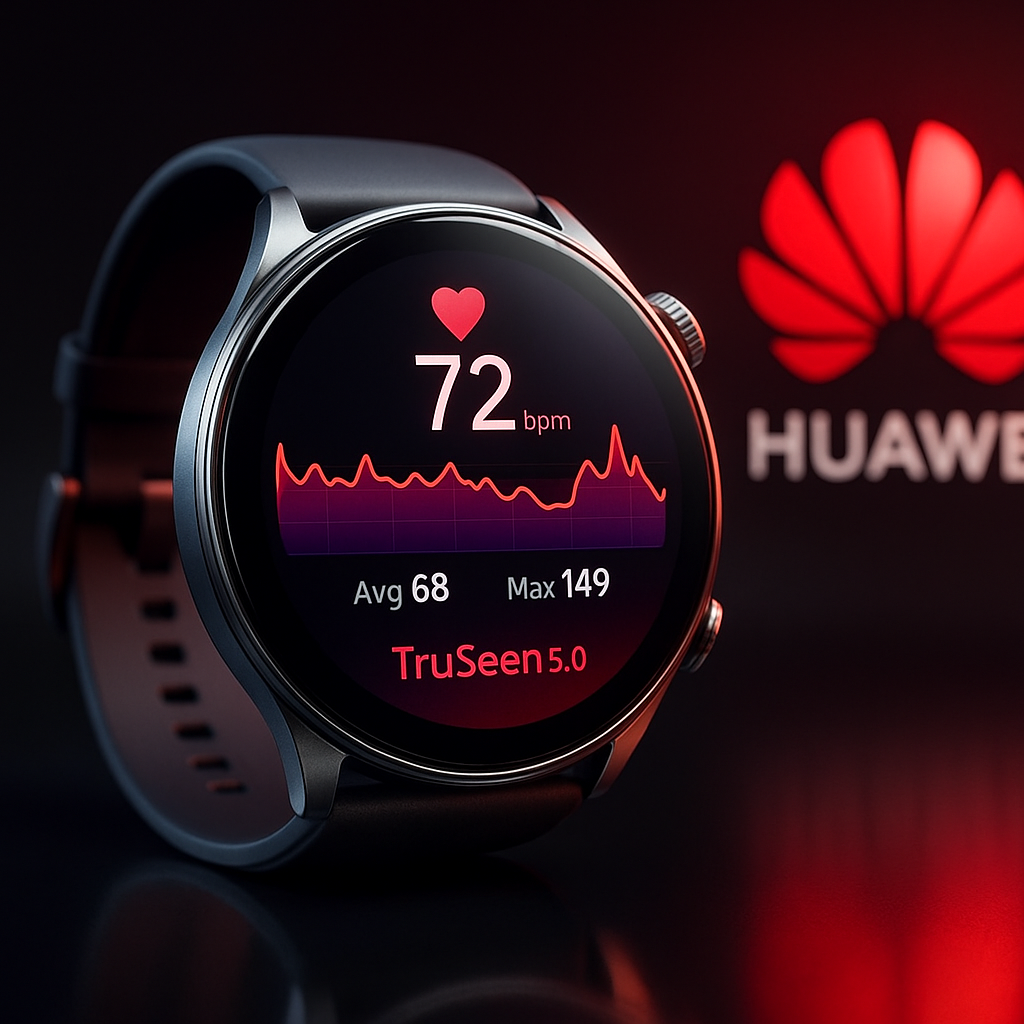
At the technological heart of Huawei’s new professional running watch lies the TruSense system—a comprehensive platform that doesn’t simply collect data; it interprets, analyzes, and transforms it into actionable insights. While many wearables provide basic metrics like heart rate and step count, TruSense operates on a fundamentally different level.
The system integrates multiple advanced sensors and algorithms to deliver:
Cardiovascular Precision: Real-time heart rate monitoring with medical-grade accuracy, detecting anomalies and providing insights into cardiovascular efficiency during different training intensities.
Respiratory Analysis: Advanced VO2 max estimations that help runners understand their aerobic capacity and optimize training zones for maximum improvement.
Recovery Intelligence: Sophisticated algorithms that assess sleep quality, stress levels, and physiological recovery, empowering athletes to balance intensity with adequate rest.
Biomechanical Insights: Detailed running dynamics, including cadence, stride length, ground contact time, and vertical oscillation—metrics that professional coaches once required expensive lab equipment to measure.
What makes TruSense revolutionary isn’t just the breadth of data it collects, but the intelligence with which it synthesizes information. The system learns your baseline, adapts to your progress, and provides personalized recommendations that evolve with your fitness journey.

Sunflower Positioning
Precision That Makes a Difference
For runners, GPS accuracy isn’t a luxury—it’s essential. A 2% error in distance measurement might seem negligible, but over a marathon’s 42.195 kilometers, that translates to nearly a kilometer of miscalculation. For elite athletes, such imprecision makes structured training nearly impossible. For recreational runners, it undermines confidence in their progress and performance.
The Sunflower positioning system addresses this challenge through multi-frequency GNSS (Global Navigation Satellite System) support, advanced signal processing algorithms, and intelligent fusion of multiple positioning technologies. The result? Accuracy that exceeds previous generations by substantial margins, even in challenging environments like urban canyons, dense forests, or mountainous terrain.
This precision enables runners to trust their data implicitly—whether they’re executing interval workouts with specific distance targets, analyzing pace variations across different segments, or simply tracking their daily runs with confidence.

Predictive Performance: The 97% Accuracy Benchmark
Perhaps most intriguing is Huawei’s race performance prediction algorithm, developed through rigorous testing with over 100 runners and refined through machine learning models. The system analyzes training data, physiological metrics, environmental factors, and historical performance to predict race finishing times with over 97% accuracy.
This isn’t fortune-telling—it’s data science applied to human performance. By understanding the relationship between training load, recovery status, and performance outcomes, the algorithm provides runners with realistic expectations and helps them pace their efforts optimally during races.
For elite athletes like Kipchoge and Joshua Cheptegei, who operate at the absolute limits of human capability, such insights are invaluable. For everyday runners, they’re transformative—turning abstract fitness data into concrete, achievable goals.

Fatigue Assessment, Training Smarter, Not Just Harder
The traditional approach to athletic training often emphasized volume and intensity above all else. More miles, faster paces, harder efforts. But modern sports science recognizes a more nuanced truth: adaptation happens during recovery, and overtraining is one of the fastest routes to injury and burnout.
Huawei’s fatigue assessment machine learning model addresses this by continuously analyzing the cumulative stress your body experiences from training, sleep quality, daily activity, and external stressors. It doesn’t just tell you when you’re tired—it predicts when you’re approaching the threshold where additional training will yield diminishing returns or increased injury risk.
This intelligent approach to load management is precisely what separates sustainable progress from the boom-and-bust cycles that plague many amateur athletes. It’s the difference between building toward long-term goals and repeatedly starting over after preventable injuries.

Why This Partnership Matters: Beyond Technology to Social Impact
Democratizing Elite-Level Training Insights
Historically, the training methods, technologies, and insights that elite athletes enjoyed were inaccessible to the broader public. Professional runners worked with exercise physiologists, had access to altitude chambers, utilized motion-capture laboratories, and received continuous monitoring that informed every training decision.
The Huawei-Kipchoge partnership disrupts this paradigm. When elite runners like Kipchoge and Cheptegei contribute real-world insights from their training and race experiences, those learnings are incorporated into algorithm improvements and feature enhancements that benefit every user of Huawei’s devices.
Suddenly, the recreational runner in Nairobi, the fitness enthusiast in Stockholm, or the marathon hopeful in São Paulo has access to training intelligence derived from the world’s best athletes. This isn’t trickle-down economics—it’s trickle-down innovation, and it has the potential to elevate athletic performance across the entire spectrum of runners.

Inspiring a Global Running Movement
Kipchoge’s new quest to run seven marathons on seven continents isn’t merely an athletic challenge—it’s a cultural bridge-building mission. Running, in its purest form, is a universal language that transcends national borders, economic circumstances, and cultural differences. It requires no expensive equipment, no exclusive memberships, no gatekeepers.
By partnering with Huawei—a company with a presence in over 170 countries and a user base exceeding a third of the world’s population—Kipchoge’s message of possibility and perseverance will reach audiences that might never attend a major marathon or watch professional track events.
The collaboration creates a virtuous cycle: Kipchoge inspires people to run; Huawei provides the technology to support their journey; success stories multiply; more people are inspired; the movement grows. This is social impact through technology—not as an abstract concept, but as a lived reality for millions.

Redefining Health as a Right, Not a Privilege
At a deeper level, this partnership reflects Huawei’s philosophy that health management shouldn’t be an exclusive privilege of the wealthy or technologically sophisticated. The same watch that provides elite runners with competition-grade insights also serves as a comprehensive health management tool for the general population.
Whether you’re monitoring blood oxygen levels, tracking sleep patterns, managing stress, or simply ensuring you’re moving enough throughout the day, the device adapts to your needs rather than forcing you to adapt to its limitations. This accessibility-by-design approach embodies the belief that everyone deserves tools that support their wellbeing, regardless of where they are in their fitness journey.
The Human Element
Why Kipchoge Is the Perfect Ambassador
More Than an Athlete: A Philosopher of Possibility
Eliud Kipchoge’s significance extends far beyond his extraordinary racing resume. Yes, he’s a two-time Olympic gold medalist, a multiple-time world record holder, and the only human to complete a marathon in under two hours. But what truly distinguishes him is his perspective on running’s purpose and meaning.
For Kipchoge, running isn’t about elitism or exclusivity—it’s about universality and inclusion. In his words and actions, he consistently emphasizes that running belongs to everyone, regardless of age, speed, or distance. It’s a symbol of freedom, a pathway to health, and a powerful expression of our shared humanity.
This philosophy aligns seamlessly with Huawei’s mission. Both believe that exceptional performance and accessible participation aren’t contradictory goals—they’re complementary aspects of a movement that benefits everyone when it’s inclusive and supported by intelligent technology.
The Seven-Continent Quest: Running as Cultural Exchange
Kipchoge’s upcoming challenge—seven marathons on seven continents—is conceptually brilliant in its simplicity and profound in its implications. By running in diverse geographical and cultural contexts, he’ll demonstrate that the joy and discipline of running transcend circumstances.
A marathon in Antarctica will look different from one in Asia or Africa, yet the fundamental experience—pushing your limits, connecting with your body, experiencing the runner’s high—remains universal. This journey will create countless opportunities for local running communities to connect with global audiences, for cultural exchange to happen naturally, and for running’s unifying power to shine.
Huawei’s role in documenting, supporting, and sharing this journey ensures that millions who can’t physically participate will still feel connected to the experience. Through wearable technology, social media integration, and data visualization, the partnership transforms a personal athletic quest into a shared global experience.


Artificial Intelligence as Your Personal Coach
The Next Generation of Intelligent Running
The future of running technology lies not in collecting more data, but in making existing data more meaningful and actionable. Huawei’s investment in AI-powered coaching represents this evolution. Imagine a device that doesn’t just record your runs but understands your patterns, anticipates your needs, and provides contextual guidance.
Had a stressful day at work? Your watch might recommend a recovery run rather than the interval session you had planned. Noticing signs of accumulated fatigue? It might suggest an extra rest day before your long run. Adapting well to increased training load? It might progressively adjust your targets to keep you challenged without overwhelming you.
This isn’t science fiction—it’s the natural progression of machine learning applied to personal fitness. As the algorithms learn from millions of users and continuously incorporate insights from elite athletes, they’ll become increasingly sophisticated in their ability to provide truly personalized guidance.

Integration and Ecosystem Thinking
Huawei’s vision extends beyond individual devices to comprehensive health ecosystems. Your running watch communicates with your smartphone, which connects with your smart home, which integrates with your health records. The goal isn’t surveillance—it’s seamless support for healthier living.
Imagine returning from a morning run to find your home has adjusted the temperature for optimal recovery, your smart scale has automatically logged your weight and provided hydration recommendations based on your workout intensity, and your phone has queued up a post-run stretching routine tailored to the muscle groups you emphasized today.
This level of integration, executed thoughtfully with user privacy and autonomy at the center, represents the future of health technology—not as isolated gadgets, but as an intelligent support system that works quietly in the background to help you live better.

Sustainability and Longevity
As wearable technology becomes increasingly sophisticated, questions of sustainability and device longevity become more pressing. Huawei’s commitment to creating devices that balance cutting-edge features with practical battery life, durable construction, and software support that extends the useful life of devices reflects an understanding that environmental responsibility and technological progress aren’t mutually exclusive.
The new professional running watch will need to perform flawlessly during Kipchoge’s multi-continent marathon quest—through extreme temperatures, variable altitudes, and demanding conditions. This real-world testing in the harshest environments ensures that the device you purchase will be equally reliable whether you’re training in a controlled environment or pushing your limits in challenging conditions.

Frequently Asked Questions: Everything You Need to Know
Q: When will the new Huawei professional running watch be available for purchase?
A: While Huawei has announced the partnership with Eliud Kipchoge and provided detailed information about the watch’s capabilities, the exact release date hasn’t been publicly confirmed. Given that this announcement came in early January 2025, industry observers anticipate a launch within the first half of 2025. For the most current information, monitor Huawei’s official channels and consumer technology news sources.
Q: How does the TruSense system differ from standard heart rate monitoring in other smartwatches?
A: TruSense represents a comprehensive platform rather than a single sensor. While basic smartwatches might measure heart rate and steps, TruSense integrates multiple sensors and AI algorithms to provide holistic health insights including cardiovascular efficiency, respiratory analysis, stress levels, sleep quality, and recovery status. The difference is comparable to the distinction between a thermometer and a complete medical diagnostic system—one provides isolated data points; the other offers contextual understanding.
Q: Will the race performance prediction feature work for beginners, or is it designed only for elite runners?
A: The algorithm’s 97% accuracy benchmark was established through testing with over 100 runners of varying abilities. While the technology certainly benefits elite athletes, the machine learning model adapts to individual baseline fitness levels. Whether you’re targeting a sub-three-hour marathon or simply hoping to complete your first 5K without walking, the system learns your patterns and provides predictions calibrated to your specific fitness level and training history.
Q: How does the Sunflower positioning system maintain accuracy in challenging environments like dense urban areas or forests?
A: The Sunflower system utilizes multi-frequency GNSS support, meaning it can simultaneously receive signals from multiple satellite constellations (GPS, GLONASS, Galileo, BeiDou) and across different frequency bands. When signals from one constellation are blocked by buildings or terrain, others can fill the gaps. Advanced algorithms then fuse this data with accelerometer and gyroscope information to maintain accurate tracking even when direct satellite visibility is compromised.
Q: Can the fatigue assessment model prevent overtraining and injury?
A: While no technology can provide absolute guarantees, the fatigue assessment model significantly reduces overtraining risk by analyzing cumulative training load, recovery quality, and physiological stress indicators. It identifies patterns that historically correlate with increased injury risk and provides early warnings. However, users should still listen to their bodies, consult healthcare professionals for medical concerns, and remember that the watch is a tool to inform decisions, not a replacement for personal judgment and professional guidance.
Q: Will Eliud Kipchoge’s training data or insights be available to regular users?
A: While Kipchoge’s personal training data will remain private, his real-world insights and experiences will inform algorithm improvements and feature enhancements that benefit all users. Think of it as indirect knowledge transfer—the learnings from his training and racing experiences help refine the technology’s accuracy and usefulness for everyone, without compromising his privacy or competitive advantages.
Q: How long does the battery last during GPS-enabled running sessions?
A: Specific battery life specifications haven’t been officially released yet, but Huawei has historically prioritized practical battery performance in their wearable lineup. Based on the company’s previous running watches and the emphasis on creating a device suitable for Kipchoge’s marathon-distance efforts, users can likely expect full-marathon battery life even with continuous GPS and comprehensive sensor monitoring active. Detailed specifications will be available at launch.
Q: Is the watch water-resistant enough for swimming or running in heavy rain?
A: While specific water resistance ratings haven’t been published, professional running watches typically feature at least 5ATM water resistance (suitable for swimming and sustained rain exposure). Given that the device is designed for marathon runners who often train in variable weather conditions, adequate water protection is virtually certain. Official specifications will confirm the exact rating.
Q: Will the watch integrate with third-party running apps like Strava or TrainingPeaks?
A: Huawei’s wearable ecosystem has historically supported integration with popular third-party fitness platforms. While specific partnership announcements for this device haven’t been made, the trend in the industry is toward greater interoperability. Runners who use external training platforms for analysis, social sharing, or coaching services should watch for official announcements regarding integration capabilities.
Q: Can non-runners benefit from this watch, or is it exclusively for running enthusiasts?
A: The partnership announcement explicitly states that the watch “doubles as a comprehensive health management tool for the general population.” While it offers professional-grade features for serious runners, the TruSense platform provides valuable health insights for anyone—from monitoring cardiovascular health and sleep quality to stress management and daily activity tracking. The device is designed to be accessible to beginners while satisfying the demands of seasoned athletes.
Q: How does Huawei ensure data privacy and security with such comprehensive health monitoring?
A: Huawei has consistently emphasized user privacy and data security across their product ecosystem. Health data is typically encrypted, stored locally on the device or in secure cloud environments with user-controlled access permissions, and processed in compliance with regional data protection regulations like GDPR. Users maintain control over what data is collected, how it’s used, and whether it’s shared. Specific privacy features and controls for this device will be detailed in the official product documentation.
Q: What makes this partnership different from typical athlete endorsement deals?
A: Traditional endorsements often involve athletes lending their name and image to products they may not actively use or influence. This partnership explicitly emphasizes Kipchoge and other elite runners contributing real-world insights from training and races to drive iterative improvements in algorithms and features. It’s a collaborative development relationship where athletic expertise informs technological innovation, resulting in devices that genuinely resonate with runners’ needs rather than simply carrying an athlete’s endorsement.
The Bigger Picture
Technology in Service of Human Potential
As we witness this partnership between Huawei and Eliud Kipchoge unfold, we’re seeing something more significant than a product launch or a marketing campaign. We’re seeing a demonstration of what becomes possible when technological capability is guided by human values—when innovation serves inspiration, when data becomes wisdom, and when tools empower rather than complicate.
Kipchoge’s belief that “No Human Is Limited” isn’t just motivational rhetoric—it’s a philosophical stance on human potential that finds its perfect technological complement in Huawei’s commitment to accessible, intelligent health technology. Together, they’re building something that honors the spirit of running while embracing the possibilities of the digital age.
The next era of intelligent running isn’t about replacing the pure, elemental joy of movement with cold data and algorithms. It’s about enhancing our understanding of our bodies, optimizing our training for better results and fewer injuries, and connecting with a global community of people who share our passion for pushing limits and discovering what we’re capable of achieving.
Whether you’re an elite athlete chasing podium finishes, a fitness enthusiast pursuing personal records, or someone simply seeking a healthier, more active lifestyle, this partnership represents a promise: that the future of running is smarter, more inclusive, and more inspiring than ever before.
As Kipchoge embarks on his seven-continent journey, millions will follow along—not just as spectators, but as participants in a global movement toward healthier, more purposeful living. And on their wrists will be technology that doesn’t just measure their progress but actively supports their journey, learns from their experiences, and helps them discover their own limitless potential.
The revolution in intelligent running has begun. The question isn’t whether you’ll be part of it—it’s what you’ll discover about yourself when you have the right tools, the right inspiration, and the courage to find out what you’re truly capable of achieving.

