
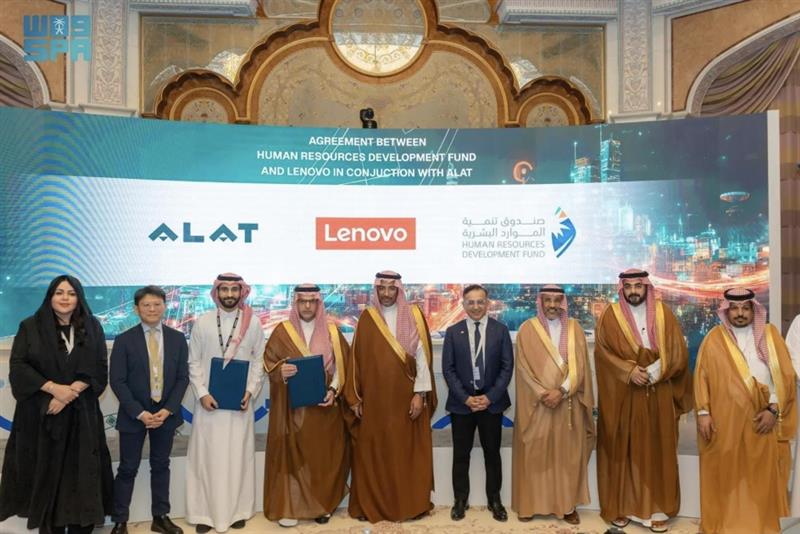
Lenovo Graduate Training
The Future of Smart Manufacturing in Saudi Arabia
There’s something quietly revolutionary happening in Riyadh right now. While headlines chase AI breakthroughs and tech unicorns, Lenovo is doing something that matters just as much, maybe more: investing in people. Not just hiring them. Not just training them for a job. But genuinely preparing 100 Saudi graduates to become the architects of an industrial future that doesn’t exist yet.
This isn’t your typical corporate training program with PowerPoints and name badges. It’s a four-month immersion into the beating heart of one of the world’s most sophisticated supply chains—spanning 30 manufacturing sites across 10 countries. It’s hands-on, it’s global, and it’s designed to turn fresh graduates into the kind of professionals who can build, manage, and innovate within the smart factories of tomorrow.
And here’s what makes it different: Lenovo isn’t doing this alone. They’ve partnered with Alat, the Human Resources Development Fund, and the Ministry of Industry and Mineral Resources to create something that aligns perfectly with Saudi Arabia’s Vision 2030. It’s not charity. It’s not a PR stunt. It’s a long-term bet on human capital, on local talent, and on the belief that the future of manufacturing isn’t just about robots and AI—it’s about the people who design, operate, and reimagine those systems.
So why does this matter? Because we’re standing at a crossroads. The Fourth Industrial Revolution isn’t coming—it’s here. And the countries that thrive won’t be the ones with the most technology. They’ll be the ones with the most skilled people who know how to use it.
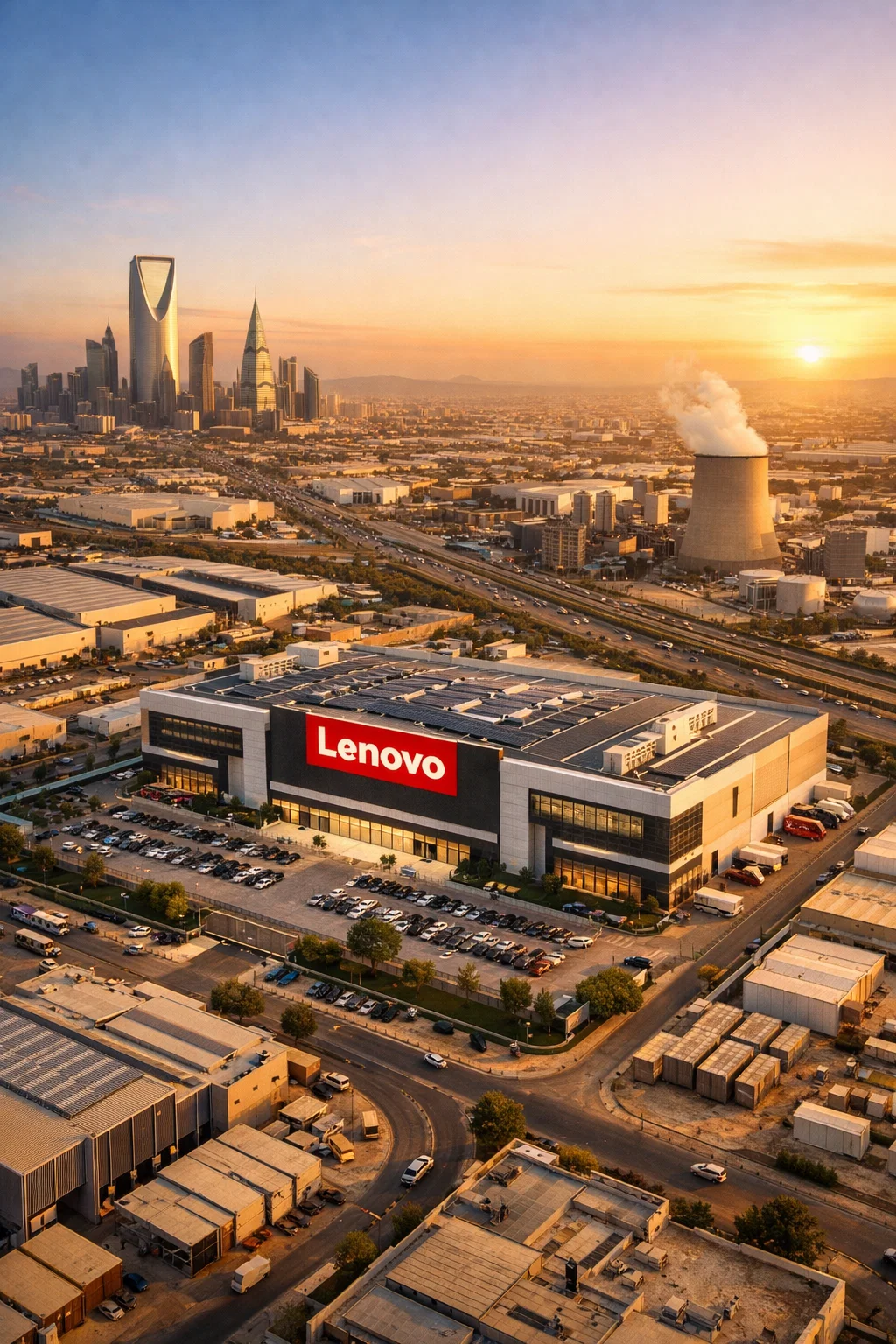
Riyadh Industrial Innovation 1
The Lenovo Story: From Beijing to the World
Let’s rewind for a moment. Lenovo didn’t start as a tech giant. It started in 1984 in a small guardhouse in Beijing with 11 engineers and $25,000 in seed money from the Chinese Academy of Sciences. The founder, Liu Chuanzhi, had a vision that was almost laughably ambitious at the time: to create a globally competitive Chinese technology company.
Fast forward four decades. Lenovo is now a $69 billion revenue powerhouse, ranked #196 in the Fortune Global 500, serving millions of customers daily across 180 markets. They’re the world’s largest PC manufacturer. They’ve acquired IBM’s PC division, Motorola Mobility, and built a full-stack portfolio that includes everything from AI-enabled devices to high-performance computing infrastructure.
But here’s what’s often overlooked: Lenovo’s success wasn’t built on cutting corners or racing to the bottom. It was built on operational excellence, strategic partnerships, and a relentless focus on innovation. Their supply chain? Recently ranked 8th globally by Gartner. Their R&D investments? Consistently pushing the boundaries of what’s possible in AI, edge computing, and smart manufacturing.
And the leadership? People like Lawrence Yu, Head of MEA Regional Headquarters, who understand that technology is only as good as the people behind it. Yu recently said something that stuck with me: “Saudi Arabia’s vision for industrial transformation is ambitious, and Lenovo is proud to be a partner in this journey. This collaboration shows our commitment to investment in the Kingdom’s most valuable assets—its people.”
That’s not corporate speak. That’s someone who gets it.
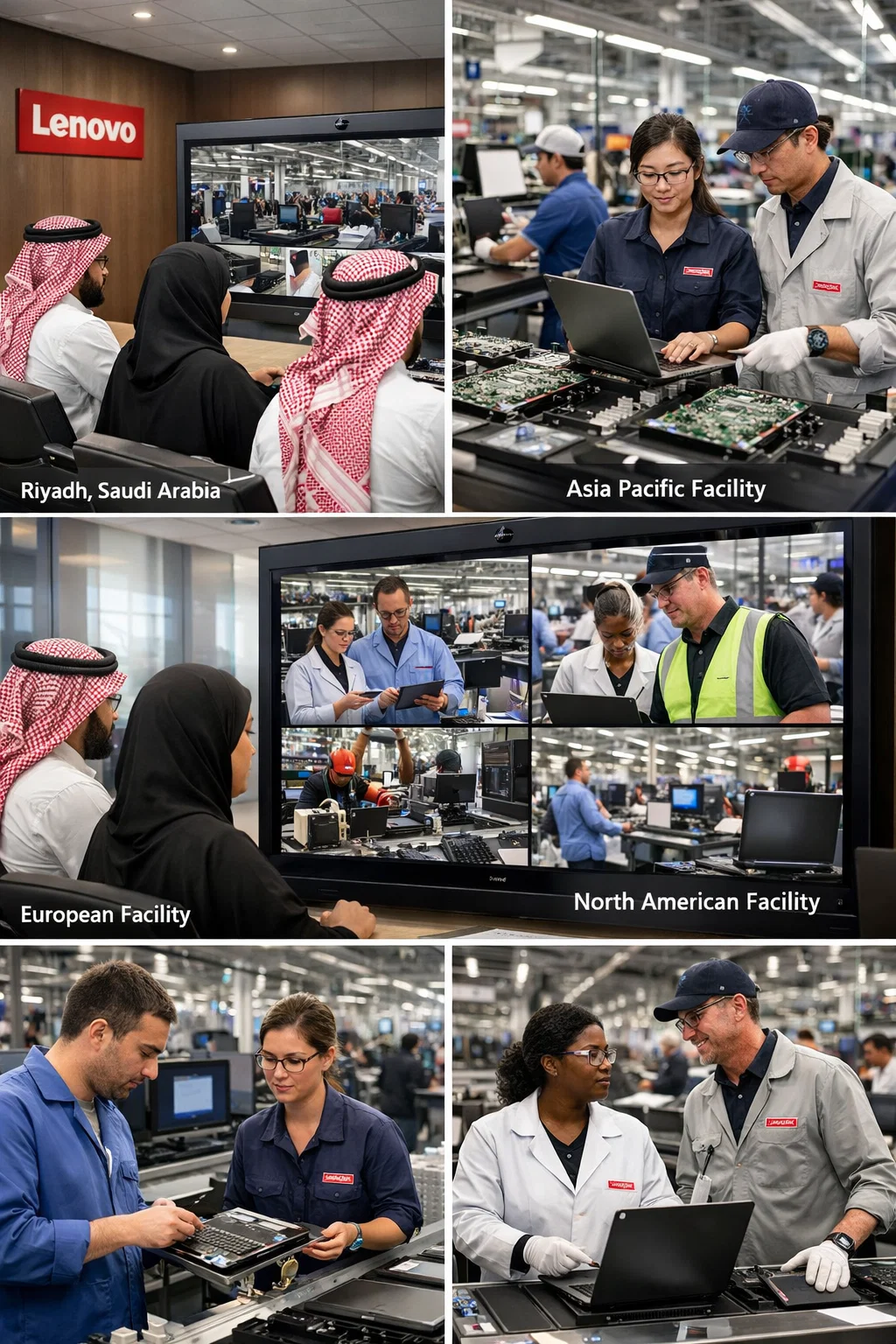
globlal lenovo trainig in saudi arabia
Lenovo Powers Lenovo: Walking the Talk on AI Transformation
Here’s something most people don’t know about Lenovo: before they train anyone else on smart manufacturing and AI, they’ve already transformed their own operations from the inside out.
It’s called “Lenovo Powers Lenovo”—an initiative that uses their own technology, resources, and intellectual capital to deliver transformative benefits across every aspect of their business. And the results? They’re stunning.
Supply Chain Excellence: Lenovo used AI to accelerate supply-chain decision-making by 60% and production scheduling by a staggering 98%. Think about that for a moment. What used to take days now happens in hours. This isn’t just efficiency for efficiency’s sake—it’s enabled them to utilize 24% more of their production line capacity and deliver to global customers on time, every time.
Empowering Knowledge Workers: For Lenovo employees, the company embraced Large-Language Models (LLMs) to eliminate manual work and create space for value-added activities. Knowledge workers are saving an average of 1.9 hours per week with Copilot for Microsoft 365. That might not sound like much until you multiply it across thousands of employees—that’s thousands of hours redirected toward innovation, problem-solving, and creative thinking.
Their marketing and sales teams? They’re creating compelling, personalized content 90% faster with generative AI. And with automation for ITOps processes, they’re achieving average efficiency gains of 22% for application and hybrid cloud management.
Customer Service Revolution: Lenovo is also transforming how the company serves customers. With innovative AI technology, they’ve cut contact center handle times by 20% and given thousands of Lenovo Forum users rapid access to information—boosting customer support efficiency by 50%.
Sustainability Impact: Perhaps most impressive is how they’re using AI to strengthen their ESG processes. The initiative cuts time to insight for ESG metrics by 99% and allows them to refurbish 116% more customer devices per hour, contributing directly to their sustainability goals.
Why does this matter for the Saudi graduates entering this program? Because they’re not learning from a company that’s theorizing about the future of smart manufacturing—they’re learning from a company that’s already living it.
The Four Pillars: What Saudi Graduates Will Learn
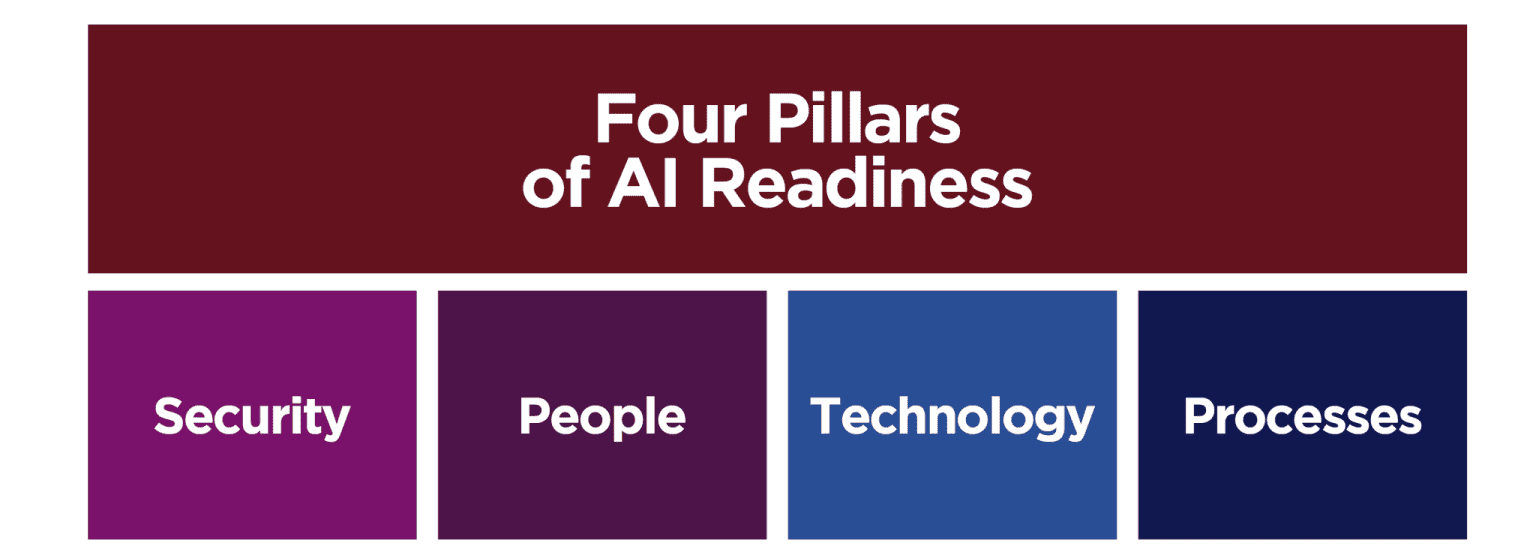
Lenovo’s approach to AI-readiness rests on four fundamental pillars: Security, People, Technology, and Processes. And these aren’t just buzzwords—they’re the framework that the 100 Saudi graduates will be immersed in throughout their training.
Security: In an era where cyber threats are constant and evolving, understanding how to protect industrial systems isn’t optional—it’s essential. Graduates will learn how Lenovo secures its manufacturing operations, protects intellectual property, and ensures data integrity across global supply chains.
People: Technology is only as effective as the people who use it. The program emphasizes how to build teams that can adapt to rapid technological change, how to foster a culture of continuous learning, and how to balance automation with human expertise.
Technology: This is where the rubber meets the road. Graduates will get hands-on experience with IoT sensors, AI-driven analytics, digital twins, predictive maintenance systems, and the full suite of Industry 4.0 technologies that power modern manufacturing.
Processes: The best technology in the world won’t help if your processes are broken. Lenovo will teach graduates how to optimize workflows, eliminate waste, balance efficiency with quality, and create systems that can scale.
Smart Manufacturing that Matters More Than You Think
When most people hear “smart manufacturing,” they picture robots assembling things at lightning speed. And sure, that’s part of it. But the real magic of smart manufacturing isn’t automation for automation’s sake. It’s about creating systems that are adaptive, efficient, and resilient.
Think about it: traditional manufacturing is linear. You design a product, set up an assembly line, and hope demand matches supply. Smart manufacturing flips that. It’s data-driven, responsive, and constantly learning. Sensors track every step of production. AI predicts maintenance needs before machines break down. Digital twins simulate entire factories to optimize performance.
But here’s the catch: you can’t just plug in the technology and walk away. You need engineers who understand production flow. Quality control specialists who can interpret data in real time. Operations managers who can balance efficiency with sustainability. And that’s exactly what Lenovo is training these 100 Saudi graduates to do.
The program isn’t theoretical. Graduates will rotate through key roles in Lenovo’s global supply chain—production, quality control, digital operations—at facilities spanning Asia Pacific, Europe, the Middle East, North Africa, North America, and South America. They’ll see how a truly world-class operation works from the inside. They’ll experience firsthand how AI accelerates decision-making, how automation increases capacity, and how the right processes can transform outcomes.
And when they return to Saudi Arabia, they won’t just be employees. They’ll be catalysts for change.
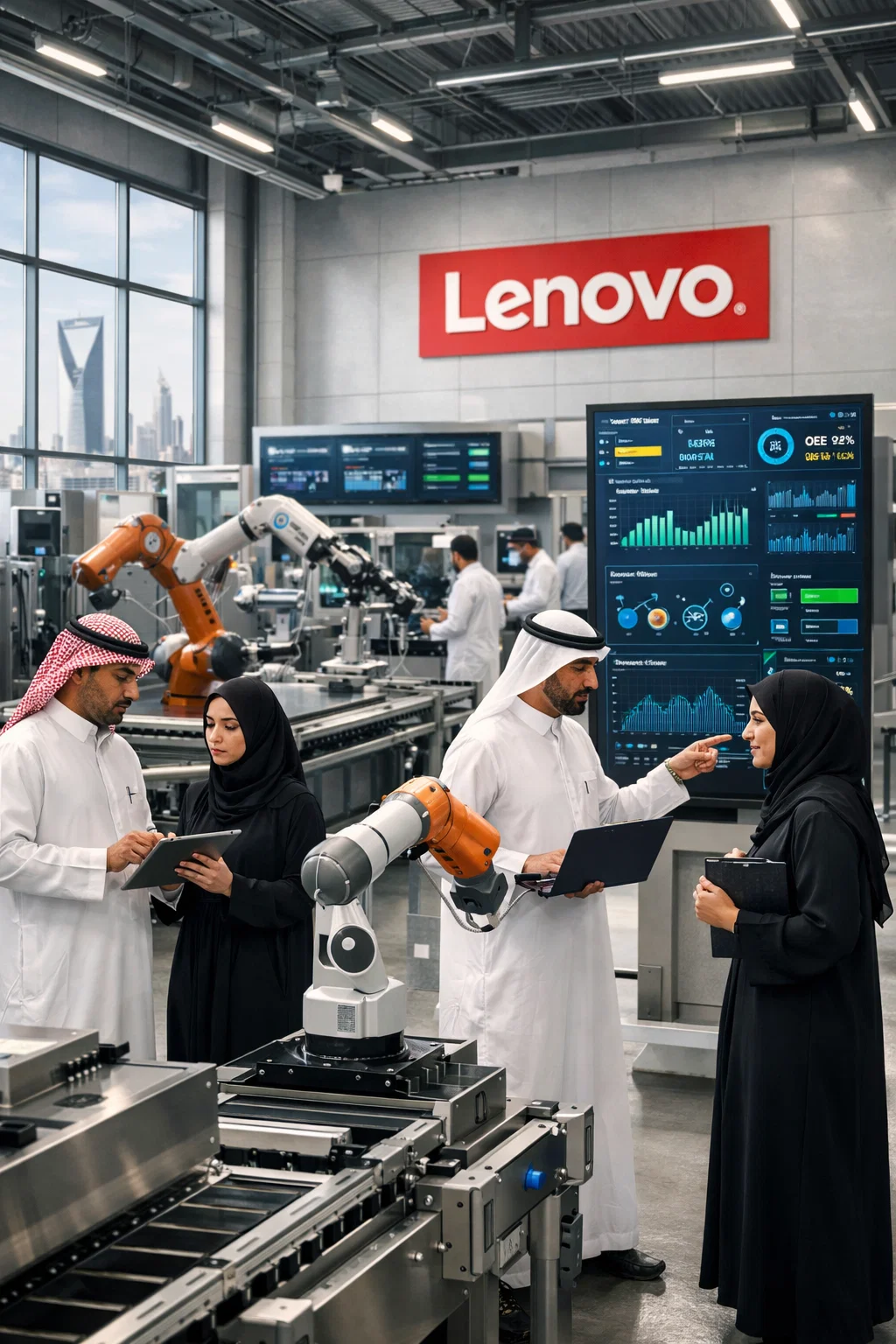
Smart Manufacturing in Riyadh
Saudi Arabia’s Vision 2030: Beyond Oil, Toward Innovation
Saudi Arabia has been synonymous with oil for nearly a century. But Vision 2030 is about rewriting that narrative. It’s about economic diversification, job creation for a young population, and building a knowledge-based economy that can compete globally.
The numbers are striking. Over 60% of Saudi Arabia’s population is under 30. That’s an enormous asset—but only if that talent is developed, empowered, and given meaningful opportunities. This is where programs like Lenovo’s talent initiative come in.
By training 100 graduates in advanced manufacturing, Lenovo isn’t just filling positions. They’re building a pipeline of skilled professionals who will go on to train others, start companies, and drive innovation across the Kingdom’s industrial sector. It’s a multiplier effect that compounds over time.
And Lenovo’s commitment to Saudi Arabia runs deep. They’ve broken ground on a new manufacturing facility in Riyadh. They’ve established their MEA Regional Headquarters in the city. They’re developing R&D facilities, flagship retail spaces, and VIP customer centers. This isn’t a short-term play. It’s a decades-long partnership designed to co-create the future.
The timing couldn’t be better. As Saudi Arabia diversifies its economy away from oil dependence, advanced manufacturing represents a critical pillar of growth. And with Lenovo’s proven track record—using AI to enhance operations, optimize supply chains, and deliver measurable results—the Kingdom is partnering with a company that doesn’t just talk about transformation, but demonstrates it daily.
The Technology Behind the Training
IoT, AI, and Operational Intelligence
Inside Lenovo’s Four-Month Training Initiative for Saudi Engineers and Tech Professionals
Real-World Impact: What the Numbers Tell Us
Let’s talk specifics, because numbers don’t lie. When Lenovo implemented AI across its own operations through the Lenovo Powers Lenovo initiative, the results were transformative:
60% faster supply-chain decision-making means responding to market changes in real time
98% acceleration in production scheduling translates to agility and competitiveness
24% increased production line capacity without building new facilities
1.9 hours saved per week per knowledge worker equals thousands of hours redirected toward innovation
90% faster content creation for marketing and sales teams
20% reduction in contact center handle times, improving customer satisfaction
50% boost in customer support efficiency through AI-powered forums
99% faster time to insight for ESG metrics, enabling better sustainability decisions
116% more customer devices refurbished per hour, contributing to circular economy goals
These aren’t projections or aspirations. These are actual results from a company that’s using its own technology to transform its own operations. And this is the environment that Saudi graduates will be training in—not a simulation, not a case study, but real facilities achieving real outcomes.
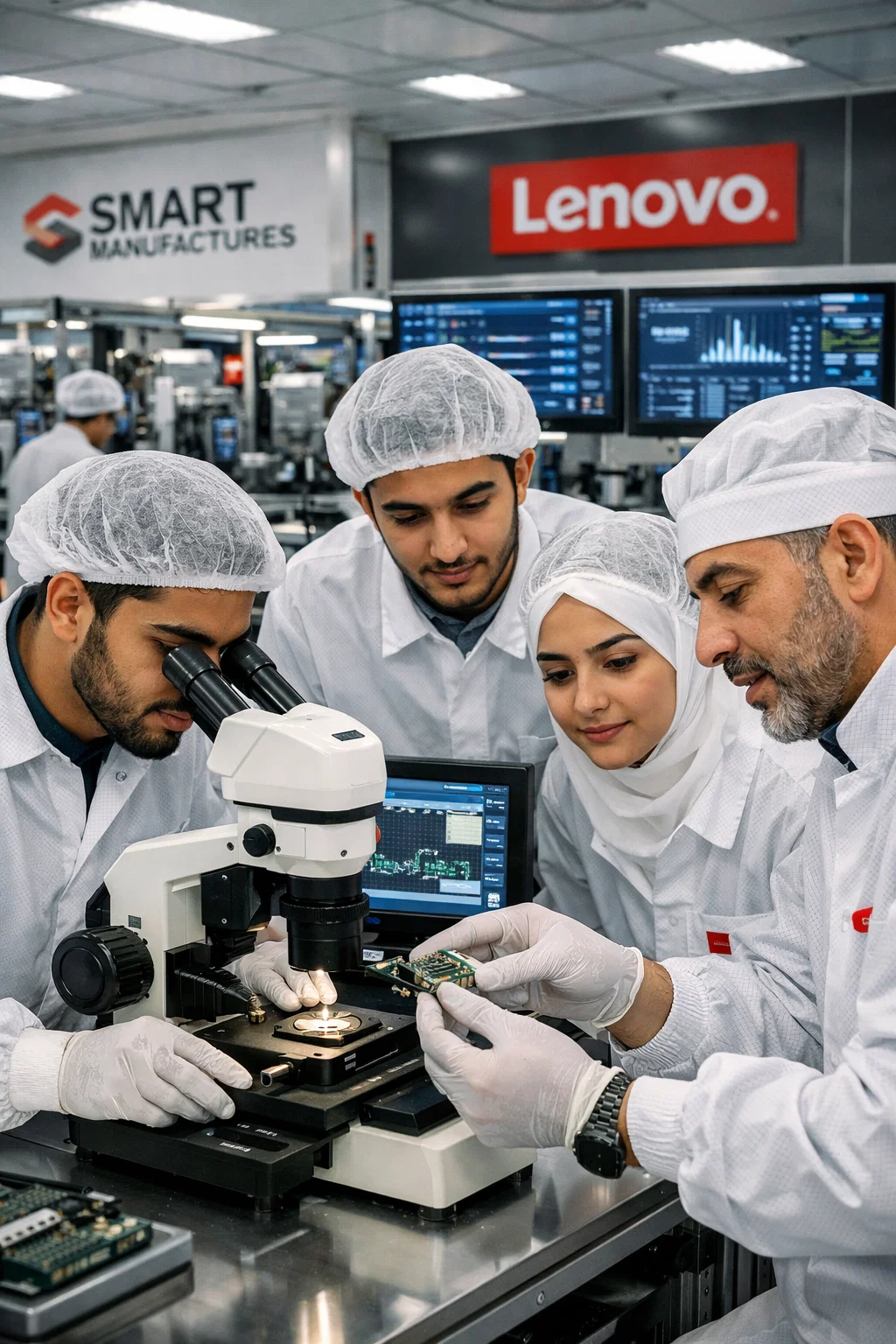
saudi graduates in manufacturing
The Technology Behind the Training: IoT, AI, and Operational Intelligence
Let’s talk tech for a moment, because what Lenovo is teaching these graduates isn’t just assembly line basics. It’s the cutting edge of industrial IoT, AI-driven operations, and data analytics.
Internet of Things (IoT) in Manufacturing: Lenovo has been a pioneer in integrating IoT into its manufacturing processes. Sensors embedded throughout production lines collect real-time data on everything from machine performance to environmental conditions. This data feeds into centralized systems that provide visibility across the entire supply chain. For graduates in this program, learning to work with IoT infrastructure means understanding how to make data-driven decisions at scale.
AI and Predictive Analytics: Lenovo’s factories use AI to predict equipment failures before they happen, optimize production schedules based on demand forecasts, and even identify quality issues that human inspectors might miss. The graduates will learn how these systems work, how to interpret their outputs, and how to continuously improve them. They’ll see firsthand how AI accelerated Lenovo’s own supply-chain decision-making by 60%—and they’ll learn to implement similar systems in Saudi Arabia’s industrial sector.
Large-Language Models and Generative AI: The program will expose graduates to the latest advances in LLMs and generative AI—the same technologies that are saving Lenovo knowledge workers 1.9 hours per week and enabling marketing teams to create content 90% faster. Understanding these tools isn’t just about efficiency—it’s about fundamentally reimagining how work gets done.
Digital Operations and Industry 4.0: This is where it all comes together. Digital operations mean creating a seamless flow of information from design to delivery. It means using digital twins to simulate changes before implementing them. It means understanding cybersecurity in industrial environments. And it means being able to adapt quickly when conditions change.
The Challenges We Face – How Lenovo Is Helping Solve
The world is facing some serious challenges right now. Supply chain disruptions. Climate change. Widening skills gaps. Economic inequality. And while no single company can solve these problems alone, companies like Lenovo are proving that business can be a force for good.
Before we move on, I want to remind you of something that should highlight that Lenovo has been recognized as the eighth winner by the Gartner Supply Chain Top 25 for 2025, among global leaders across various industries, including pharmaceutical, automotive, FMCG, and technology. The Gartner ranking highlights companies that consistently demonstrate leadership in supply chain strategy and execution.
Within Lenovo’s global supply chain, AI has significantly enhanced planning accuracy and accountability, leading to more efficient and cost-effective operations. Intelligent production scheduling has alloweda quicker and more responsive production decisions.
“The use of AI in our systems is ultimately benefiting our customers. AI-driven customer sentiment analysis has provided deeper insights into customer needs and recurring issues, resulting in improved customer satisfaction and better warranty-related performance,” said Guan Wei, SVP and Head of Global Supply Chain.
Supply Chain Resilience: The pandemic exposed how fragile global supply chains really are. Lenovo responded by diversifying manufacturing locations, investing in local capabilities, and building more resilient operations. Training local talent in Saudi Arabia is part of that strategy—creating regional expertise that reduces dependence on any single location. With AI-powered supply chain decision-making that’s 60% faster, Lenovo can respond to disruptions in real time rather than reacting after the fact.
Sustainability: Manufacturing has a significant environmental footprint. Lenovo has committed to reducing its carbon emissions and increasing the use of renewable energy across its operations. Through Lenovo Powers Lenovo, they’ve achieved 99% faster insights into ESG metrics and refurbish 116% more devices per hour—tangible contributions to a circular economy. The graduates in this program will learn these sustainable manufacturing practices that balance efficiency with environmental responsibility.
Skills Development: There’s a massive global shortage of skilled workers in advanced manufacturing. By investing in education and training, Lenovo is helping close that gap—not just in Saudi Arabia, but potentially across the entire region. And they’re teaching graduates the same tools and methodologies that saved their own knowledge workers nearly 2 hours per week, creating more time for innovation and problem-solving.
What Makes This Program Different
I’ve seen a lot of corporate training programs. Most are forgettable. A few are good. But very few are truly transformative. So what makes Lenovo’s initiative stand out?
1. It’s Proven: Lenovo isn’t teaching theory—they’re teaching what works. Every methodology, every tool, every process the graduates will learn has been tested and validated within Lenovo’s own operations through the Lenovo Powers Lenovo initiative.
2. It’s Comprehensive: Four months of intensive, hands-on training across multiple locations and disciplines. That’s not a crash course—it’s a genuine education in smart manufacturing, AI implementation, and operational excellence.
3. It’s Global: Graduates don’t just learn about manufacturing in theory. They experience it firsthand at world-class facilities on multiple continents. That kind of exposure is invaluable and opens doors that might otherwise remain closed.
4. It’s Supported: The Human Resources Development Fund is funding the program. The Ministry of Industry and Mineral Resources is providing oversight and strategic direction. Alat is contributing technical resources. And Lenovo is delivering the operational expertise. That’s a powerful coalition.
5. It’s Aligned: Everything about this program supports Vision 2030’s goals for industrial growth and local talent development. It’s not happening in a vacuum—it’s part of a larger national strategy to build a knowledge-based economy.
6. It’s Real: These aren’t internships with no path forward. Graduates will have the skills and experience to build careers in Saudi Arabia’s evolving industrial sector. Some will likely join Lenovo’s Riyadh facility. Others may go on to start their own companies or join other manufacturers. Either way, they’re being prepared for meaningful, impactful careers.
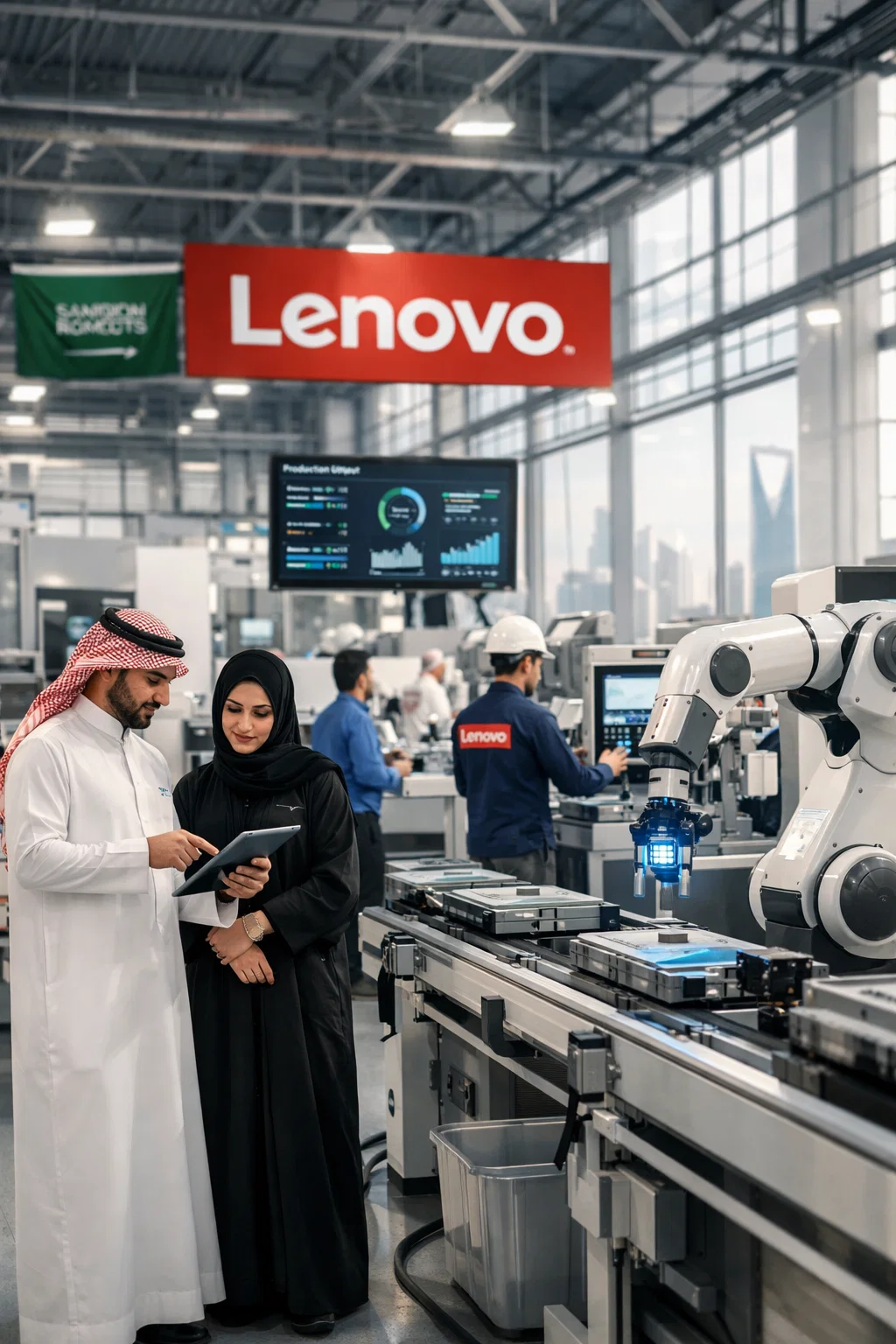
smart manufacturing in riyadh
Lenovo’s Talent Program Is Shaping the Future of Manufacturing in Saudi Arabia
Let’s not lose sight of the individuals in all of this. Behind the numbers and strategies are 100 young Saudis whose lives are about to change.
Imagine being a recent graduate, passionate about technology and eager to contribute, but unsure how to break into advanced manufacturing. Traditional entry-level jobs might not provide the depth of experience you need. Study abroad programs are expensive and competitive. But here comes an opportunity to train with one of the world’s leading tech companies, travel to global facilities, learn from experts who’ve already transformed their own operations, and return home with skills that are in high demand.
You’ll learn how AI can accelerate decision-making by 60%. You’ll see how automation can increase production capacity by 24%. You’ll understand how to cut customer service handling times by 20% using innovative AI. You’ll discover how to achieve 99% faster insights into sustainability metrics.
That’s life-changing. And it’s the kind of opportunity that creates ripple effects—these graduates will go on to mentor others, share knowledge, and raise the bar for what’s possible in Saudi Arabia’s industrial sector.
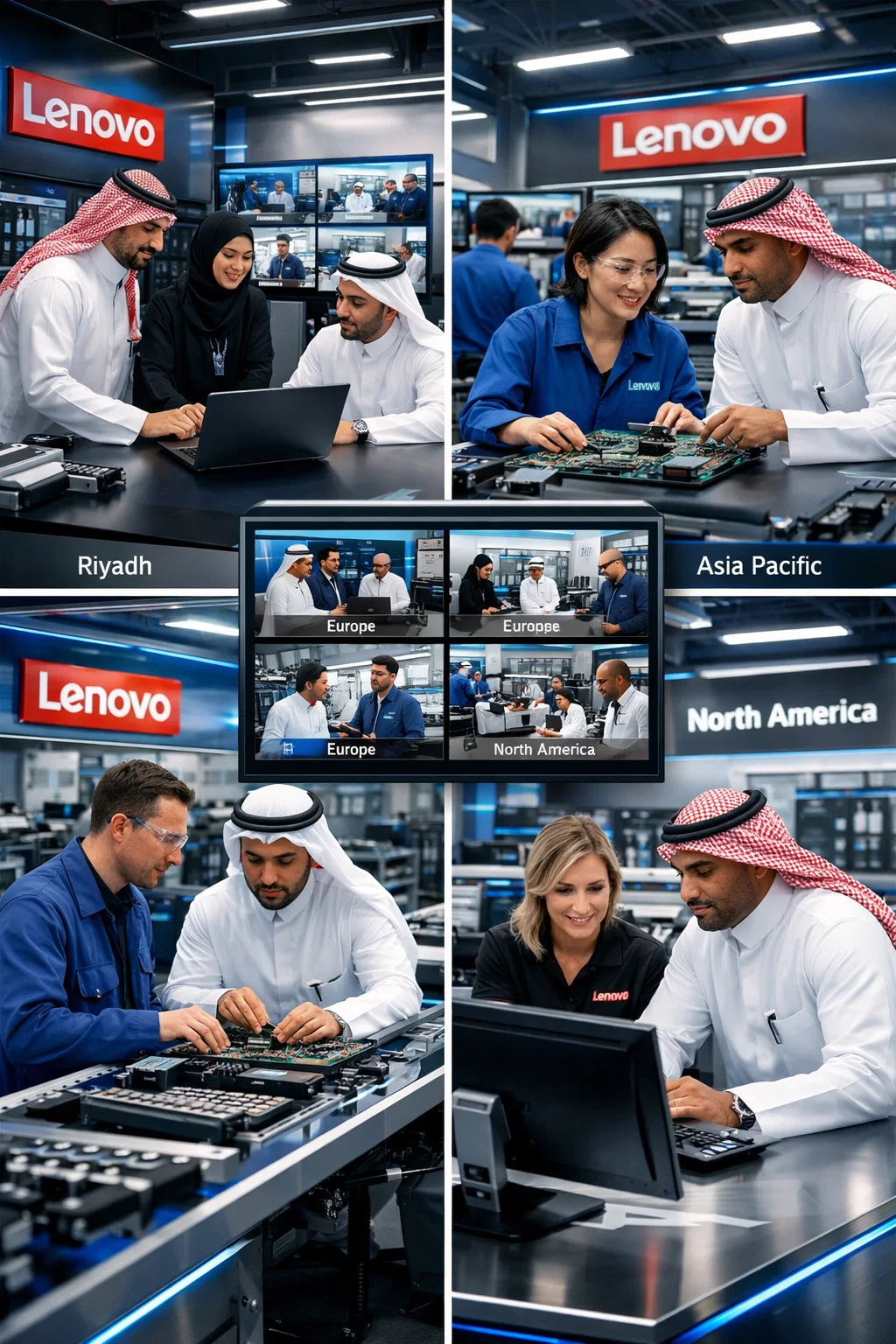
Global Lenovo Collaboration
high tech saudi manufacturing
Building a Blueprint for Success
By transforming its own operations through Lenovo Powers Lenovo, the company has created something invaluable: a blueprint for success that can be replicated across industries and geographies.
This isn’t abstract knowledge. It’s a practical, tested methodology backed by measurable results. When Saudi graduates return from their training, they won’t just understand smart manufacturing in theory—they’ll know exactly how to implement it because they’ve seen it work at scale.
They’ll know how to accelerate supply-chain decisions. They’ll understand how to leverage LLMs to eliminate manual work. They’ll be able to implement AI solutions that boost efficiency by double digits. They’ll know how to balance technological advancement with sustainability goals.
And perhaps most importantly, they’ll have the confidence that comes from training with a company that doesn’t just talk about the future of manufacturing—they’re building it, testing it, and proving it works every single day.
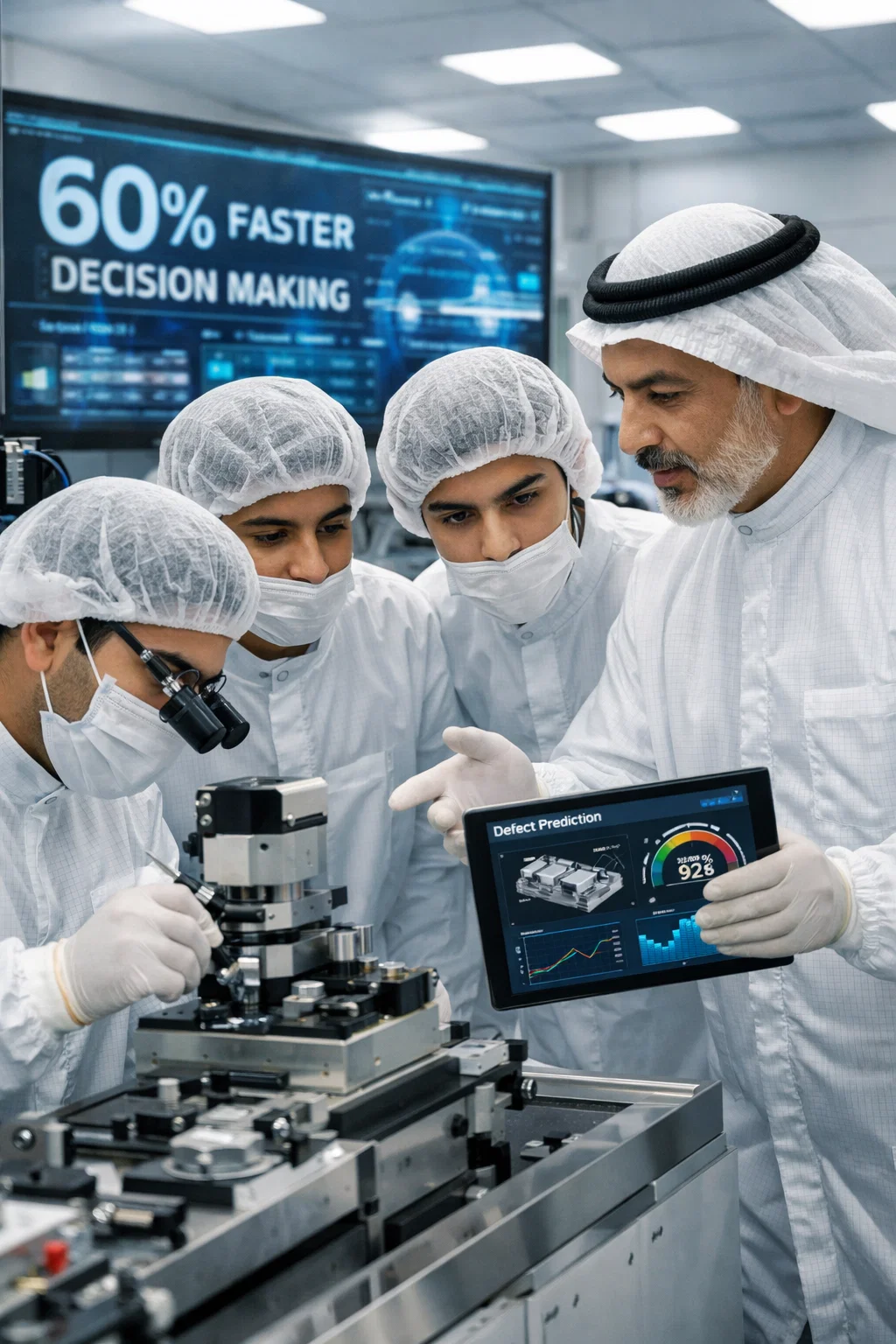
High-Tech Saudi Manufacturing
Looking to the future game Ahed
Lenovo’s talent program isn’t about quick wins. It’s about playing the long game. It’s about recognizing that sustainable growth requires investment in people, not just technology. It’s about understanding that today’s graduates are tomorrow’s industry leaders.
And it’s working. Saudi Arabia is rapidly becoming a hub for advanced manufacturing and innovation in the Middle East. Companies like Lenovo are choosing to invest here not just because of incentives or market access, but because they see genuine potential for collaboration and growth.
The program aims to build a pipeline of skilled Saudi professionals who will contribute to the Kingdom’s industrial growth for decades to come. Some will become engineers who design the next generation of smart factories. Others will become managers who optimize operations for efficiency and sustainability. And a few might become entrepreneurs who start their own manufacturing companies, creating jobs and driving further innovation.
That’s the vision. That’s what’s possible when you invest in people and give them access to world-class training, proven methodologies, and real-world experience.
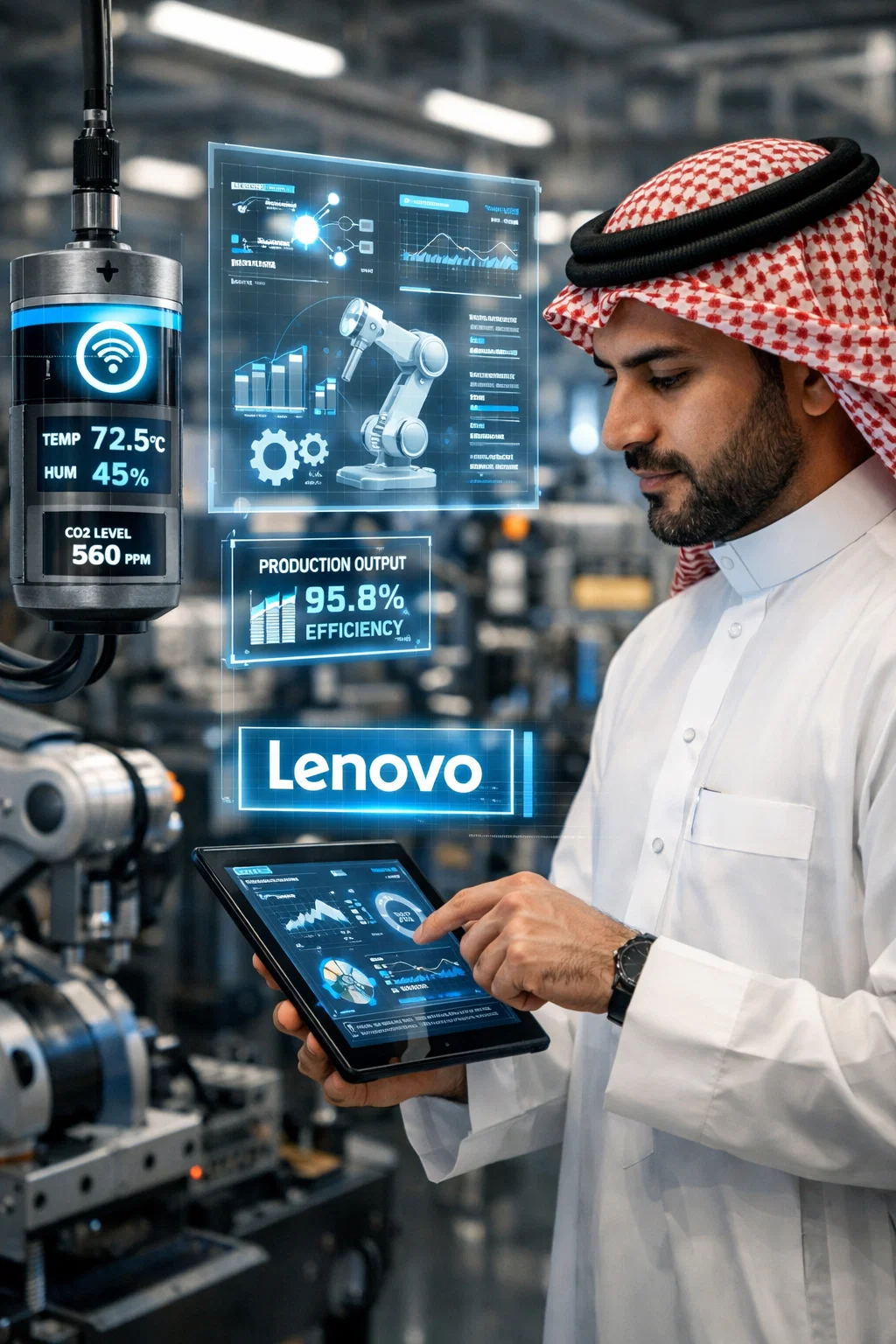
futuristic smart factory scene
Frequently Asked Questions
Q: What is Lenovo’s talent development program in Saudi Arabia?
A: It’s a comprehensive four-month training initiative that will second 100 Saudi graduates to Lenovo’s Riyadh manufacturing facility and other global sites. The program combines theoretical learning with hands-on experience in engineering, technology, and smart manufacturing to prepare participants for careers in Saudi Arabia’s industrial sector.
Q: What is “Lenovo Powers Lenovo” and how does it relate to the training program? A: Lenovo Powers Lenovo is an initiative where Lenovo uses its own technology, resources, and intellectual capital to transform its operations. The program has achieved remarkable results, including 60% faster supply-chain decision-making, 98% acceleration in production scheduling, and 24% increased production capacity. Saudi graduates will train in facilities where these proven methodologies are already in practice.
Q: Who is funding and supporting this program? A: The program is funded by the Human Resources Development Fund, with strategic oversight from the Ministry of Industry and Mineral Resources. Lenovo provides training and operational support, while Alat contributes to program development and technical resources.
Q: How long is the training program? A: The program consists of a four-month training block where graduates rotate through key roles in Lenovo’s global supply chain.
Q: What areas will the graduates receive training in?
A: Participants will gain hands-on experience in production, quality control, digital operations, AI implementation, IoT systems, predictive analytics, and other critical areas of smart manufacturing. The curriculum is based on Lenovo’s four pillars of AI-readiness: Security, People, Technology, and Processes.
Q: Why is Lenovo investing in Saudi Arabia?
A: Lenovo’s investment aligns with Saudi Arabia’s Vision 2030 goals for industrial growth and economic diversification. The company has made long-term commitments, including constructing a new manufacturing facility in Riyadh, establishing its MEA Regional Headquarters there, and developing R&D facilities and retail spaces.
Q: How does this program support Vision 2030?
A: The program directly supports Vision 2030’s objectives by developing local talent, increasing employment opportunities for Saudi nationals, building a knowledge-based industrial sector, and reducing dependence on oil revenues through economic diversification.
Q: What makes Lenovo’s supply chain notable? A: Lenovo’s supply chain spans over 30 manufacturing sites across 10 markets globally and was recently ranked 8th in Gartner’s global supply chain ranking. Through AI implementation, they’ve achieved 60% faster decision-making and 98% acceleration in production scheduling.
Q: Will graduates work only in Saudi Arabia?
A: While the program aims to build a skilled workforce for Saudi Arabia’s industrial sector, graduates will train at Lenovo facilities across multiple continents, including Asia Pacific, Europe, the Middle East and Africa, North America, and South America.
Q: What is smart manufacturing? A: Smart manufacturing integrates IoT sensors, AI-driven analytics, and digital operations to create adaptive, efficient, and resilient production systems. It goes beyond traditional automation to enable data-driven decision-making and continuous optimization.
Q: How has AI transformed Lenovo’s own operations?
A: Through Lenovo Powers Lenovo, AI has accelerated supply-chain decision-making by 60%, production scheduling by 98%, increased production capacity by 24%, saved knowledge workers an average of 1.9 hours per week, cut contact center handle times by 20%, and enabled 99% faster insights into ESG metrics.
Q: What career opportunities will graduates have after completing the program?
A: Graduates will be equipped with skills needed for careers in manufacturing, operations management, quality control, digital operations, AI implementation, and industrial engineering within Saudi Arabia’s growing industrial sector, potentially with Lenovo or other manufacturers in the Kingdom.
Q: How does Lenovo approach sustainability in manufacturing?
A: Lenovo uses AI to achieve 99% faster insights into ESG metrics and has increased device refurbishment capacity by 116% per hour. The training program will teach graduates these sustainable manufacturing practices that balance efficiency with environmental responsibility.
Q: What is Alat’s role in this partnership?
A: Alat serves as Lenovo’s strategic partner, contributing to program development and providing technical resources to support the training initiative.
Lenovo
The Blueprint for The Smart Manufacturing & The Smart Success
There’s a quote I keep coming back to from Lawrence Yu: “This program will provide Saudi talent with world-class skills, foster local innovation, and create meaningful career opportunities for all the participants. Together, we are building the foundation of a thriving manufacturing sector.”
That word—”together”—matters. Because none of this happens in isolation. Not the technology. Not the training. Not the transformation of an entire economy. It all requires partnership, commitment, and a genuine belief that investing in people is the smartest thing a company can do.
Lenovo gets that. They’ve proven it by transforming their own operations first through Lenovo Powers Lenovo—achieving measurable, remarkable results that demonstrate what’s possible when you combine cutting-edge technology with skilled people and proven processes.
Saudi Arabia’s leadership gets that. They’re investing in Vision 2030 not as a slogan but as a comprehensive roadmap for building a diversified, knowledge-based economy.
And now, 100 graduates are about to get a once-in-a-lifetime opportunity to be part of something bigger than themselves. They’ll learn from a company that doesn’t just talk about the future of manufacturing—they’re living it, proving it, and now sharing it.
The future of manufacturing isn’t just about machines. It’s about the people who build, operate, and reimagine those systems. And in Riyadh, that future is being written right now.
