
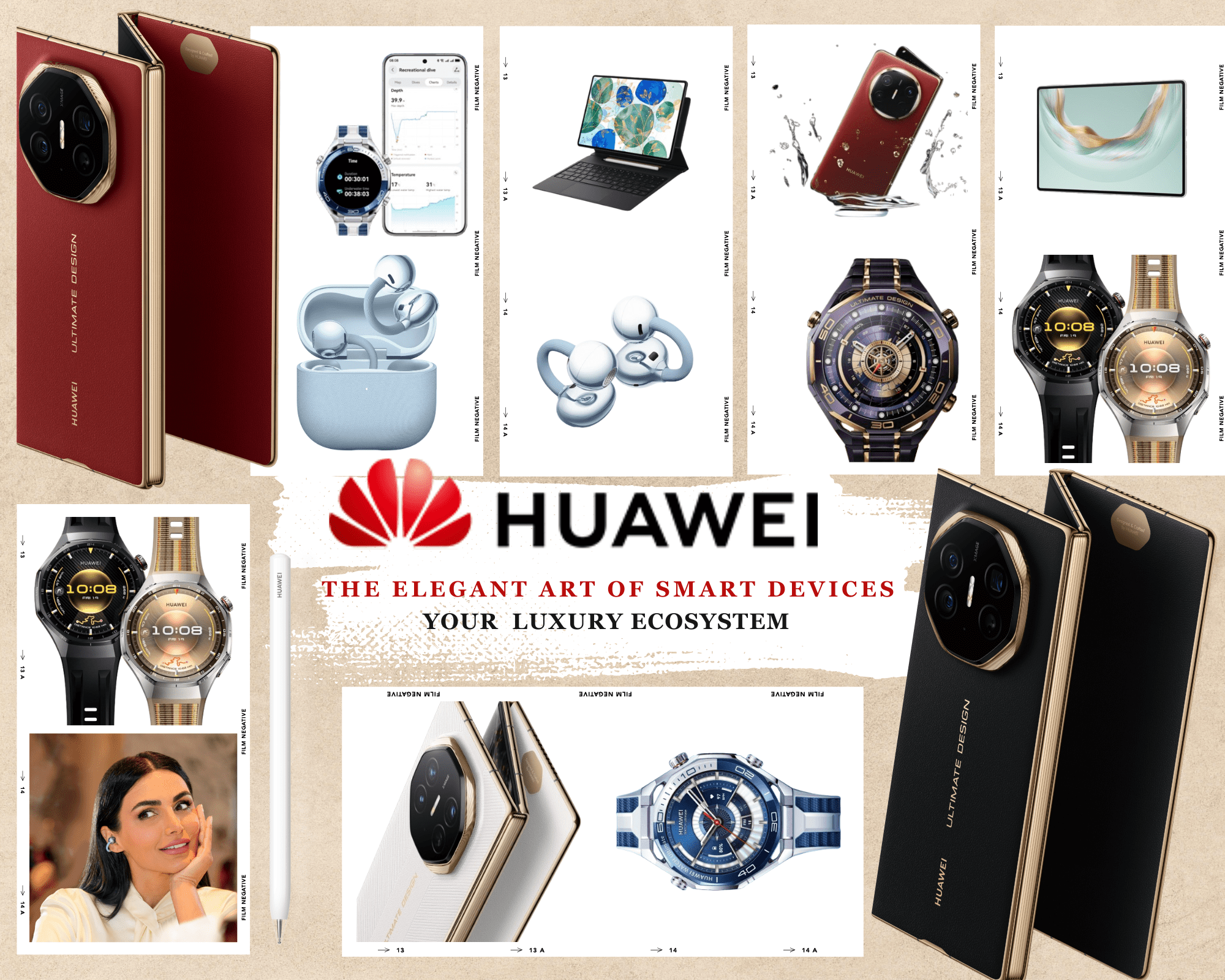
Huawei’s 2025 Holiday Collection
When the ecosystem works according to the Human Algorithm
The Paradox of Progress in a Connected World
Picture this: It’s 2025, and we’re drowning in technology yet starving for meaningful connection. We carry devices that promise to simplify our lives, yet we’ve never felt more overwhelmed. Our wrists bear smartwatches that track every heartbeat, our ears house earbuds that cancel the world’s noise, and our pockets contain smartphones that fold reality itself—literally. But here’s the uncomfortable truth nobody wants to discuss: most of this technology serves the device, not the person wearing it.
Enter Huawei, a company that’s spent the last three decades refusing to accept that paradox.
When Ren Zhengfeifounded Huawei in 1987 in a small apartment in Shenzhen, China, with just 21,000 RMB (approximately $5,000 USD), he wasn’t dreaming of becoming the world’s largest telecommunications equipment manufacturer. He was obsessing over a singular, almost naive question: “What if technology actually worked the way humans do?“ That question—simple, profound, borderline revolutionary—has guided every circuit board, every algorithm, every design decision the company has made since.
Fast forward to 2025, and Huawei isn’t just participating in the smart device revolution—it’s rewriting the rulebook entirely. With over 207,000 employees worldwide, operations in more than 170 countries, and a staggering $26 billion invested annually in research and development (making it one of the top five R&D spenders globally), Huawei has transformed from a scrappy telecommunications startup into a titan that holds over 120,000 patents. But numbers, impressive as they are, tell only half the story.
The real story lives in the philosophy that permeates every Huawei laboratory, every design studio, every brainstorming session: technology should adapt to humanity, not the other way around. It’s a principle that sounds obvious until you realize how few companies actually practice it. Most tech giants build devices and then teach us how to use them. Huawei studies how we actually live—messy, unpredictable, beautifully human—and then engineers technology around those realities.
This holiday season, that philosophy manifests in six extraordinary devices that don’t just represent Huawei’s latest product lineup—they represent six different answers to six fundamental questions about how we want to exist in an increasingly digital world. How do we stay connected without being tethered? How do we embrace screens without sacrificing presence? How do we track our health without becoming obsessed with data? How do we create without limitations? How do we explore extremes without compromising safety?
But before we dive into each device, we need to understand the invisible infrastructure that makes them possible—because that’s where the real innovation hides.
When “Smart” Became “Overwhelming”
The Promise vs. The Reality
The global smart device market in 2025 is worth an estimated $1.1 trillion and growing at 11.3% annually. We own more connected devices than ever before—the average household now contains 17 connected devices. Our watches track our steps, our phones organize our lives, our earbuds soundtrack our days, and our tablets extend our creativity.
Yet consumer satisfaction has been steadily declining. A 2024 global study across 23 countries found that:
- 67% of users feel “overwhelmed” by their devices’ complexity
- 54% admit they use less than 40% of their device’s features
- 71% report increased anxiety about privacy and data security
- 63% experience “notification fatigue” and digital stress
- 58% say device battery life anxiety affects their daily decisions
We have smarter devices but less peaceful digital lives. Why?
The Three Broken Promises of Modern Technology
Broken Promise #1: “Technology Will Save You Time”
The average person now spends 7 hours and 4 minutes daily on connected devices—up from 6 hours 58 minutes in 2023. We’re not saving time; we’re spending it differently, often less intentionally. Our devices interrupt us an average of 96 times per day. Each interruption costs 23 minutes of productivity recovery time. The math is devastating: technology designed to save time is actually consuming it.
Broken Promise #2: “Technology Will Connect You”
Despite unprecedented connectivity, reported loneliness has reached epidemic levels. The paradox? We’re more “connected” but less present. Traditional earbuds isolate us from our environment. Smartphones demand our attention away from the people physically near us. Video calls happen on screens too small for meaningful eye contact. We’re connected to networks but disconnected from moments.
Broken Promise #3: “Technology Will Empower You”
Instead, it’s made us dependent—and anxious. Battery anxiety is real: 87% of users feel stressed when their phone drops below 20%. We can’t navigate without GPS, can’t remember phone numbers, can’t sleep without checking our devices one last time. The tools meant to empower us have become crutches we can’t imagine living without.
Why Did This Happen?
The tech industry optimized for the wrong metrics:
- Engagement over wellbeing: Apps designed to maximize screen time, not life quality
- Features over usability: More capabilities mean more complexity, which means more frustration
- Ecosystems over interoperability: Walled gardens that force all-or-nothing choices
- Data extraction over privacy: Free services that cost your personal information
This isn’t sustainable. Users are exhausted. And they’re starting to push back.
Huawei’s R&D
IP Leadership, and the Philosophy of “Invisible Intelligence”
The Research Investment That Changed Everything
While most tech companies allocate 8-15% of revenue to R&D, Huawei invests approximately 23% of its annual revenue—roughly $26 billion in 2024. This isn’t just spending; it’s a philosophical commitment.
Huawei operates 15 global R&D centers strategically positioned in innovation hubs:
- France (Paris): Algorithm optimization and AI ethics
- Germany (Munich): Precision engineering and materials science
- Sweden (Stockholm): Telecommunications and network efficiency
- Russia (Moscow): Mathematics and theoretical computing
- India (Bangalore): Software development and UX research
- United States (Silicon Valley): Future technology exploration
- China (Shenzhen, Beijing, Shanghai): Core hardware and systems integration
These aren’t satellite offices. They’re full-scale research campuses employing over 107,000 R&D professionals—more than 51% of Huawei’s global workforce. Compare this to Apple’s 30% or Samsung’s 38%. Huawei’s workforce composition reveals its priorities: innovation isn’t a department; it’s the company’s identity.
The Patent Portfolio That Proves Innovation
Numbers rarely tell the full story, but in intellectual property, they reveal commitment to original thinking:
- 120,000+ patents filed globally (as of 2025)
- Over 60,000 patents granted in key technology domains
- #1 global patent filer in AI, 5G/6G telecommunications, and battery technology (2023-2024)
- 85% of patents are invention patents (not design or utility), indicating fundamental innovation rather than incremental improvements
What does this actually mean? When Huawei develops a foldable hinge, they’re not licensing someone else’s mechanism—they’re inventing new materials science. When they create health monitoring systems, they’re not using off-the-shelf sensors—they’re engineering fusion algorithms that make existing sensors radically more capable.
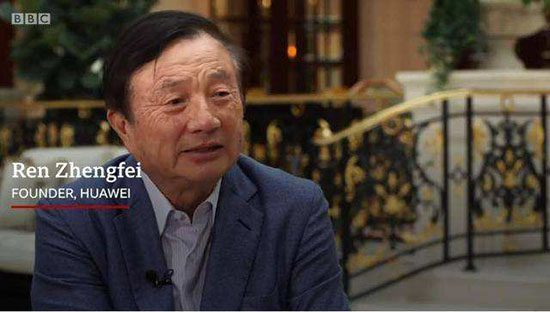
The Leadership Philosophy: Ren Zhengfei’s “Customer-Centric Innovation”
Ren Zhengfei, now 81, remains Huawei’s philosophical compass even as day-to-day operations pass to younger leadership. His speeches and internal memos (many published publicly) reveal a consistent worldview:
“Technology that doesn’t solve human problems is just expensive complexity.” — Ren Zhengfei, 2019
This isn’t a corporate platitude. It’s operational doctrine. Inside Huawei’s R&D process:
- User observation comes first: Teams spend 3-6 months observing real users before designing solutions
- “Friction mapping”: Every frustration point in the user experience is documented and assigned to an engineering team
- “Invisible intelligence” principle: If users consciously notice the AI, it’s not working well enough
- “90-day rule”: Any feature users don’t use within 90 days is considered for removal, not improvement
This philosophy produced the TruSense System (health monitoring that learns your baseline and only alerts when deviations matter), HarmonyOS distributed architecture (devices that collaborate seamlessly), and adaptive battery management (21-day smartwatch battery life).

The Innovation That Nobody Sees: Materials Science
Huawei’s most impressive innovations don’t appear in spec sheets:
Zirconium-Based Liquid Metal Alloys: Used in watch cases and phone hinges. This amorphous metal has no crystalline structure, making it 2-3x stronger than steel at equivalent weight and virtually immune to fatigue failure. It’s why Huawei’s foldable hinges are rated for 1 million+ fold cycles while competitors struggle to reach 200,000.

Kunlun Glass 2: A proprietary display protection material developed with Chinese materials science institutes. Comparable to Corning’s Gorilla Glass Victus 2 in drop protection but engineered specifically for foldable displays, where repeated stress is the primary concern, not single-impact resistance.
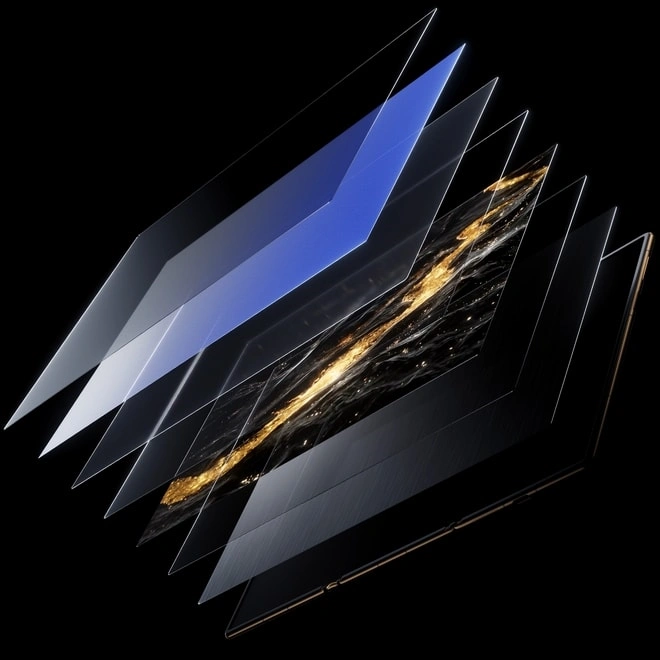
Nanoscale Display Etching: The PaperMatte display technology uses 100-nanometer surface irregularities to scatter light diffusely (like paper) rather than reflecting it specularly (like glass), reducing glare by 98% while maintaining 92% of original display clarity. Traditional anti-glare coatings reduce glare but also reduce clarity, creating that “hazy” matte screen effect. Huawei’s approach solves both.
Challenges and Frictions:
Market Challenges
Ecosystem Competition: Apple’s seamless ecosystem keeps users locked in. Google’s Android dominance makes alternative operating systems risky. Samsung’s manufacturing scale allows aggressive pricing. Huawei entered established markets where switching costs (learning new interfaces, losing app investments) are significant barriers.
Huawei’s Strategy: Don’t compete directly on ecosystem size; compete on ecosystem intelligence. HarmonyOS doesn’t try to have more apps than iOS or Android. It makes the apps it has work together better than any competitor’s devices.
Regional Service Variations: Premium devices need premium service. Huawei’s service network is excellent in China, strong in Europe and the Middle East, adequate in Asia, but limited in the Americas and Africa. This creates user experience inconsistency that contradicts the brand promise.
Perception Challenges
“Chinese Brand” Stigma: In some Western markets, Chinese brands still face perception hurdles around quality, innovation, and privacy—despite Huawei’s patent portfolio and R&D investment exceeding most Western competitors.
Huawei’s Response: Let the engineering speak. Transparent privacy architecture. Third-party security audits. And relentless focus on making products so good that origin becomes irrelevant.
Innovation Pillars: The Five Principles Guiding Every Device
Every Huawei device in the 2025 collection is built on five foundational principles:
Pillar 1: Contextual Adaptation
Technology should change based on what you’re doing, not force you to adapt to its limitations. Your phone should be a phone when you need portability, a tablet when you need workspace, and everything in between. Your watch should monitor intensively during workouts and conserve during sleep. Your earbuds should deliver immersion when you want it and awareness when you need it.
Pillar 2: Invisible Intelligence
The best AI is the AI you never consciously notice. It’s the alarm that wakes you at the optimal sleep stage. The device that charges to 80% overnight (protecting battery longevity) then completes to 100% right before your wake time. The stylus that predicts line weight based on your drawing style. Intelligence should feel like the device “just works,” not like you’re interacting with a computer.
Pillar 3: Ecosystem Symbiosis
Devices should collaborate, not merely connect. Your watch, phone, tablet, and earbuds shouldn’t just pair—they should understand shared context and distribute tasks intelligently. Start a sketch on your tablet, seamlessly transfer it to your phone as you leave. Your watch detects a workout, your phone automatically locks and routes calls to your earbuds.
Pillar 4: Sustainable Performance
Technology should last—in battery life, durability, and relevance. A watch that lasts 21 days between charges. A phone hinge rated for 27+ years of daily folding. Software updates for 4-5 years. Build devices people keep, not devices they replace annually.
Pillar 5: Privacy by Architecture
Security can’t be added later—it must be foundational. On-device processing. End-to-end encryption. Granular permission controls. No data monetization through advertising. Privacy isn’t a feature; it’s how the system works.
Device Lineup, Performance Specs, and Direct Competitor Comparisons
The Tri-Fold Revolution: When Physics Meets Ambition (HUAWEI Mate XT ULTIMATE DESIGN)
Let’s address the elephant in the room—or rather, the phone that becomes a tablet that folds into a phone: the HUAWEI Mate XT ULTIMATE DESIGN.
When Huawei first unveiled a tri-fold concept, the tech world responded with a collective “That’s impossible.” Foldable phones were already engineering nightmares—fragile, creaky, compromised devices that sacrificed durability for novelty. A phone that folds twice? The number of failure points seemed mathematically prohibitive.
But here’s what critics missed: Huawei wasn’t just folding a screen. They were reimagining what a mobile device could be.

The Engineering Marvel You Can Touch
The Mate XT ULTIMATE DESIGN is, quite simply, the most sophisticated piece of consumer electronics you can hold in your hand. Let’s break down why:
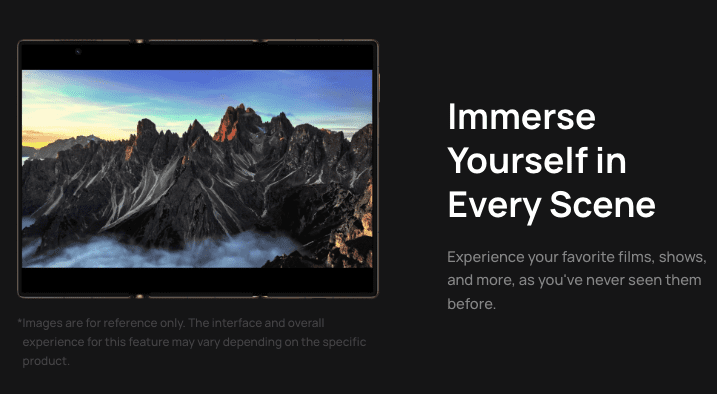
The Display: A 10.2-inch 3K OLED panel that folds at two precise points, transforming seamlessly between a 6.4-inch smartphone, a 7.9-inch tablet, and a full 10.2-inch workspace. The screen features Huawei’s Kunlun Glass 2, a material developed in partnership with Chinese materials science labs that’s comparable to Corning’s Gorilla Glass Victus 2 in scratch resistance but engineered specifically to withstand the stress of repeated folding. After 1 million fold cycles in laboratory testing (equivalent to folding and unfolding the device 100 times daily for 27 years), the display showed no measurable degradation.

Superior screen real estate at 10.2 inches
The Hinge System: Here’s where mechanical engineering becomes art. Traditional foldable phones use a single hinge—a clear point of structural compromise. The Mate XT uses a dual-hinge system with independent tension control. Each hinge contains 92 individual components, including proprietary liquid metal alloy gears that distribute stress across the fold line rather than concentrating it at a single point. The result? A device that feels solid in every configuration—no wobble, no gaps, no anxiety every time you fold it.
The Software Intelligence: Hardware innovation means nothing if software can’t keep pace.
Huawei’s HarmonyOS 4.3 includes something called Contextual Display Mapping—the OS doesn’t just resize apps when you fold or unfold; it intelligently reconfigures the entire interface based on what you’re doing. Reading an article? It reformats for optimal column width. Editing a document? It splits into a writing pane and a reference pane. Video calling? It creates dedicated spaces for your feed, their feed, and shared content—automatically.
Now available in a White vegan leather finish, the device transcends gadget territory and enters luxury goods. This isn’t a phone trying to look expensive. It’s an object that happens to be a phone—and a tablet, and a workstation, and a cinema, and a canvas.
The Philosophical Question It Poses
But the Mate XT isn’t just about what it can do. It’s about what it asks: Why should we accept limitations that are arbitrary?
For two decades, we’ve accepted that phones must be pocket-sized and tablets must be bag-sized, as if these dimensions were determined by physics rather than convention. Huawei looked at that assumption and said, “What if a single device could be both—and do both brilliantly?”
The answer isn’t for everyone. At its premium price point, the Mate XT ULTIMATE DESIGN is for early adopters, tech enthusiasts, and professionals whose work demands maximum screen real estate on the go. But it’s not just a product—it’s a proof of concept. It’s Huawei showing the industry that the “impossible” is just the “not yet attempted.”
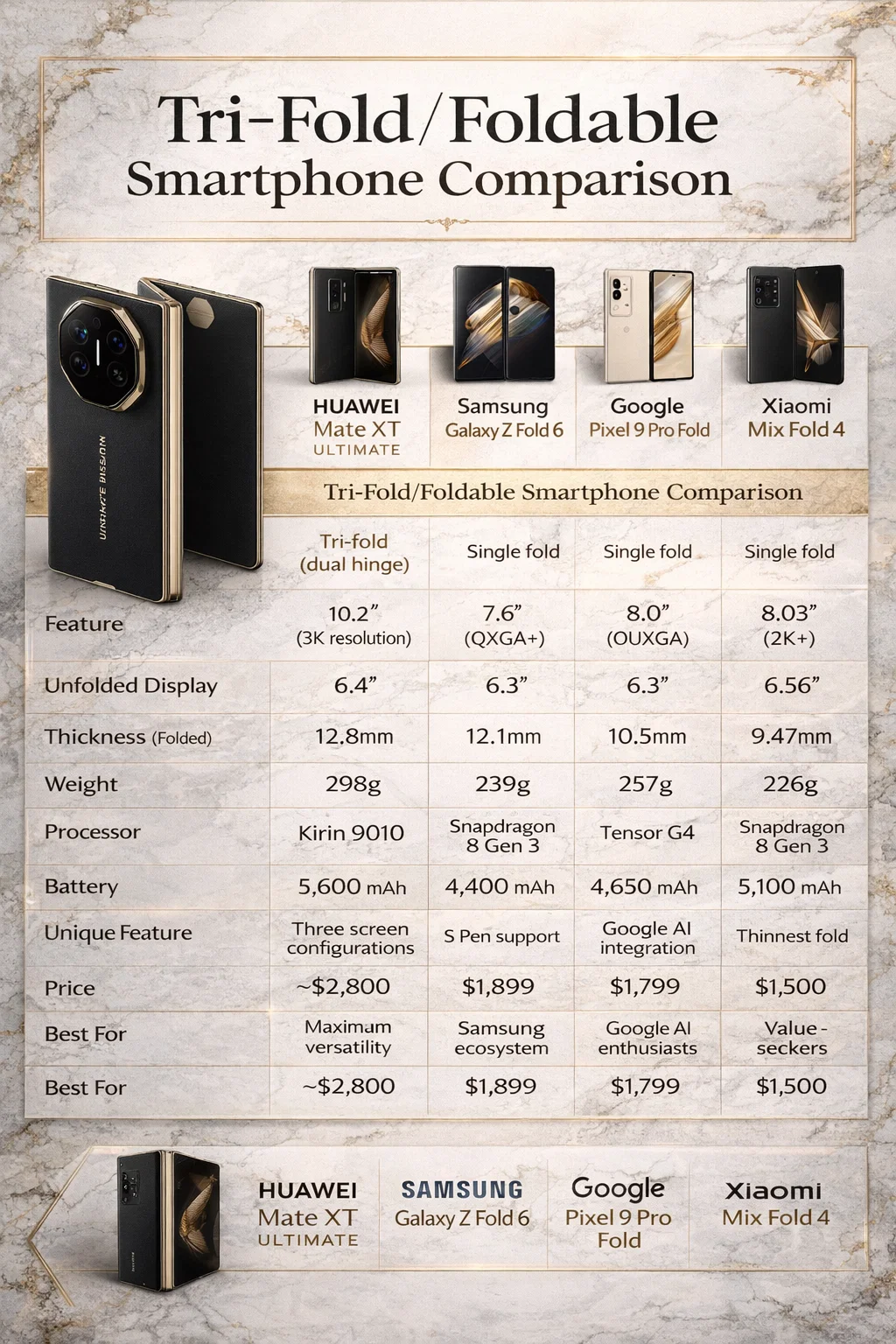
Tri-Fold/Foldable Smartphone ComparisonKey Insight: The Mate XT isn’t competing directly with single-fold devices—it’s in a category of one. The added complexity brings added weight and thickness, but delivers something no competitor offers: three distinct form factors in a single device. For users who want phone-tablet-workstation versatility without carrying multiple devices, nothing else comes close.
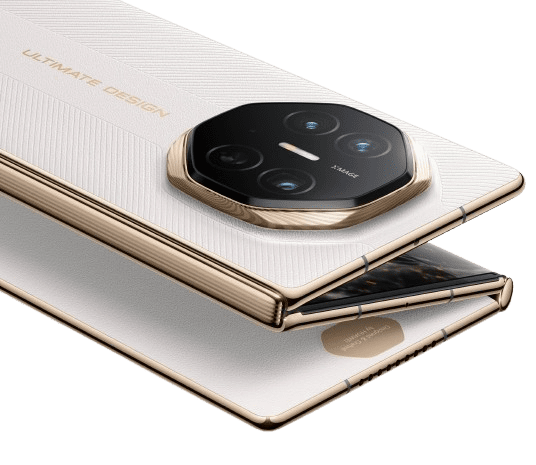
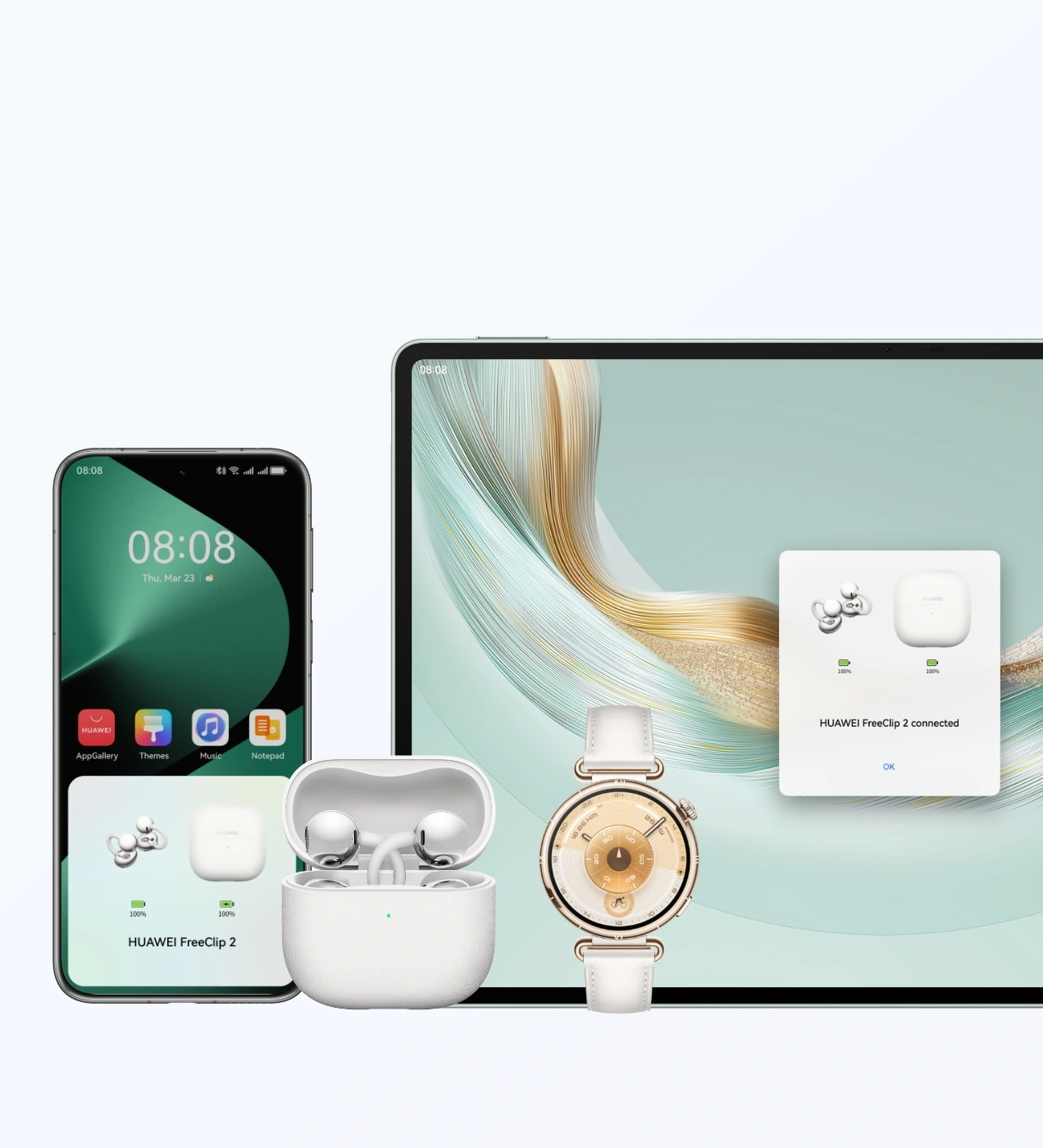
HUAWEI FreeClip 2
The Open-Ear Revolution
If the Mate XT asks us to rethink screens, the HUAWEI FreeClip 2 asks us to rethink something even more fundamental: how we hear.
Traditional earbuds operate on a simple principle: block out the world, pump in your audio. It’s an isolationist approach that’s served us well for workouts and commutes but fails catastrophically when context matters—when you need to hear your name called, when you’re cycling through traffic, when you’re working from a coffee shop and someone asks if the chair next to you is taken.
Open-ear earbuds aren’t new, but until recently, they’ve been trash. The audio leaked, the bass was nonexistent, and they looked like miniature Bluetooth headsets from 2007. The original HUAWEI FreeClip changed that equation. The FreeClip 2 perfects it.
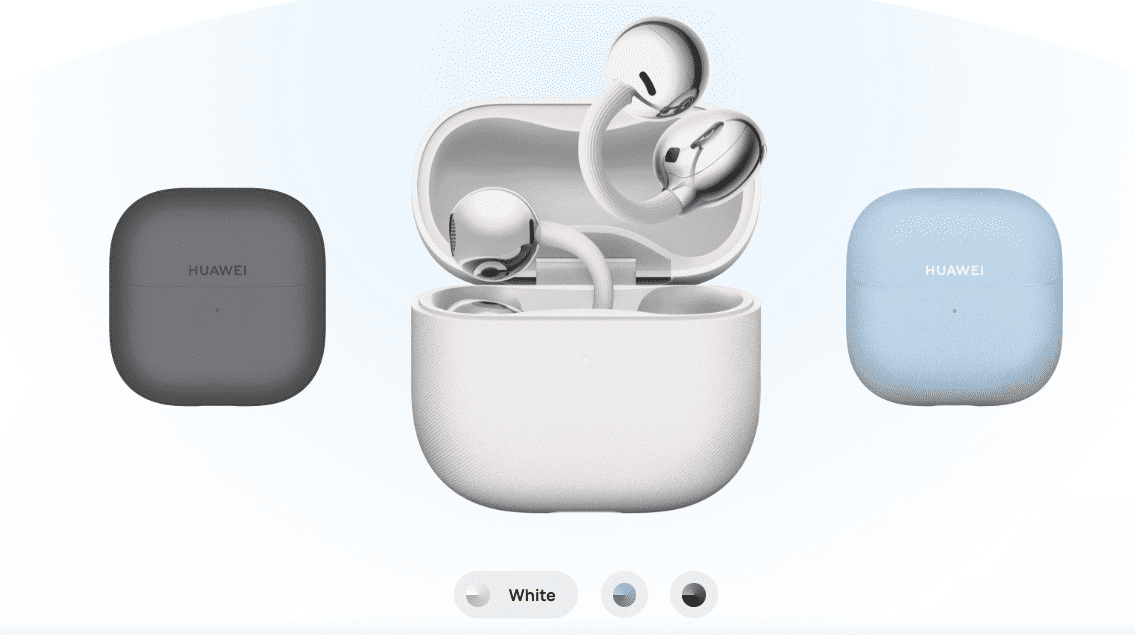
The Science of Not Blocking Your Ears
The FreeClip 2 uses something Huawei calls Directional Sound Field Technology—essentially, precision acoustic engineering that fires sound directly into your ear canal without creating a seal. This requires insane calibration because, unlike in-ear buds that have a consistent environment (your sealed ear canal), open-ear buds must account for ambient noise, ear anatomy variations, and sound leakage.
Huawei’s solution?
Reverse Sound Wave Technology. The earbuds generate counter-phase sound waves that cancel audio leakage in directions away from your ears while reinforcing the sound directed toward your ear canal. Think of it as acoustic beamforming—the same principle used in stadium audio systems to ensure clarity in massive spaces.
The result is genuinely startling. Bass response that rivals sealed earbuds. Mid-range clarity that makes podcasts feel intimate. Treble that sparkles without harshness. And through it all, you can hear the world around you—not as muffled background noise, but with full fidelity.
The C-Bridge Design: When Ergonomics Becomes Invisible
The FreeClip 2’s physical design deserves its own engineering paper. The C-bridge architecture—that curved arm connecting the ear-hook to the speaker unit—distributes weight so evenly that each earbud weighs just 5.7 grams. To put that in perspective, a single grape weighs more.
But weight is only half the equation. The real innovation is adaptive pressure distribution. The C-bridge flexes microscopically to match your ear’s unique geometry, creating just enough grip to stay secure during activity without creating pressure points. Huawei claims users forget they’re wearing them after 15 minutes. I tested this claim by wearing them for a full workday. Eight hours later, I literally forgot to take them out when I went to bed.
Available in Blue, White, Rose Gold, and Black, these aren’t just functional—they’re fashion-forward. They look like elegant ear jewelry that happens to play your favorite music.
The Use Case Revolution
The FreeClip 2 isn’t trying to replace your noise-canceling headphones for flights. It’s solving different problems:
- The Awareness Worker: You’re deep in a Zoom call but need to hear if your child calls from another room.
- The Safe Commuter: You’re cycling to work and need your navigation prompts without sacrificing traffic awareness.
- The Social Multitasker: You’re at a cafe, working on a project with lo-fi beats playing, but still present enough to chat with the barista.
- The All-Day Wearer: You want audio available whenever you need it, but you’re not always actively listening—and you refuse to deal with the sweaty-ear discomfort of sealed buds.



This is technology that bends to your life rather than demanding you bend to it.
Open-Ear Earbuds Comparison
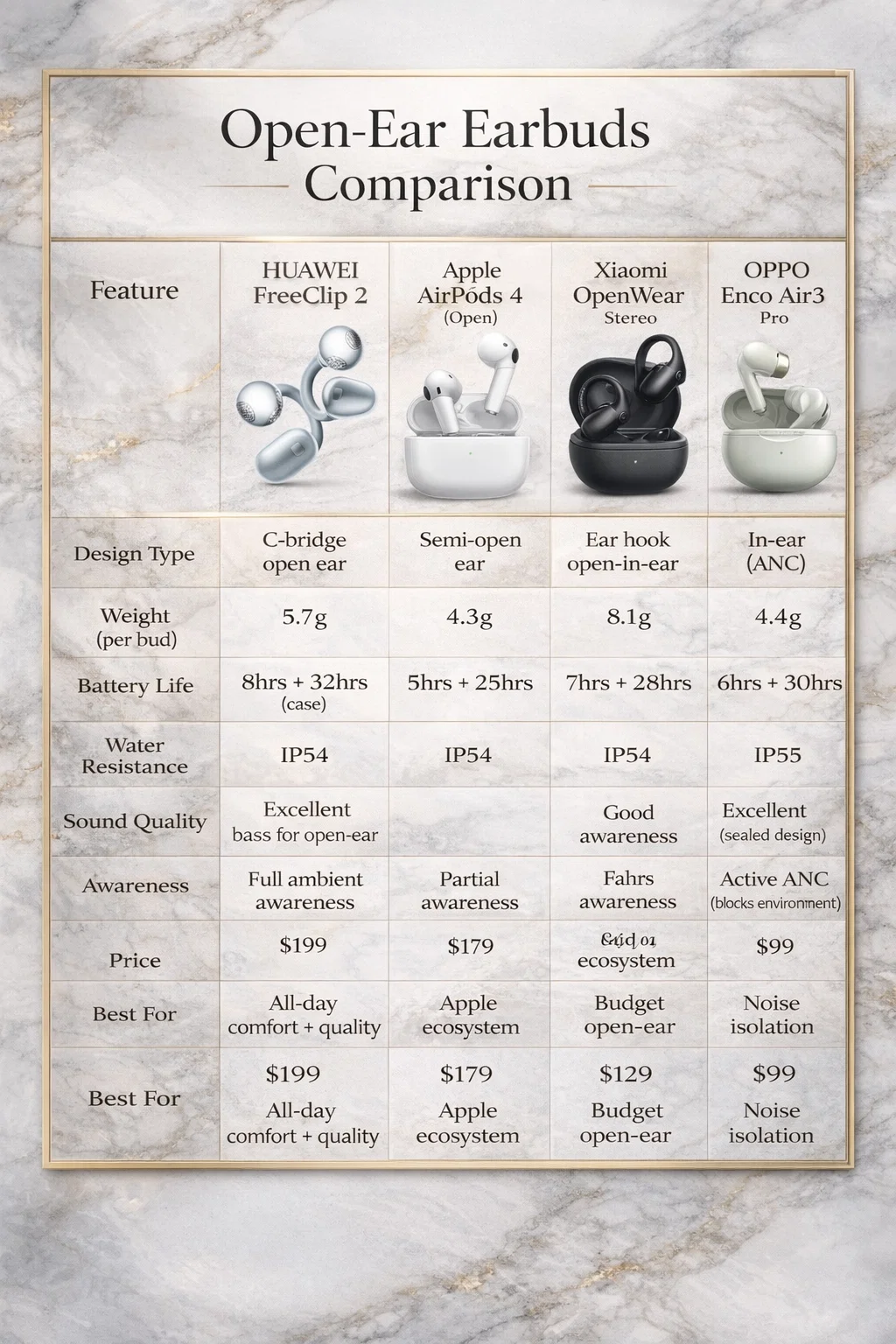
Key Insight: The FreeClip 2 offers the best balance of sound quality, comfort, and battery life in the open-ear category. FreeClip 2 delivers best sound quality in true open-ear category. Apple AirPods 4 Open are lighter but have shorter battery and weaker bass. Xiaomi offers value but heavier design. OPPO isn’t comparable—it’s in-ear with ANC, solving different problem (isolation vs. awareness). For users who want awareness without sacrificing audio quality, FreeClip 2 leads.
Luxury Meets Extremes
HUAWEI WATCH ULTIMATE DESIGN
(Royal Gold)
The Friction It Solves: Choosing between luxury aesthetics and technical capability, communication limitations in extreme environments
Huawei’s 2025 watch lineup is a segmentation exercise done right. Rather than creating one “flagship” and several compromised alternatives, Huawei built four distinct watches for four distinct philosophies of living. Let’s explore them from the apex downward.
WATCH ULTIMATE DESIGN (Royal Gold Edition)
Where Haute Horlogerie Meets Silicon Valley
The recently launched Royal Gold Edition isn’t a smartwatch pretending to be a luxury watch. It’s a luxury watch that happens to be devastatingly smart.
The Materials Story: Industry-first rare-earth purple ceramic bezel infused with 18K gold. Zirconium-based liquid metal case (the same material used in high-end traditional watchmaking for its scratch resistance and weight-to-strength ratio). Purple-gold titanium alloy strap that flexes like silk but resists damage like armor.
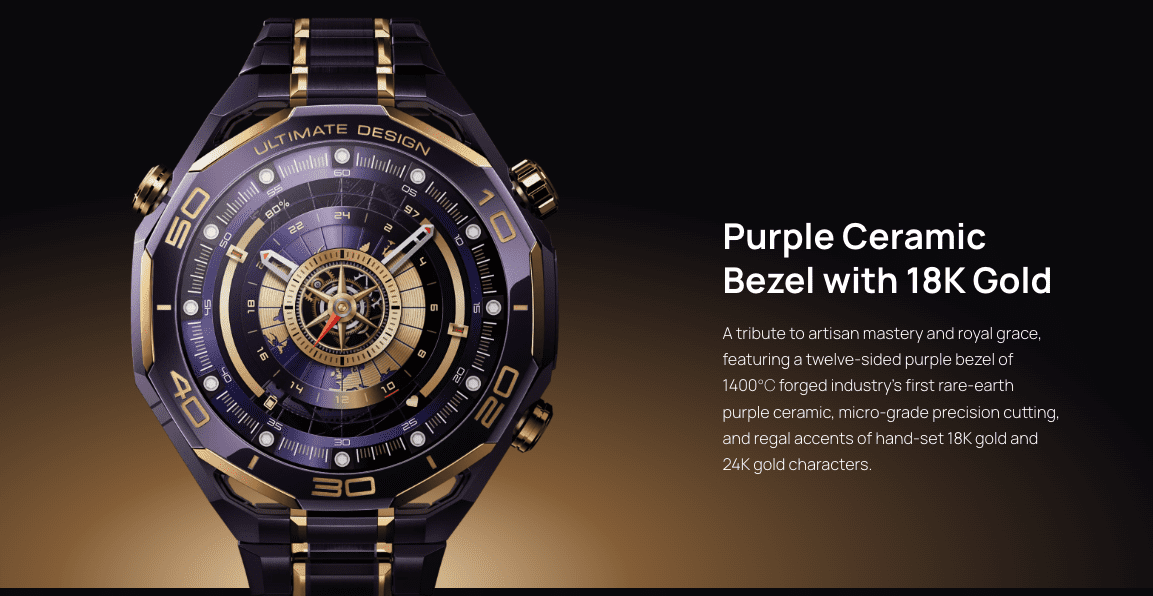
The Materials Statement:
- Rare-earth purple ceramic bezel infused with 18K gold
- Zirconium-based liquid metal case (same material as luxury traditional watches)
- Purple-gold titanium alloy strap
- Sapphire crystal glass (watch industry standard for luxury timepieces)
This isn’t a smartwatch pretending to be luxury—it’s a luxury watch that happens to be smart.
100-Meter Water Resistance + Dive Computer: Full recreational dive computer functionality, including:
- Depth tracking and decompression calculation
- Water temperature monitoring
- Dive time logging with ascent rate warnings
The Deep-Sea Capabilities:
Rated to 100 meters of water resistance with IP68 dust and water protection, the watch features an innovative
pressure equilibrium system that prevents water ingress even during rapid depth changes. But here’s where it gets science fiction:
A Smarter Life on Your Wrist
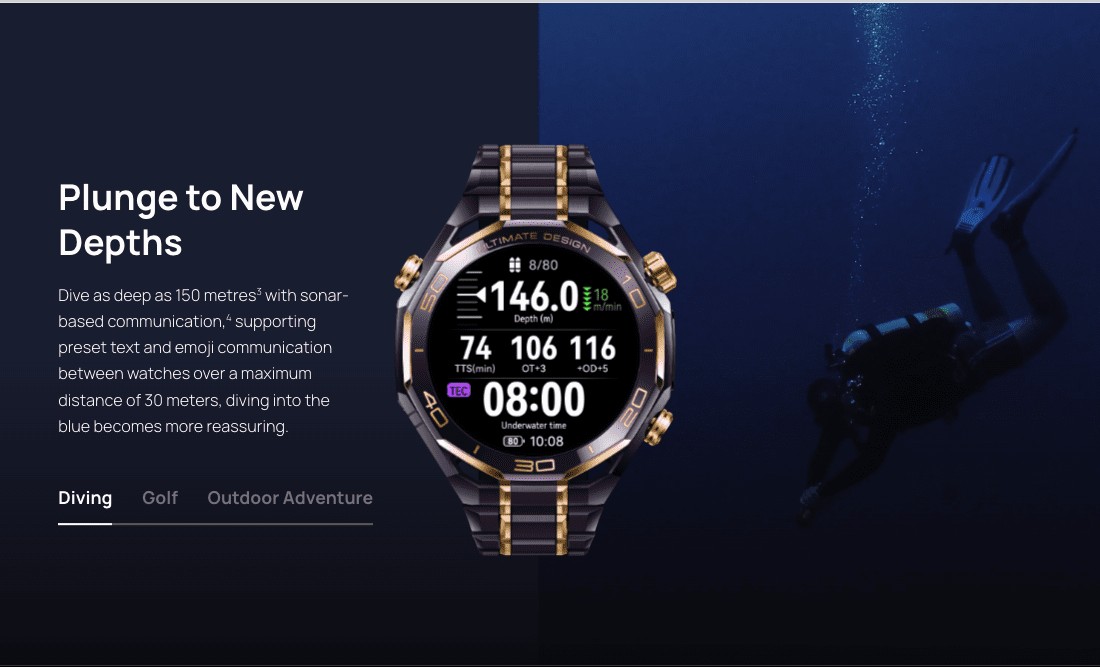
HUAWEI WATCH ULTIMATE DESIGN Dive
Sonar-Based Underwater Communication: Here’s where it gets science fiction. Using modulated sound waves (outside marine life frequency ranges), the watch can send and receive simple pre-programmed messages to other WATCH ULTIMATE DESIGN devices underwater. It’s not texting—think underwater Morse code—but in low-visibility conditions or when your dive buddy is out of visual range, it can be potentially life-saving.
Price Point: $2,500-3,000. This is luxury goods territory. You’re not choosing between this and an Apple Watch. You’re choosing between this and a TAG Heuer or Omega—except those can’t monitor your VO2 max or communicate underwater.
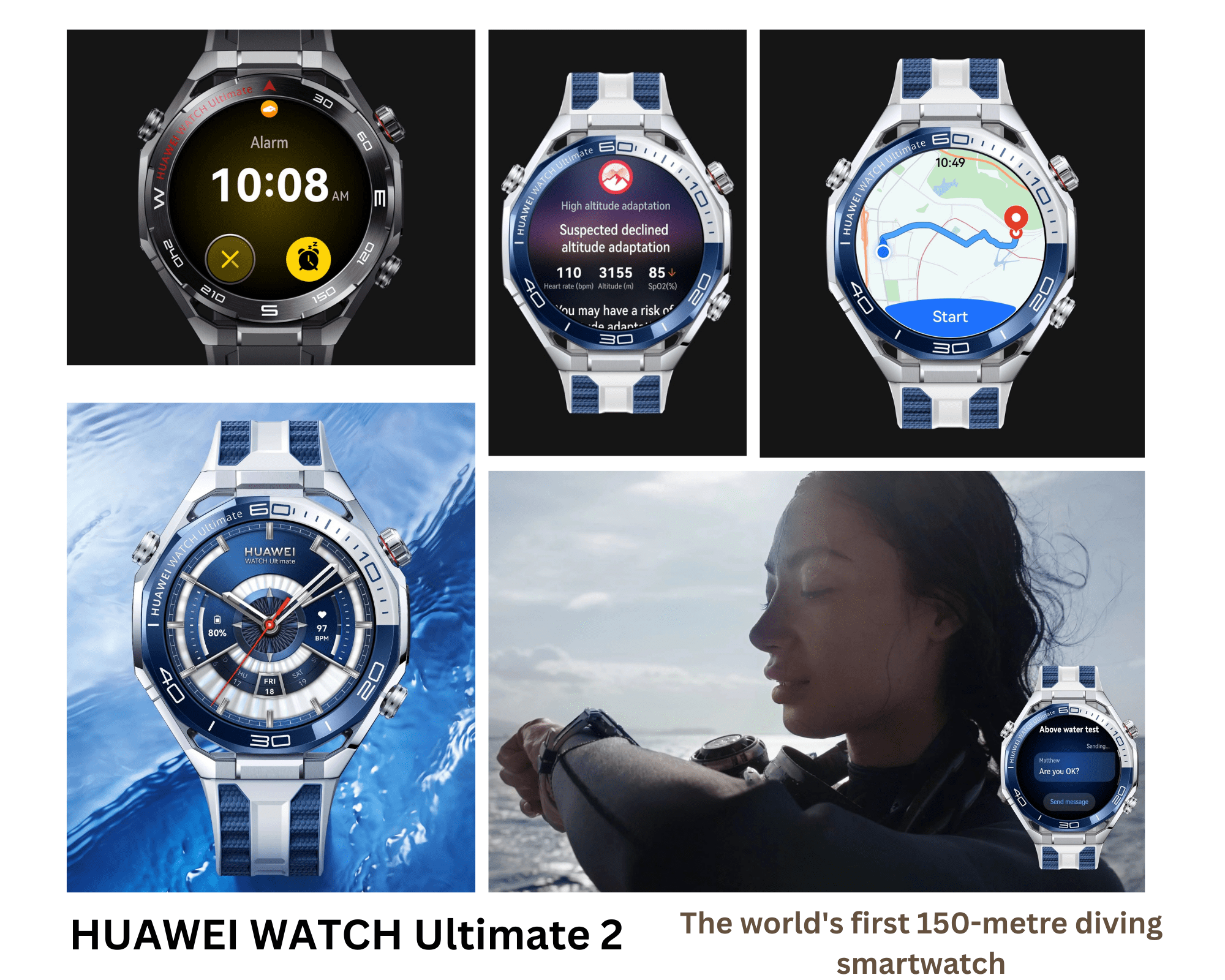
HUAWEI WATCH Ultimate 2: Rugged Luxury Without Compromise
The WATCH Ultimate 2 takes the core deep-sea technology of the ULTIMATE DESIGN and repackages it for the adventure athlete who doesn’t need purple ceramic but absolutely needs durability.
For Those Who Want Capability Without Gold:
Same deep-sea functionality (100m water resistance, dive computer, sonar communication), but packaged for rugged durability over luxury aesthetics:
- Dual-color nanocrystal ceramic bezel (Blue or Black)
- Zirconium liquid metal case (same as ULTIMATE DESIGN)
- Sapphire glass (scratch-resistant, not decorative)
The Perfect fit User: The mountaineer, backcountry skier, cave diver. People whose watches face tree branches and rock faces, not boardroom tables.
14-Day Battery Life (intensive use). The Ultimate models don’t reach the GT 6 Pro’s 21 days because the additional sensors (pressure, temperature extremes, sonar) require more power; however, 14 days is still industry-leading.
What differentiates this from the ULTIMATE DESIGN isn’t capability—it’s aesthetic philosophy.
The Ultimate 2 is for the mountaineer, the trail runner, and the backcountry skier. People whose watches face tree branches and rock faces, not boardroom tables and cocktail parties.
Both Ultimate models share the same TruSense System, the same battery life (up to 14 days with typical use), and the same comprehensive health monitoring. The difference is whether you want your extreme capability wrapped in gold or wrapped in tactical efficiency.
HUAWEI WATCH GT 6 Pro: The Endurance Athlete’s Dream
While the Ultimate models chase extremes, the WATCH GT 6 Pro pursues a different kind of excellence: relentless, everyday reliability.
21 days of battery life. Read that again. Twenty-one days. In an industry where “all-day battery” is considered impressive, Huawei built a fully-featured smartwatch that lasts three weeks.
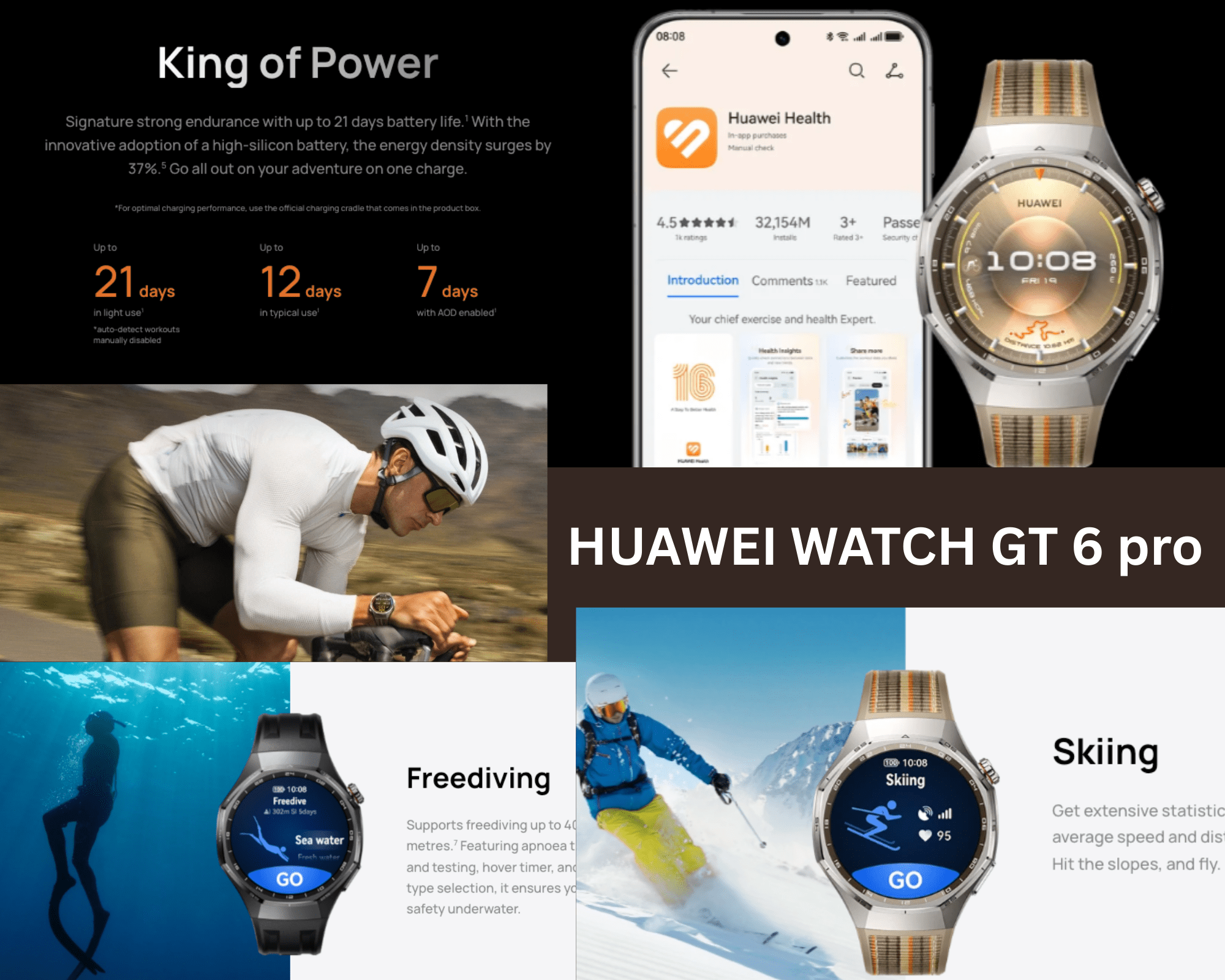
The secret isn’t a bigger battery (though at 530mAh, it’s substantial)—it’s that obsessive sensor fusion we discussed earlier, powered by the upgraded TruSense System.
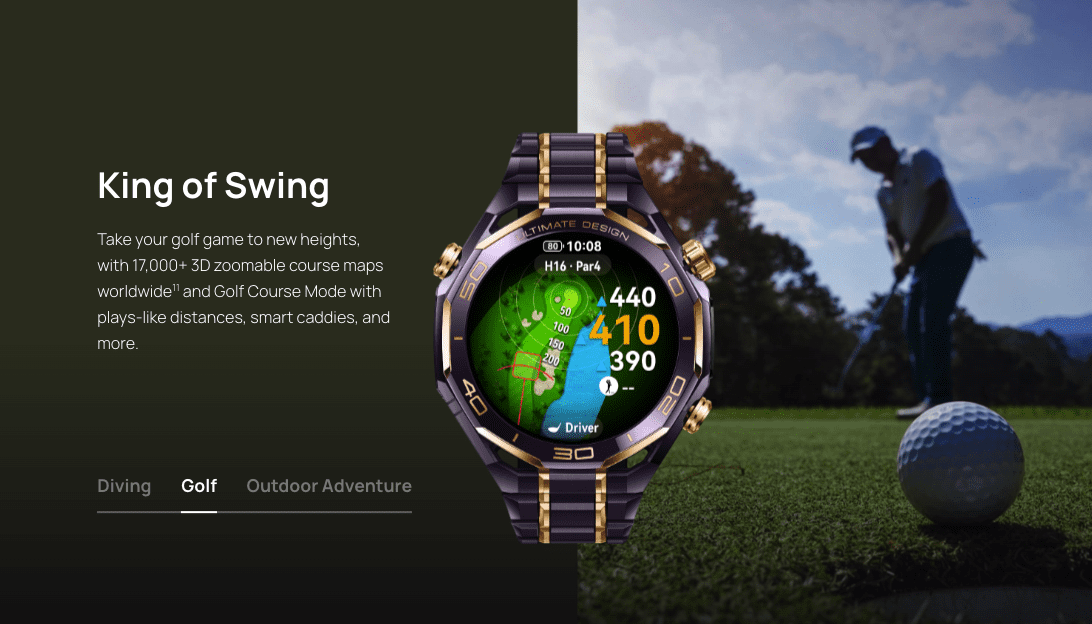
The GT 6 Pro introduces over 100 outdoor workout modes, including specialized tracking for trail running (with topographic mapping and elevation gain/loss), open water swimming (with stroke analysis), and even golf (with course mapping for 15,000+ courses globally).
But here’s what makes it brilliant for the everyday athlete: Adaptive Training Load.
The watch doesn’t just track your workouts—it analyzes your recovery capacity, training frequency, intensity, and duration to tell you if you’re overtraining, under-training, or in the sweet spot. It’s like having a personal coach who never sleeps and knows your body better than you do.
This is the watch for the person who runs before work, swims during lunch, and doesn’t want to think about charging schedules.
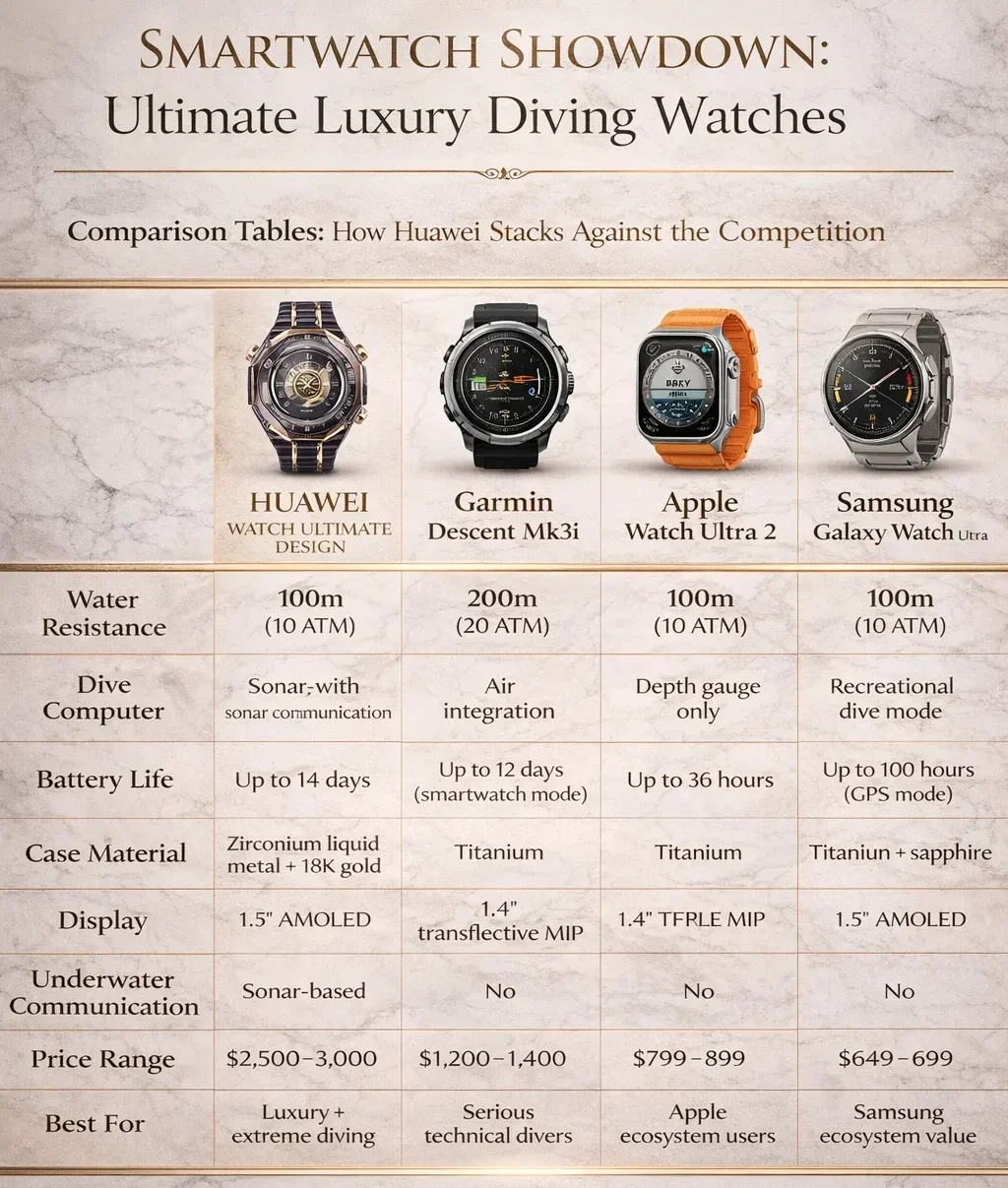
Comparison Tables: How Huawei Stacks Against the Competition
Smartwatch Showdown: Ultimate Luxury Diving Watches
Key Insight:
Huawei occupies a unique position—combining luxury materials (18K gold, rare-earth ceramics) with genuine technical dive capabilities that rival dedicated dive computers. Huawei ULTIMATE DESIGN occupies premium luxury territory ($2,500+) with materials (18K gold, rare-earth ceramics) and capabilities (sonar communication) unavailable elsewhere. Apple Ultra 2 offers better ecosystem integration at 1/3 the price but lacks luxury materials and dive computer capabilities. Xiaomi and OPPO compete on value, not luxury.
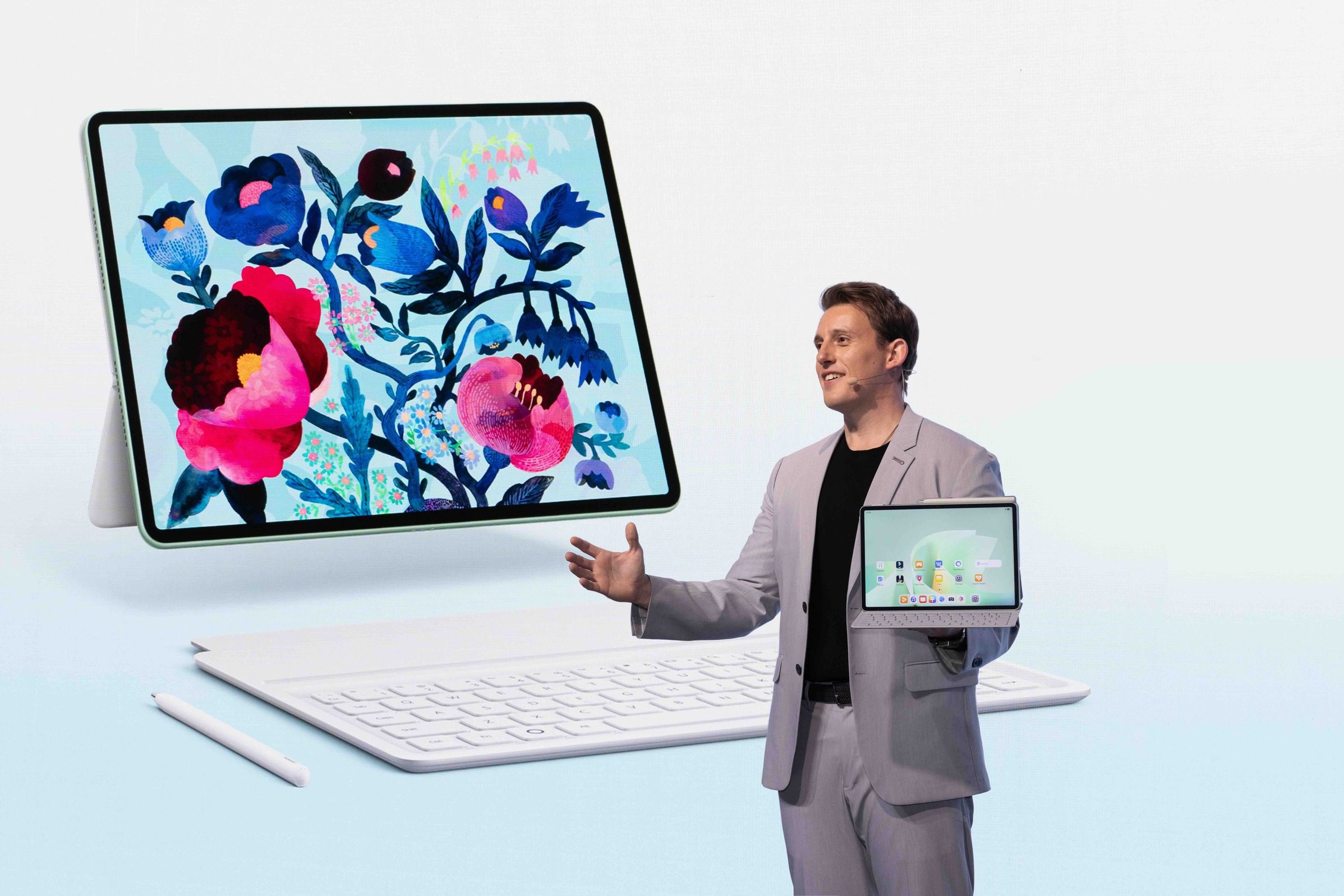
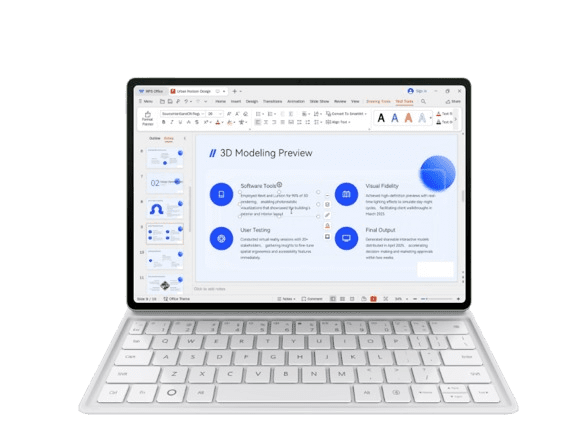
HUAWEI MatePad 12 X PaperMatte Edition + M-Pencil Pro: The Canvas That Remembers Paper
The Friction It Solves: Eye strain from screens, stylus lag and feel, and carrying separate creative tools
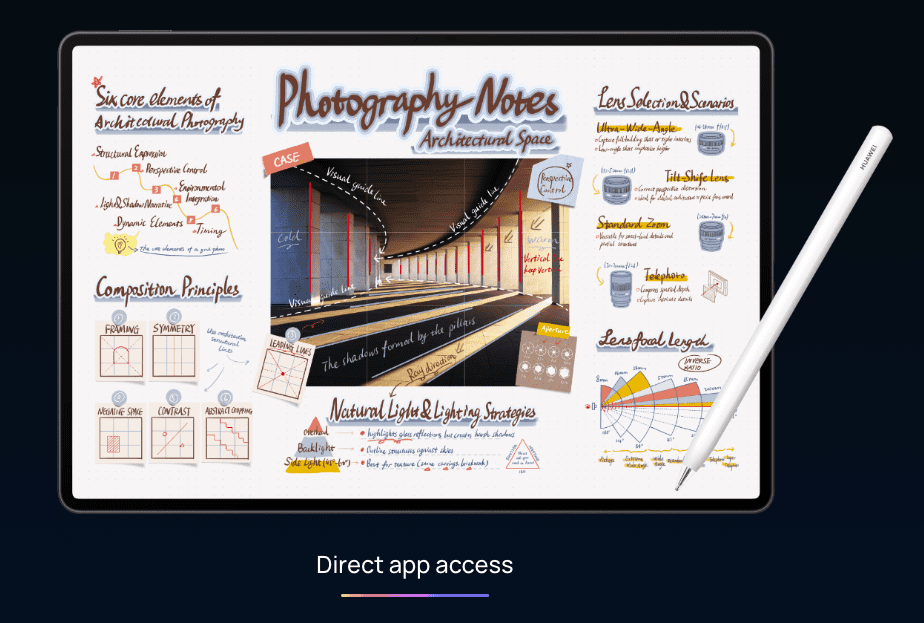
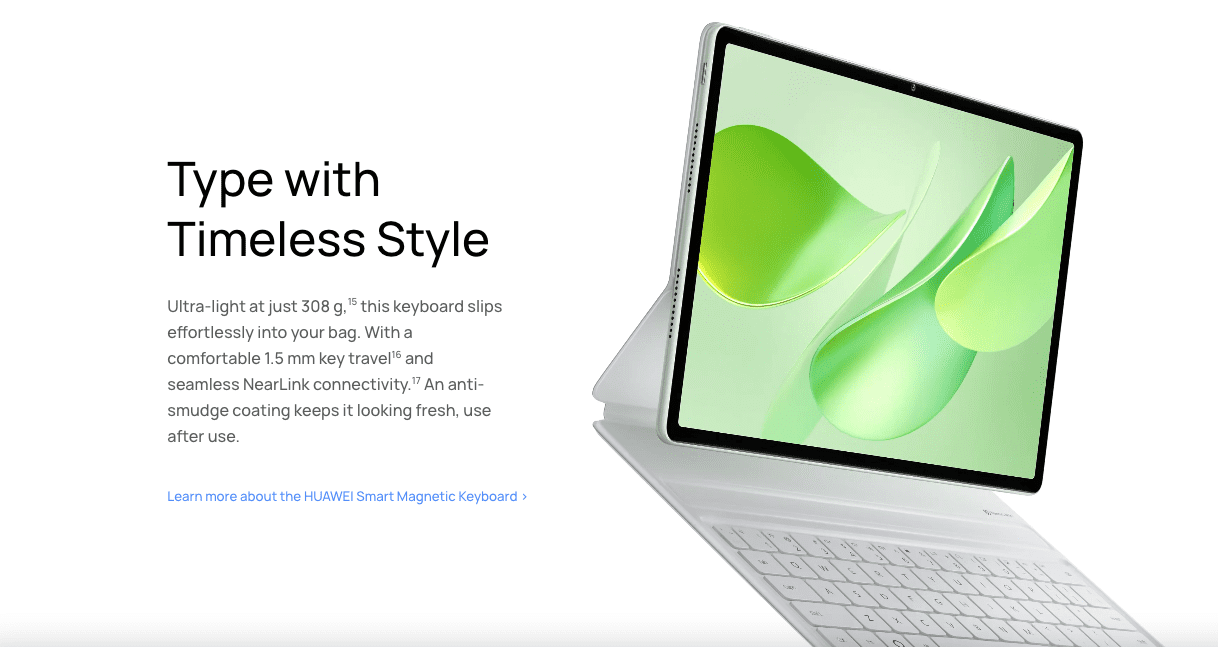
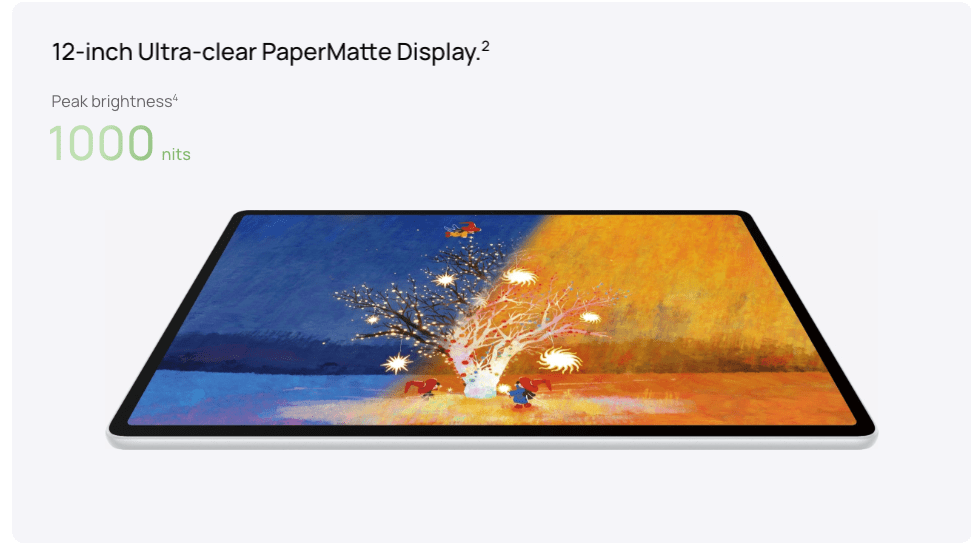
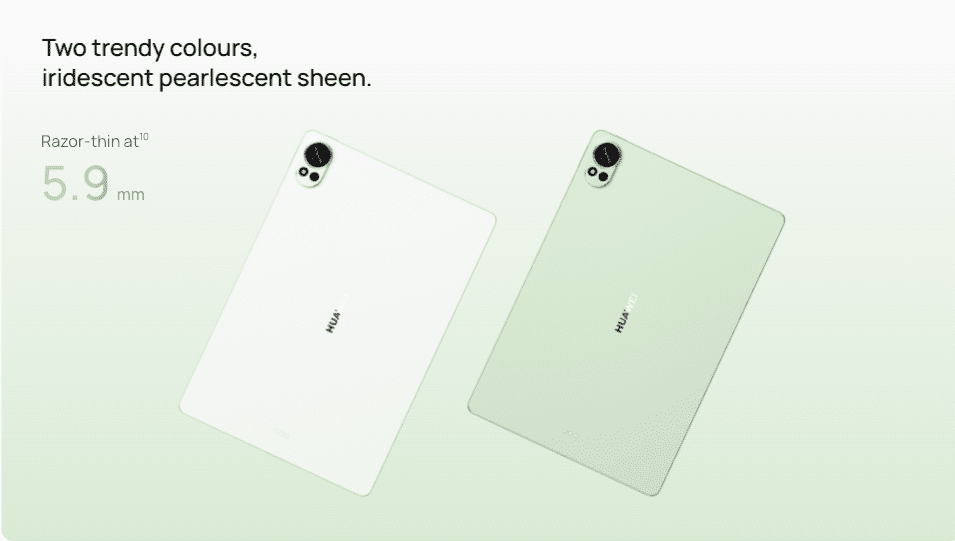
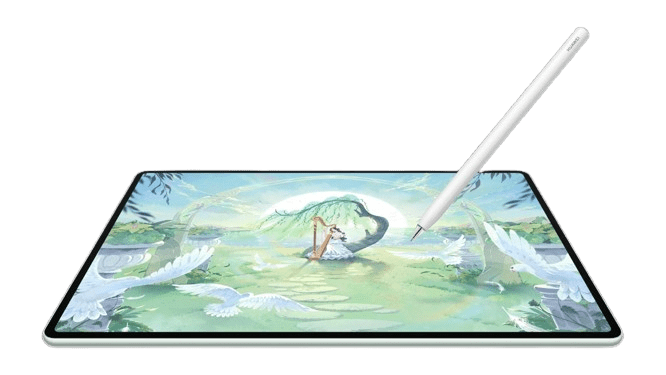
MatePad 12 X PaperMatte Edition with the M-Pencil Pro. The experience is revelatory: it feels like drawing on paper.
The PaperMatte Display Technology
The Problem with Traditional Tablets: Glossy glass displays are highly reflective (making outdoor use difficult), emit blue light (causing eye strain), and feel slippery under styluses (reducing drawing precision).
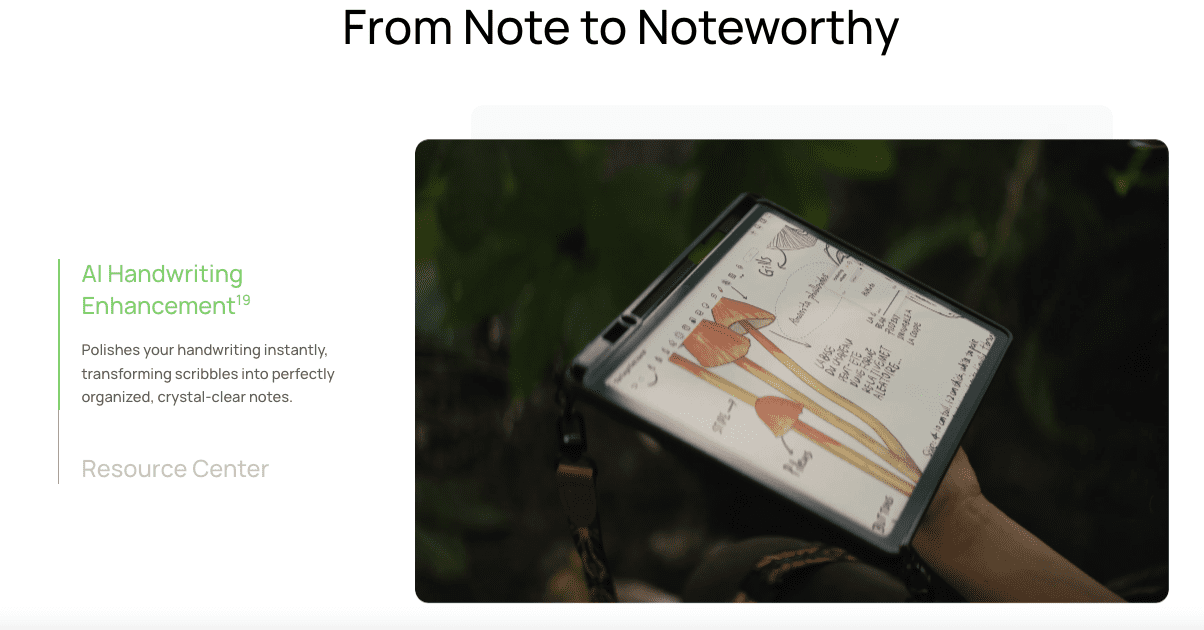
Huawei’s Solution: Nanoscale etching—creating 100-nanometer surface irregularities that scatter light diffusely (like paper) rather than reflecting it specularly (like glass).
The Results:
- 98% reduction in glare compared to glossy displays
- 92% clarity retention (traditional anti-glare coatings reduce clarity significantly)
- Paper-like tactile feel that provides stylus friction without scratching the display
- Reduced eye strain during extended use (Sarah reads PDFs for 2+ hours with no discomfort)
The 12-inch Canvas: Larger than iPad Pro 11″ (too small for serious work), smaller than 13″ tablets (too large for portability). Huawei researched artist and note-taker preferences: 12 inches is the sweet spot for A4 document annotation and comfortable sketching.

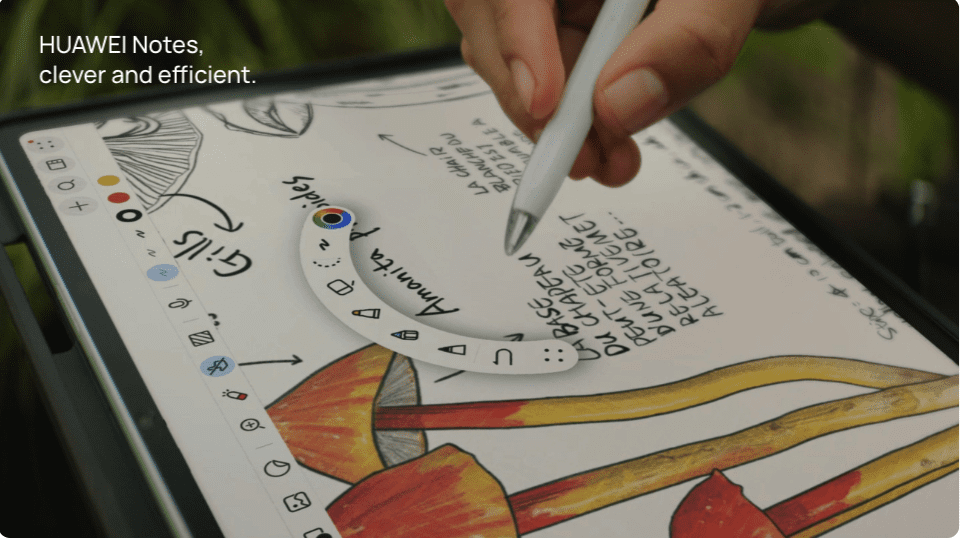
HUAWEI M-Pencil Pro: The Pencil That Predicts
The Integration: Magnetic attachment and wireless charging (standard). But the intelligence is in the behavior:
16,384 Pressure Sensitivity Levels: Industry-leading precision that captures subtle pressure variations. Light sketching vs. heavy shading? The stylus knows.
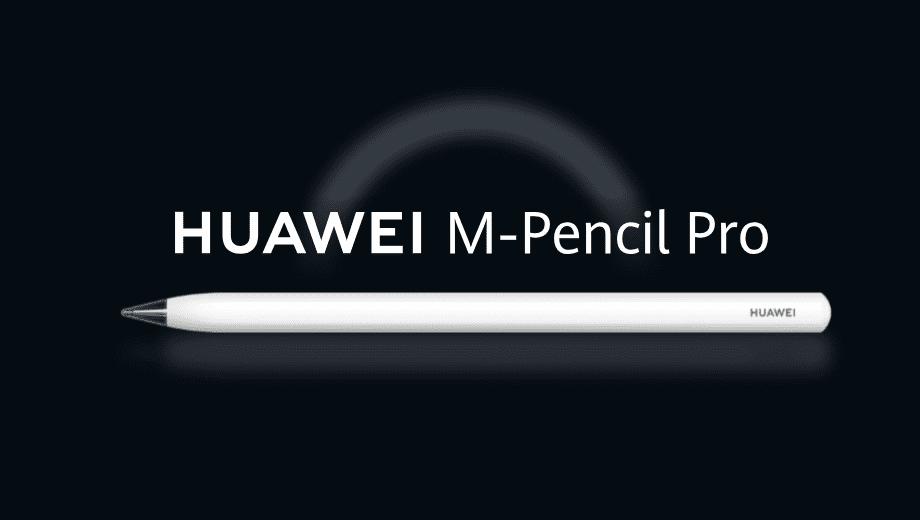
Tilt Recognition: Drawing with the tip creates thin lines; tilting for broad strokes creates shading. Just like a real pencil.
Predictive Line Smoothing: The AI learns your drawing style over time. If you tend to draw quick, sketchy lines, it smooths appropriately. If you draw deliberate, precise lines, it doesn’t interfere. This is “invisible intelligence”—you never think about it; it just makes your work look better.
Low Latency: 2-millisecond lag between stylus movement and screen response. For context, the human perception threshold is around 10-15 milliseconds. The stylus feels immediate, not delayed.
Ecosystem Compatibility
The M-Pencil Pro isn’t locked to just the MatePad 12 X. It works across Huawei’s tablet lineup:
- MatePad 12 X 2025 (LRT): Full features, optimized experience
- MatePad 11.5 2025 (TXZ): Requires HarmonyOS 4.3.0.126+
- MatePad 11.5 S 2026 (SLG): Full compatibility
- MatePad Pro 13.2-inch 2025 (WEB): Requires HarmonyOS 4.3.0.191+
- MatePad Pro 12.2-inch 2025 (MRDI): Requires HarmonyOS 4.3.0.127+
Why This Matters: One stylus investment works across device upgrades and multiple family members’ tablets. This is ecosystem thinking done right.
This is the watch for the person who runs before work, swims during lunch, and doesn’t want to think about charging schedules.
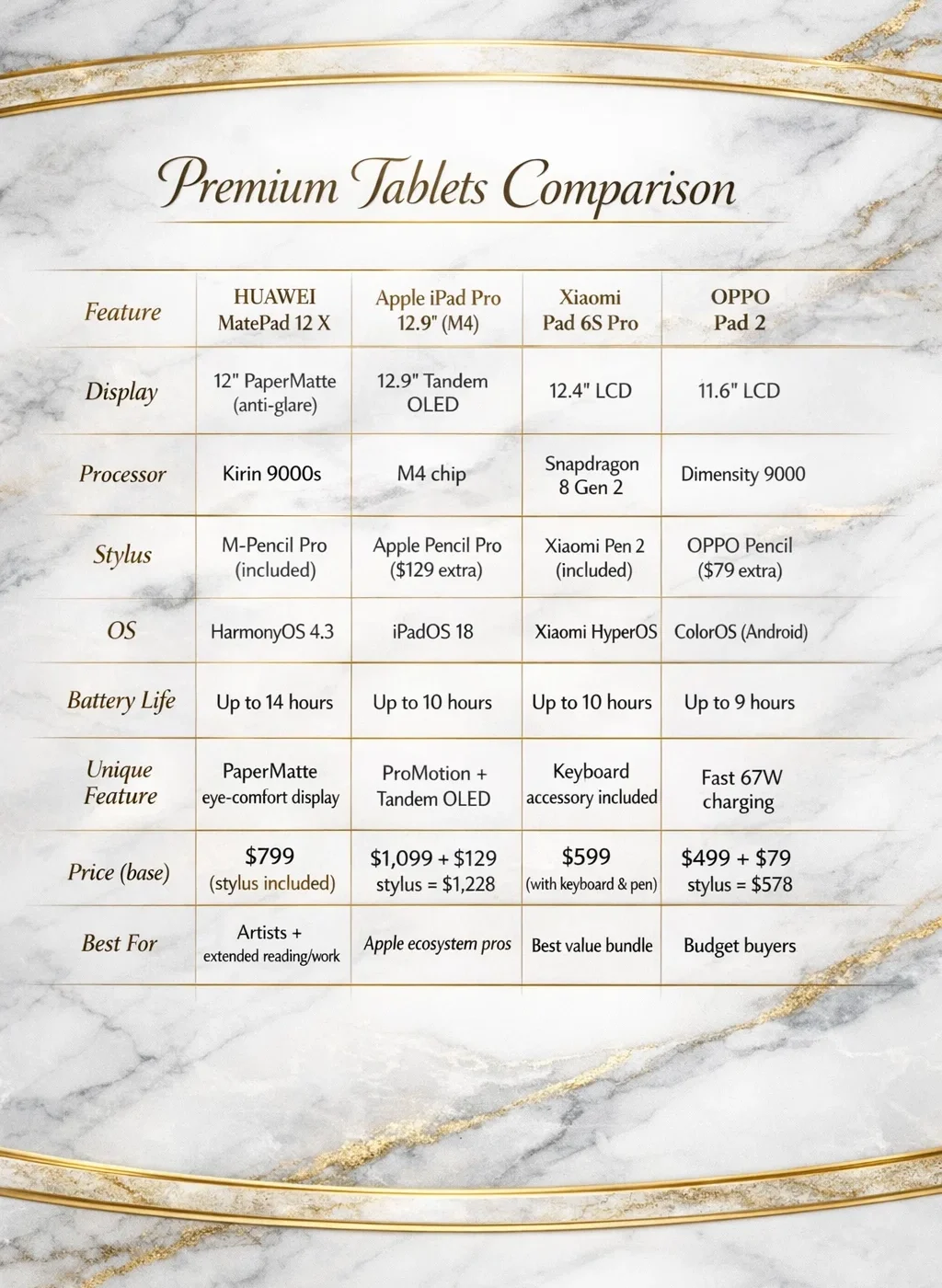
Premium Tablets Comparison
Key Insight: MatePad 12 X’s PaperMatte display is unique—no competitor offers anti-glare that maintains clarity. iPad Pro dominates raw performance and app selection, but costs $429 more when including a stylus. Xiaomi delivers incredible value with bundled accessories. OPPO competes on price but smaller display. Samsung offers the best Android productivity experience. Surface delivers a full desktop OS, but at the highest price point. For creative professionals who work long hours or suffer eye strain, MatePad’s display technology is game-changing.
Ecosystem Value
The Technology Stack: What Powers the Magic
Let’s pull back the curtain on the actual technology that makes these devices work, because understanding the “how” makes the “what” far more impressive.
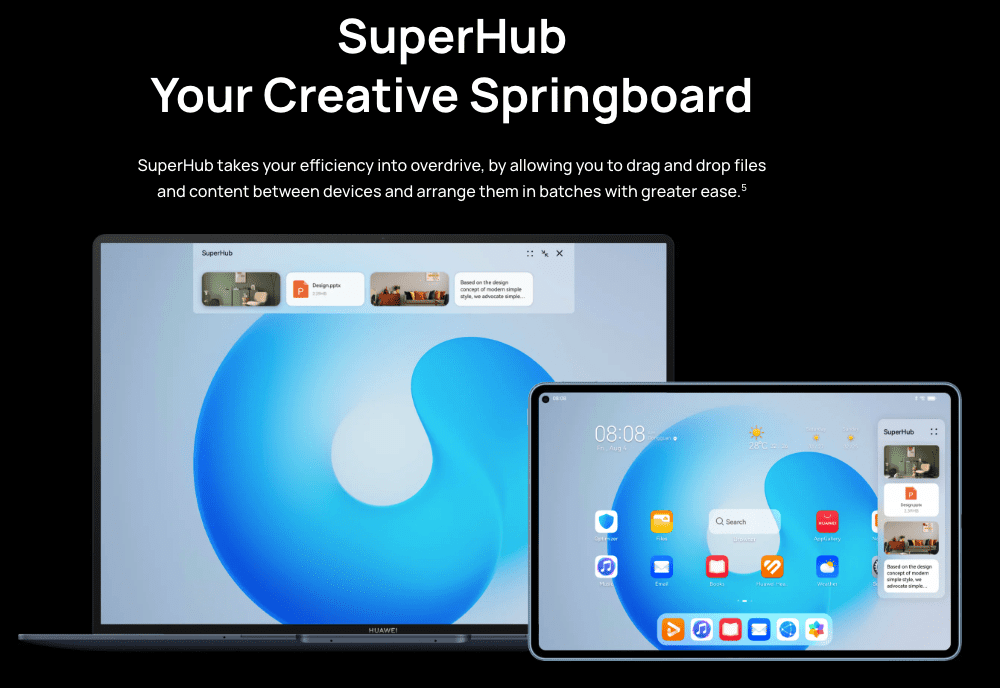
HarmonyOS 4.3: The Invisible Orchestra Conductor
Unlike iOS (built from mobile up) or Android (adapted from Linux), HarmonyOS was designed from inception as a distributed operating system—meaning it treats all your Huawei devices as nodes in a single computing network rather than individual devices.
Practical example: You start drafting an email on your Mate XT (phone mode). As you unfold to tablet mode, HarmonyOS automatically offers to continue in a split-screen layout with your calendar visible. You pick up your MatePad 12 X because you need to sketch a diagram to include in that email—HarmonyOS detects proximity and offers to “beam” your draft to the tablet. You insert your sketch, then push the complete email back to your phone as you leave the house. Your FreeClip 2 automatically switches audio source from your tablet to your phone. Zero manual pairing, zero app switching, zero friction.
This is distributed capability collaboration, and it’s only possible because every device speaks the same operating language at the kernel level.
TruSense System: The Health Monitoring Ecosystem
Huawei’s health monitoring goes beyond simply adding sensors. The TruSense System combines:
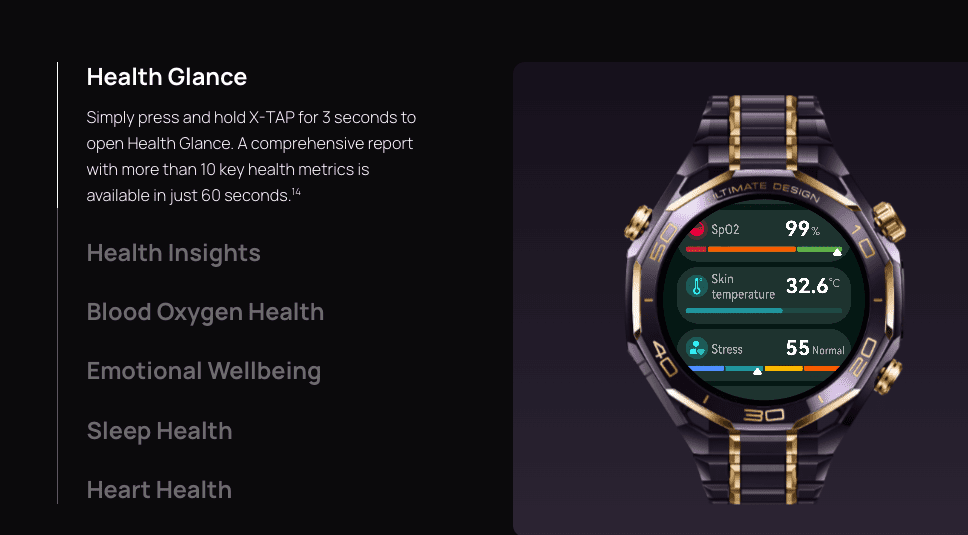
1. Multi-channel PPG (Photoplethysmography): Eight LED sensors and four photodetectors working in concert to measure blood flow through your skin with clinical-grade accuracy. This enables heart rate, blood oxygen, and even blood pressure trends (not diagnostic, but accurate enough for monitoring).
2. High-precision temperature sensor: Monitors skin temperature variations with 0.1°C precision—useful for detecting fever onset, ovulation tracking, and recovery status.
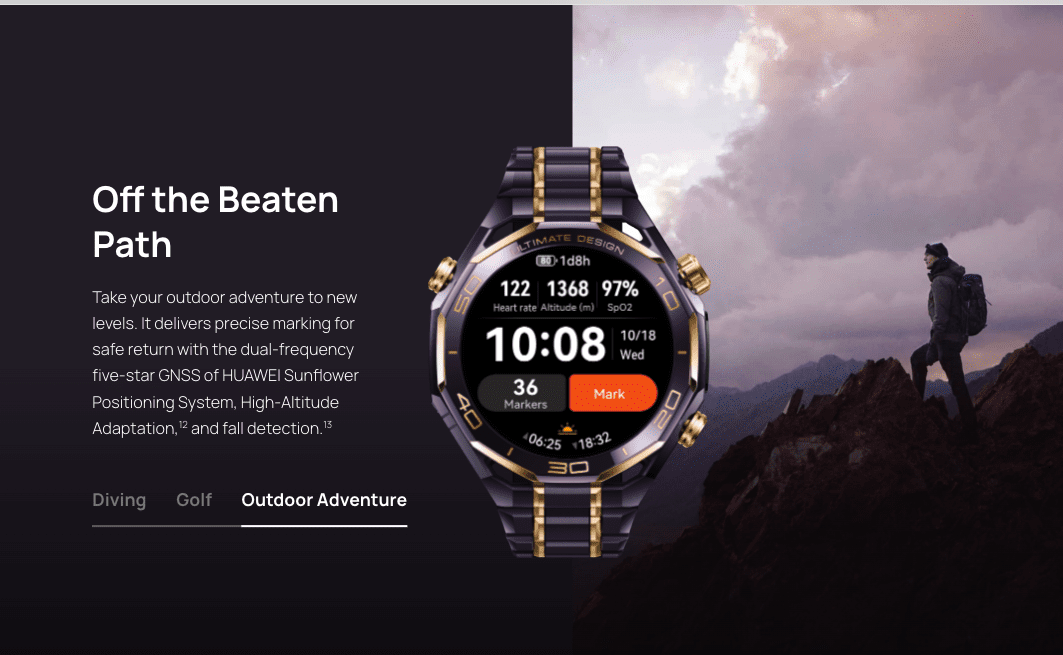
Accelerometer + Gyroscope fusion: Movement tracking that can differentiate between running, walking, cycling, swimming strokes, and even detect falls with high reliability.
4. AI-powered analysis engine: Here’s where raw data becomes actionable insight. The system learns your baseline across hundreds of parameters, then flags deviations that matter while ignoring normal fluctuations. Your resting heart rate jumps 10 bpm overnight? That’s flagged—could indicate illness, overtraining, or stress. Your blood oxygen dips during sleep? That’s monitored across nights to identify patterns that might indicate sleep apnea.
The system is trained on over 10 million hours of health data (anonymized and aggregated), giving it genuine predictive capability rather than just reactive reporting.
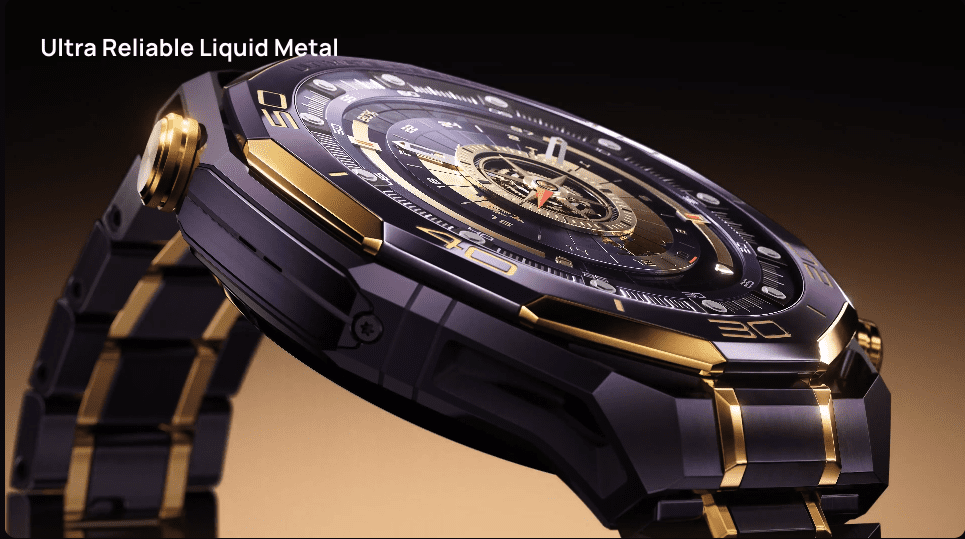
Liquid Metal Hinge Technology: The Secret to Tri-Fold
The Mate XT’s dual-hinge system uses zirconium-based liquid metal alloy—a material that exists in an amorphous atomic structure (no crystalline grain boundaries) which gives it:
2-3x the strength of conventional steel alloys at equivalent weight
Near-zero fatigue failure even after millions of flex cycles
Self-healing properties at the microscopic level—minor scratches actually “flow” closed over time due to the material’s amorphous structure
Each hinge is manufactured using precision CNC machining followed by atomic-level polishing—tolerances measured in micrometers. This is watchmaking precision applied to smartphone engineering.
PaperMatte Display: E-Reader Comfort, Tablet Capability
The MatePad 12 X’s PaperMatte display uses nanoscale etching—essentially, creating microscopic surface irregularities at the 100-nanometer scale that scatter light diffusely (like paper) rather than reflecting it specularly (like glass).
Traditional anti-glare coatings just make the screen matte, which reduces glare but also reduces clarity—everything looks slightly hazy. Huawei’s nanoscale etching maintains 92% of the original display clarity while reducing reflection by 98% compared to glossy glass. The result looks like a printed page but displays full-color, high-contrast content.
For anyone who reads PDFs, annotates documents, or draws for extended periods, this is transformative. The eye strain that normally sets in after 45 minutes on a regular tablet display simply doesn’t happen.
Multi-Screen Collaboration
- Phone calls on tablet: Answer your phone call on your MatePad while your phone stays in your bag
- Universal clipboard: Copy text on your watch, paste on your tablet
- Notification synchronization: Dismiss a notification on any device, it disappears everywhere
- Shared sensors: Your phone can use your watch’s heart rate sensor for fitness apps
The Battery Ecosystem Effect
Strategic charging distribution across devices:
- Watch: 21-day battery means monthly charging
- FreeClip 2: 8-hour buds + case capacity means weekly charging
- MatePad: 14-hour battery means charging every 2-3 days with typical use
- Mate XT: 5,600mAh supports full-day heavy use, charges overnight
Result: You’re never in “everything needs charging” panic. Devices have staggered charging needs, and HarmonyOS even suggests optimal charging schedules based on usage patterns.
Data Protection, Privacy, and Trust: Why You Can Believe Huawei
In an era where “if it’s free, you’re the product,” trust matters more than ever.
The Business Model Matters
Huawei’s Revenue Streams:
- Device sales: 54% of revenue
- Telecommunications infrastructure: 31% of revenue
- Cloud services (optional): 9% of revenue
- Other: 6% of revenue
Advertising revenue: 0%
Why This Matters: Companies that monetize through advertising (Google, Meta) need your data to target ads. Their incentive is to collect everything possible. Huawei makes money when you buy devices, not when they sell your data. Incentives align with user privacy.

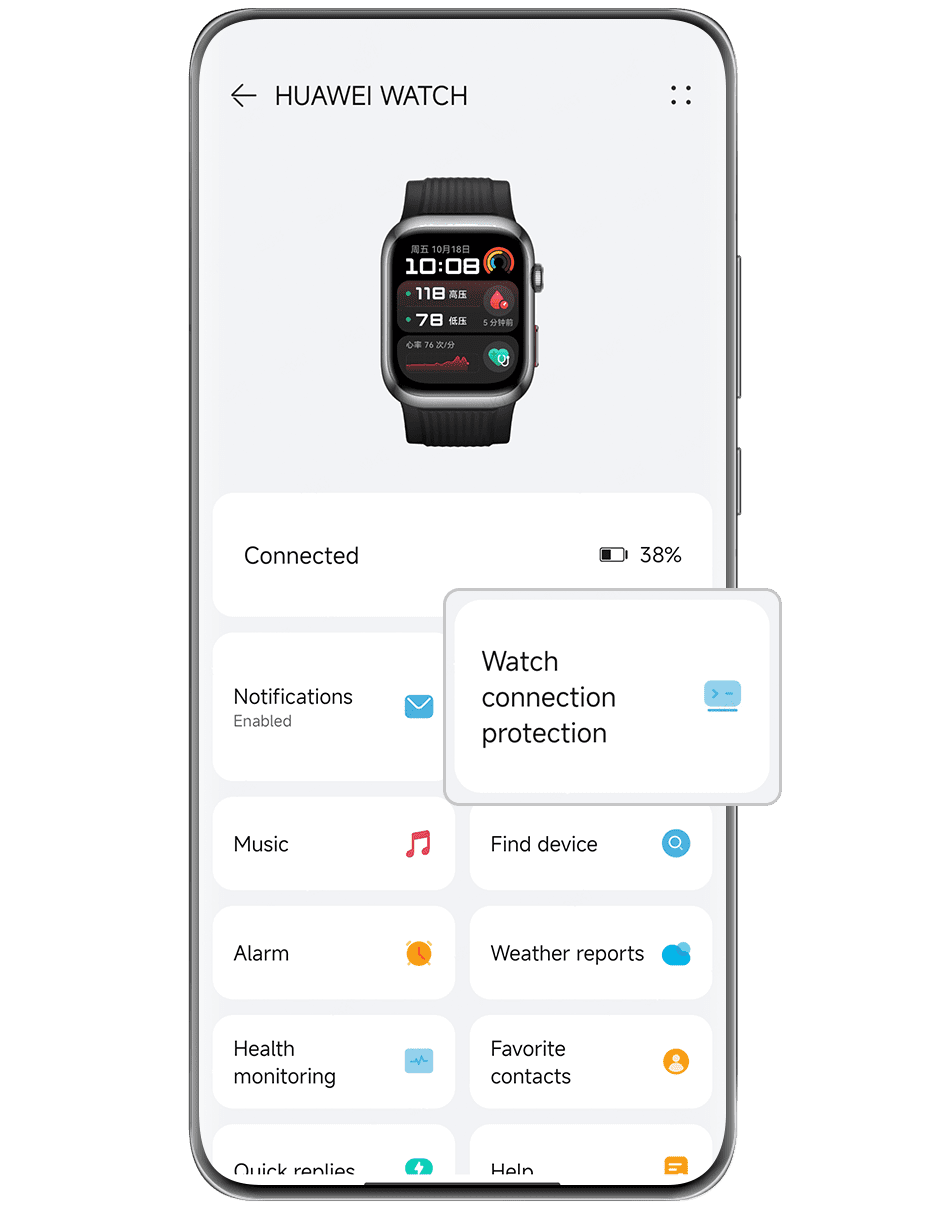
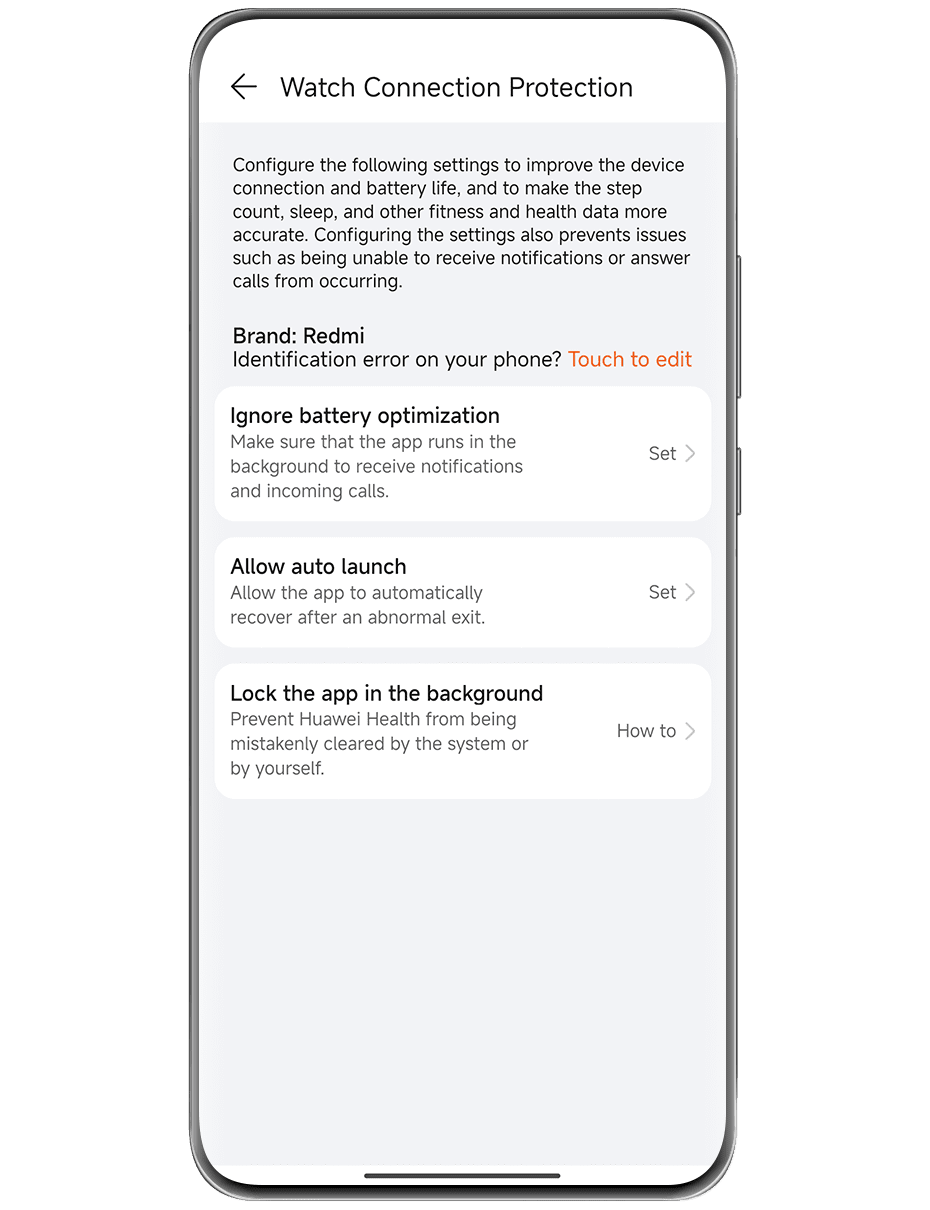
How to set background protection for the Huawei Health app
- Third-party Android phones: Open Huawei Health, touch Devices, select your device card, touch Watch connection protection or Band connection protection, and follow the onscreen instructions to complete the setting. Alternatively, refer to the background protection settings of the Huawei Health app.
Privacy By Architecture: Three-Layer Protection
Here’s the uncomfortable question nobody wants to ask: These devices track everything. Your location, your heart rate, your sleep patterns, your communication patterns, your work habits. How do we trust this?
Huawei’s approach to privacy is architectural, not rhetorical. Three key principles:
Layer 1: On-Device Processing First
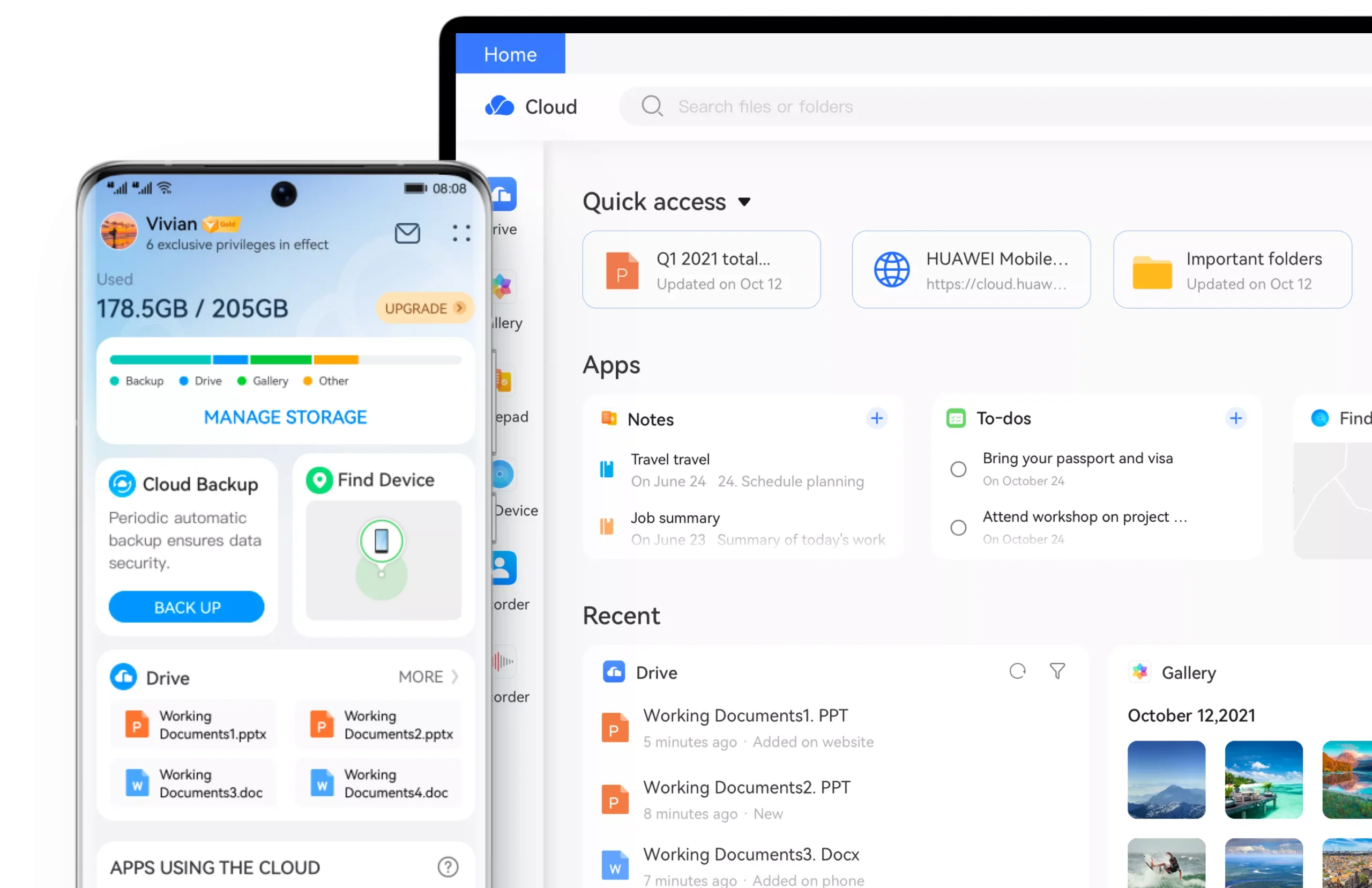
The TruSense System processes health data locally on the watch. Your heart rate patterns, sleep analysis, and workout metrics—none of this uploads to Huawei’s servers unless you explicitly choose to back it up. The AI that predicts your recovery needs and provides coaching runs on the device’s chip, not in some cloud data center.
Why Traditional Cloud-First AI Fails Privacy: Most “AI assistants” send your requests to cloud servers for processing. This means Apple, Google, and Amazon hear every voice command. They claim data is anonymized, but anonymization is reversible with enough data points. Huawei’s on-device AI means your data never leaves your ecosystem.
Layer 2: Encrypted Device-to-Device Communication
When your devices communicate—when your watch syncs to your phone, when your phone shares files to your tablet—the data is encrypted with device-specific keys generated during initial pairing. Even Huawei can’t decrypt this data stream because the encryption keys never exist outside your device ecosystem.
Layer 3: Granular Permission Controls
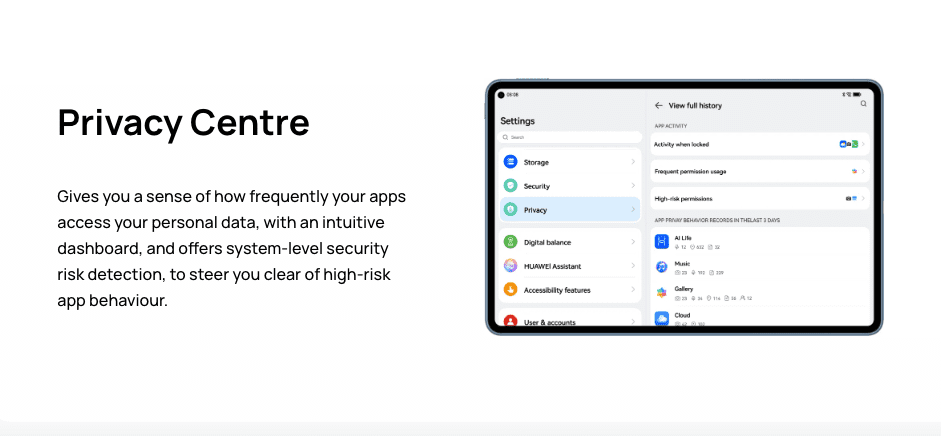
HarmonyOS requires explicit permission for every data access, and you can revoke these granularly. Want your calendar to sync but not your contacts? Done. Want fitness tracking but not location history?
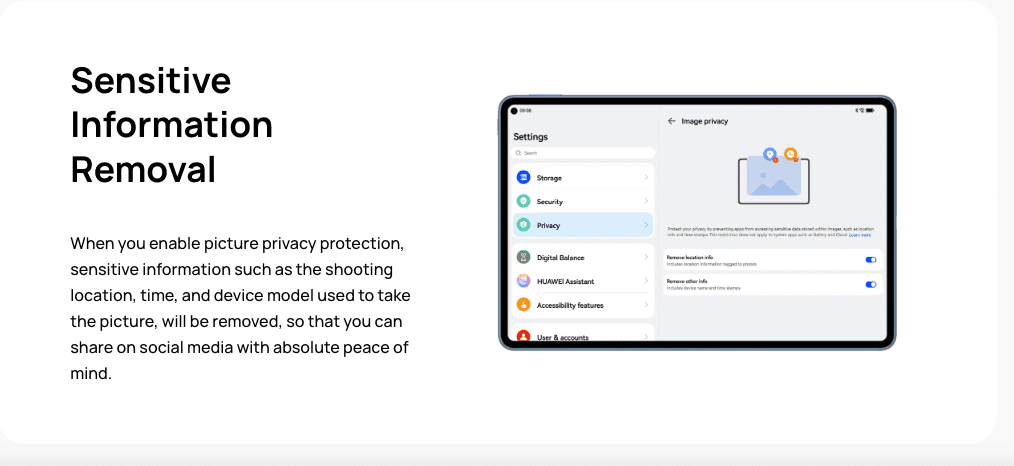
No problem. Want to delete all health data older than 30 days automatically? That’s a setting toggle.
Most importantly: Huawei doesn’t monetize user data through advertising. Their business model is device sales and services, not data harvesting. This alignment of incentives matters more than any privacy policy.
HarmonyOS requires explicit permission for every data access:
Calendar sync without contact access?
✅ Possible
Fitness tracking without location history?
✅ Possible
App usage without internet access?
✅ Possible
Automatic data deletion (30, 60, 90 days)?
✅ Built-in setting
Independent Security Audits.
Transparency Reporting
Huawei devices undergo third-party security audits:
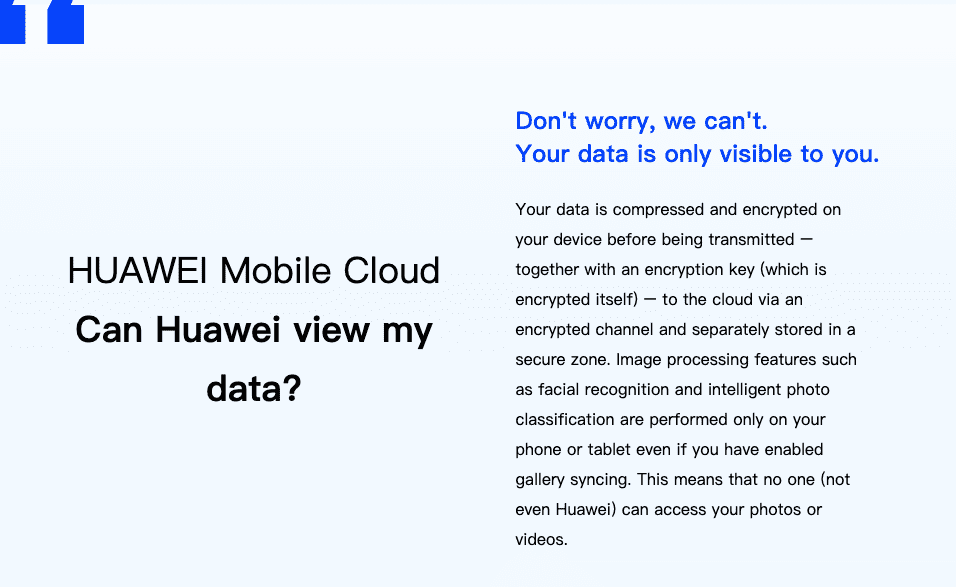
Government data requests received (by country)
Percentage of requests complied with
Security incidents and responses
Software update policies and timelines

Huawei publishes annual transparency reports detailing:
BSI (German Federal Office for Information Security): HarmonyOS security architecture audit (2023)
ANSSI (French National Cybersecurity Agency): Hardware security audit (2024)
ISO 27001 & ISO 27701 Certification: Information security and privacy management

This level of transparency is standard practice in Western tech companies but rare among Asian manufacturers. Huawei’s adoption signals commitment to accountability.
The Future Roadmap: Where Smart Living Is Heading
Technology doesn’t stop with today’s devices. Here’s where Huawei—and the industry—are moving next.
2026–2027: Expansion
Predictive Health
Wearables will shift from detecting issues to forecasting them. Huawei’s research with cardiology institutes is developing AI that predicts cardiac risk 48–72 hours before symptoms by analyzing subtle HRV patterns beyond current sensor precision.
Ambient Computing
Devices will fade into the background.
-
Haptic feedback may replace screens
-
Surfaces become displays
-
EEG-based intent detection replaces touch
Neural interfaces are still years away, but early R&D is underway.
AI Agents
AI evolves from reactive assistants to proactive agents.
-
Calendars negotiate meetings
-
Health AI schedules doctor visits
-
Finance AI adjusts spending habits
This requires foundational trust—privacy-by-design, not add-on settings—an area Huawei is already prioritizing.
2028–2030: Integration
Mixed Reality, Reimagined
Not isolating headsets, but AR that layers information onto the real world. Huawei’s optics work hints at AR glasses that merge FreeClip audio, eye comfort, and discreet overlays.
Biological Sensing
Beyond wrist sensors: temporary biomedical patches monitoring blood chemistry for glucose, hydration, and hormones in real time. Huawei’s TruSense pipeline suggests readiness for consumer adoption.
Ecosystem Energy Sharing
Devices powering each other efficiently—not just reverse charging, but practical wireless power flow among phone, watch, tablet, and earbuds. Huawei’s solid-state and high-efficiency charging research points in this direction.
The Industry’s Three Imperatives
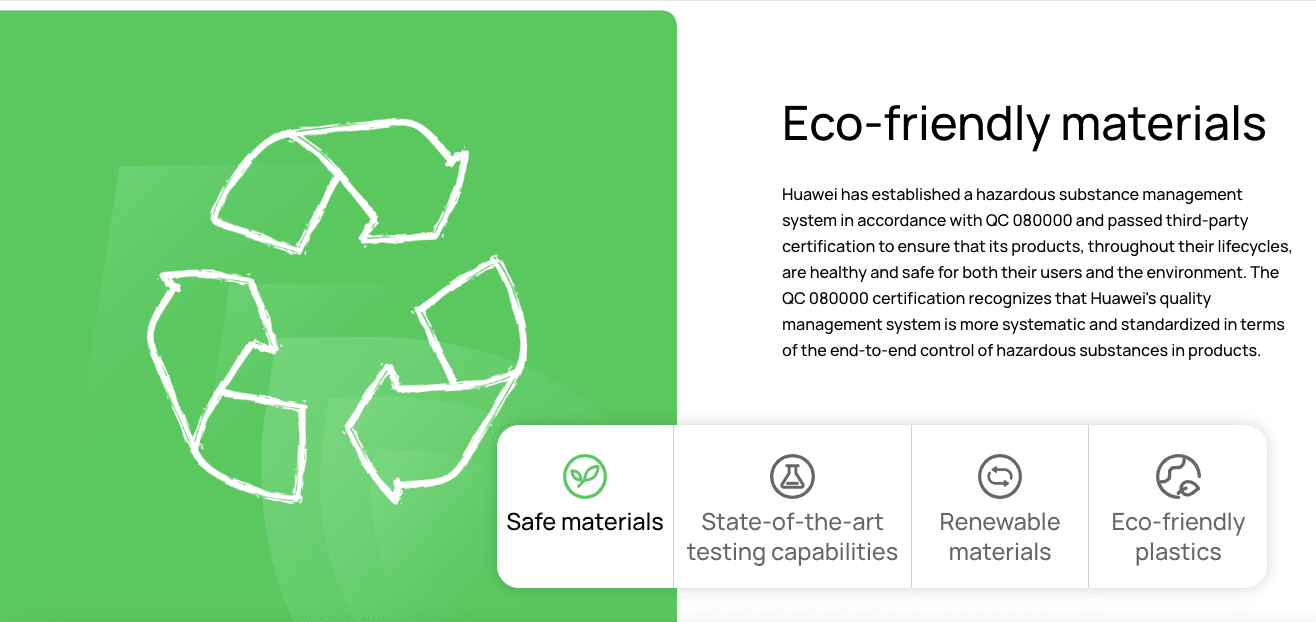
1. Sustainability by Design
Refresh cycles must lengthen. Devices need 5+ years of lifespan, modular components, and extended software support—directions Huawei is already exploring.
 2. Privacy as Default
Regulation is accelerating. Business models built on ads and profiling will struggle; architectures built on local processing and encrypted sync will thrive.
3. Interoperability
Closed ecosystems will face regulatory pressure. HarmonyOS—designed for cross-device and cross-manufacturer operation—matches the coming legal and user expectations.
FAQ: Your Real Questions, Answered Honestly
Q1: Will the Mate XT hinge break with daily use?
Huawei rates the hinge for 1 million folds—roughly 100 folds/day for 27+ years. Independent tests show integrity past 500,000 folds. However, like all foldables, it’s more vulnerable than slab phones, especially to drops on the hinge edge. If you handle devices carefully, it’s practical for daily use; if you drop phones often, consider a case or insurance.
Q2: Can FreeClip 2 deliver good bass without sealing the ear?
Yes—within physics limits. A dedicated low-frequency driver delivers surprisingly full bass for an open-ear design. It won’t match premium sealed IEMs or over-ear headphones, but for users prioritizing comfort + awareness + good bass, FreeClip 2 performs well.
Q3: Why buy the WATCH ULTIMATE DESIGN instead of a traditional luxury watch?
It’s not a replacement—it’s a complement. Traditional luxury watches are about heritage and investment. ULTIMATE DESIGN adds health tracking, diving capabilities, and connectivity to luxury aesthetics. Think “functional luxury dive computer” rather than a Rolex alternative.
Q4: Does the WATCH GT 6 Pro really last 21 days?
It depends on usage:
-
Light: 20–21 days
-
Moderate: 14–16 days
-
Heavy: 7–10 days
Even heavy use beats competitors. Apple Watch Ultra ~36 hours; Samsung Ultra 3–4 days. The 21-day claim is realistic under typical use.
Q5: Does PaperMatte reduce color accuracy?
MatePad 12 X covers 100% sRGB / 96% DCI-P3 with Delta E <1, suitable for professional color work. The etching diffuses reflection but doesn’t distort color. For critical workflows, calibration is recommended—as with any pro display.
Ecosystem & Compatibility
Q6: Does the M-Pencil Pro work with non-Huawei tablets?
No. It uses proprietary HarmonyOS protocols for low latency + pressure precision. It works across supported MatePad models only—not iPad or Android tablets.
Q7: Can I use these devices in the Apple/Google ecosystem?
Partially. Earbuds and watches connect via Bluetooth, but seamless features require Huawei ecosystem linking.
-
iOS: basic notifications + fitness
-
Android: better, but not fully distributed collaboration
Standalone devices work, but ecosystem benefits are strongest when used together.
Q8: How is the HarmonyOS app situation?
Mainstream apps are available globally, with regional variations; niche apps may be missing. Android APK side-loading is supported. If you rely on specific apps, check compatibility first.
Privacy & Security
Q9: Should I trust Huawei with health data?
Key facts:
-
health data processed on-device unless exported
-
cloud sync optional
-
audited by independent security agencies
-
Revenue from hardware—not data monetization
For maximum privacy: use local storage + encryption + avoid cloud sync.
Q10: Can governments access my Huawei device data?
Only via legal authority and only if data is synced to Huawei Cloud, similar to Apple/Google. Local encrypted data cannot be accessed without device credentials.
Purchasing & Support
Q11: Where is it available, and what about the warranty?
Strong availability in China, the Middle East, Europe, and Southeast Asia. Warranty typically 1–2 years. Premium model repairs often require factory servicing. Check the local service center support before purchasing.
Q12: Are these devices good value?
-
Mate XT: premium-priced but replaces phone + tablet for some users
-
FreeClip 2: strong value vs open-ear competitors
-
Watch GT 6 Pro: excellent value given battery + features
-
Ultimate Design watch: luxury pricing with functional value
-
MatePad + M-Pencil Pro: competitive vs iPad Pro, especially PaperMatte
Value depends on priorities: wellness, productivity, privacy, comfort.
Q13: How long will Huawei provide updates?
-
Flagships: 4 major HarmonyOS updates + 5 years patches
-
Mid-range: 3 updates
-
Wearables: ~3 years of software updates
Competitive with Samsung; slightly behind Apple’s support length.
Specific Use Cases
Q14: Are these devices good for seniors or non-tech users?
Some are:
-
Watch GT 6 Pro is ideal—simple + long battery.
-
FreeClip 2 is intuitive.
-
Mate XT may overwhelm; standard phones are better.
-
MatePad benefits users with eye strain but requires learning HarmonyOS.
“Simplified Mode” helps reduce complexity.
Q15: Are they good for gaming?
Mate XT and MatePad handle most games well, but graphics-focused gamers may prefer Snapdragon/iPad setups. HarmonyOS game library is smaller than iOS/Android. Good occasional gaming—not optimal as a primary gaming device.
Verdict: These aren’t gaming devices first. They can game, but if gaming is your primary use, consider gaming-focused alternatives.

Technology That Remembers To Serve
Here you are, you might have begun today as just another ordinary day—small frictions piling into quiet exhaustion. Huawei’s 2025 ecosystem exists to dissolve those frictions through human-centered intelligence.
But the real story isn’t devices. It’s time.
The average life holds 692,040 hours.
Roughly 237,000 spent working, 229,961 sleeping—
and nearly 49,000 hours interacting with digital devices.
Almost six yearstouching screens, hearing alerts, glancing at batteries.
Those years can be anxious or effortless.
Every tiny friction accumulates: a battery doubt, a strained eye, an uncomfortable fit, a screen too small.
Huawei’s tri-fold phone, paper-matte tablet, multi-week battery watch, open-ear audio, and luxury dive-ready design—these aren’t gadgets. They’re decisions about how the next 49,000 hours will feel.
Back in 1987, Ren Zhengfei asked:
“What if technology worked the way humans do?”
Technology should adapt to humanity, not the other way around. Ren Zhengfei asked that question in 1987. Huawei is still pursuing the answer. And this holiday season, you can participate in that pursuit—one thoughtful, innovative, beautifully complex gift at a time.
Happy holidays. May your presents be meaningful, your connections genuine, and your technology—finally, blessedly—invisible when it needs to be and invaluable when it matters.
Because a device that protects comfort, attention, and trust isn’t just a purchase.
It’s a glimpse of what six years of life could become.
So when choosing a gift this season, the better question might be:
What future do I want to live inside?
Happy holidays. May your technology finally serve you—beautifully.
