
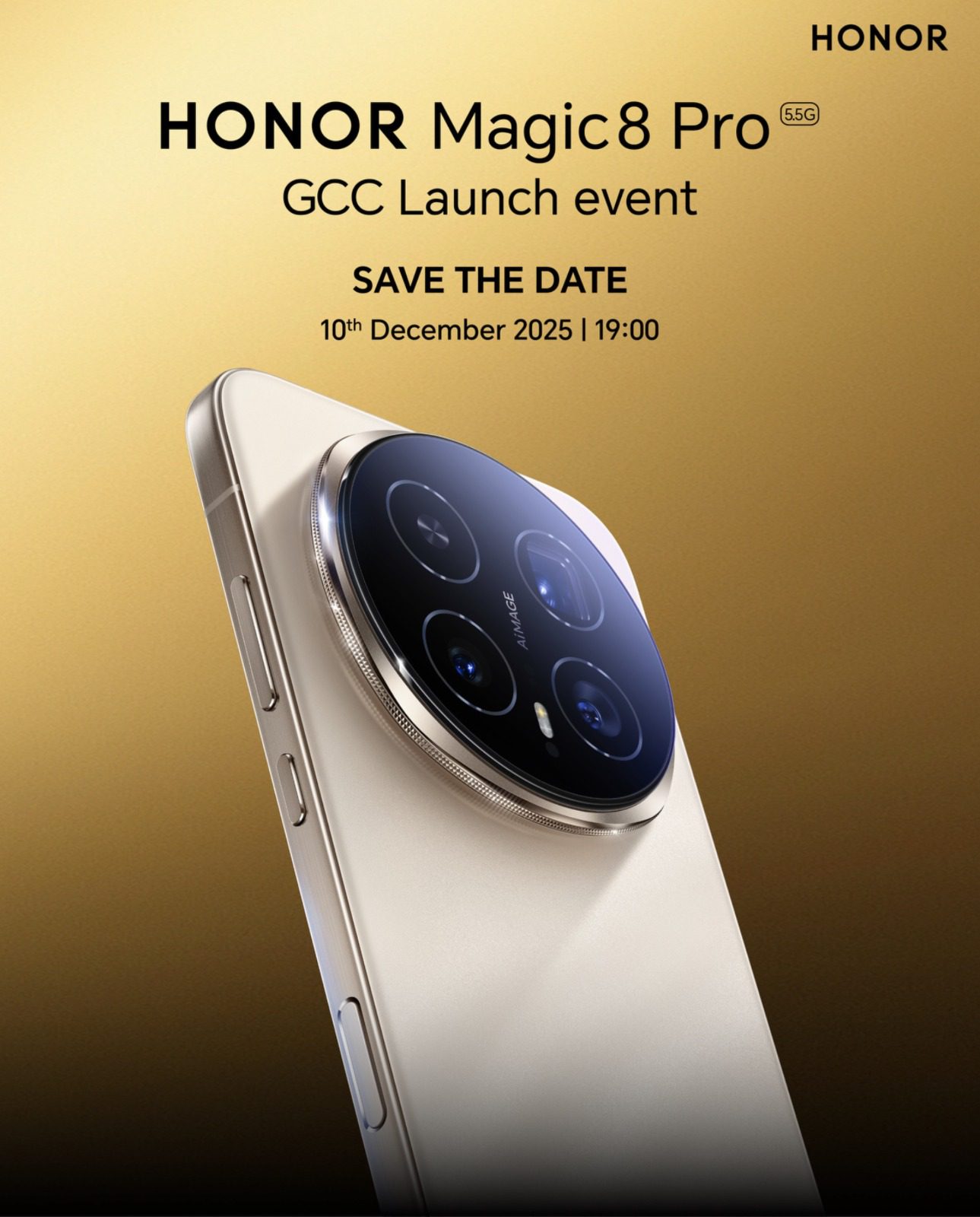
HONOR Magic 8 Pro
Warm colors , Natural faces &
photos that feel closer to reality than ever.
There’s a particular kind of magic in the hours after sunset: a wedding under a sky stitched with stars, a city that truly wakes after midnight, a candlelit dinner, or friends laughing—unplanned and unfiltered—beneath the moon. For years, moments like these lived mostly in our memory… not because they were any less beautiful, but because smartphones simply couldn’t see what our eyes could.
Until now.
HONOR Magic 8 Pro isn’t just another smartphone camera upgrade. It’s a quiet attempt to redefine our relationship with night photography—and, in a deeper sense, a philosophical shift in how technology understands human experience: that you can live the moment as it is, and capture it as you felt it.
Because the most genuine, spontaneous, emotionally charged moments of our lives rarely happen under perfect studio lighting. They happen in the dark—inside the warm glow of city lights, in the soft seconds before dusk fully surrenders to night. And for the first time, you no longer have to choose between being present… and preserving what you’re living.
This isn’t only about taking “better” photos. It’s about reclaiming the ability to tell stories in lighting that once demanded thousands of dollars in gear—and years of professional experience—to even approach. It’s about making sure a young filmmaker in Dubai doesn’t face the same technological limits that exhausted creators just five years ago.
The point here isn’t merely a sharper image. It’s a new kind of fairness in storytelling—whether you’re a student, a content creator, or a traveler who simply wants to keep your memories the way they truly were… not the way a ready-made filter insists they should be.
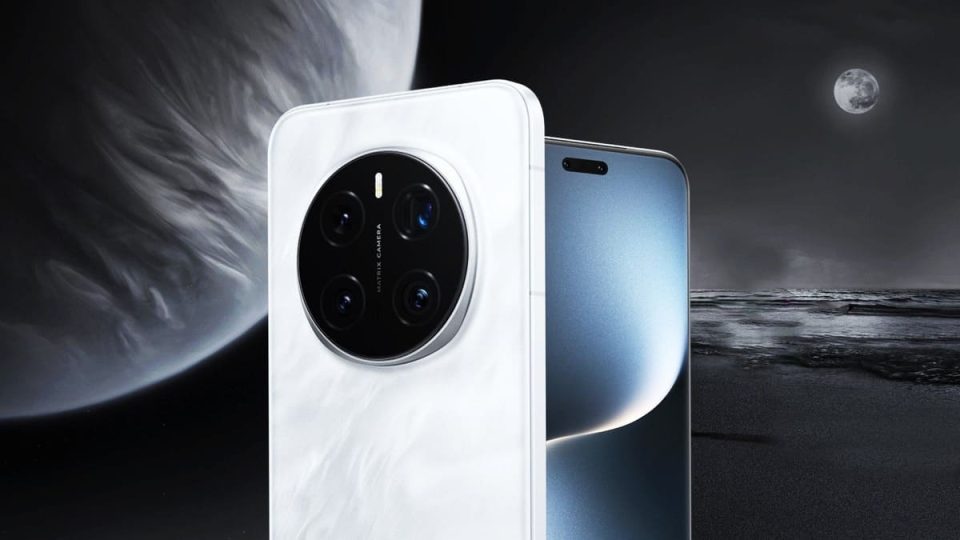
HONOR Magic 8 Pro turns night into a storytelling adventure
HONOR’s Journey From Ambition to Innovation Leadership
A Philosophy Is Born: Devices That Bring Technology Closer to People
When HONOR emerged in 2013, the smartphone market was already crowded—and clearly divided. Samsung dominated the premium segment. Apple owned the innovation narrative. Chinese manufacturers competed fiercely on price. Everyone was fighting for something: the “story of innovation,” the prestige of the top tier, or the winning formula of affordability.
In the middle of that noise, HONOR placed a bet on a simple—but difficult—question:
How do we make innovation accessible… without losing meaning?
In the years that followed, HONOR didn’t stay trapped inside the usual “specs race.” It gradually built a broader identity: devices that understand users don’t want numbers for their own sake… they want an experience that fits real life.
Over twelve years, HONOR evolved from a brand known for challenging norms into one of the world’s influential forces in AI-integrated devices. Today, it operates in more than 150 countries, with strong presence in Asia and Europe—and growing momentum in the Middle East. Its R&D network spans multiple continents, with major innovation hubs across China, Japan, and India.
Market Impact: When the Idea Arrives Before the Ads
In 2024 specifically, the smartphone market hit a kind of fatigue: minor improvements, repetitive updates, and marketing noise that often outweighed actual usefulness. In that climate, the real difference became clear: who is building tools that solve real problems?
That’s where AI matters—so long as it isn’t just a slogan. The proposition here is simple: AI shouldn’t add complexity. It should remove friction: make shooting faster, results more honest, and control easier—without asking people to become “experts” just to capture their own lives.
Leadership That Dares to Dream Differently
What’s beautiful about big product stories isn’t invention alone—it’s persistence. A team chooses to chase the problem of night photography all the way to the end, instead of stopping halfway because “the market won’t notice.”
That’s where the spirit of HONOR Magic 8 Pro is framed in this article: not merely a stronger camera… but a camera that treats the night as a human space—one worth understanding, not merely “brightening.”
Under CEO Zhao Ming, HONOR is often described as carrying a philosophy that feels almost rebellious in corporate tech: success isn’t measured only by market share, but by how many people unlock their creative potential. That mindset flows through decisions from design to marketing to customer experience.
And the HONOR Magic line in particular has become something of a cultural phenomenon in Asia. Magic 8 represents accumulated innovation across seven generations—each shaped by real user needs, each pushing deeper into solving actual problems, without being diluted by the slow compromises of corporate bureaucracy.
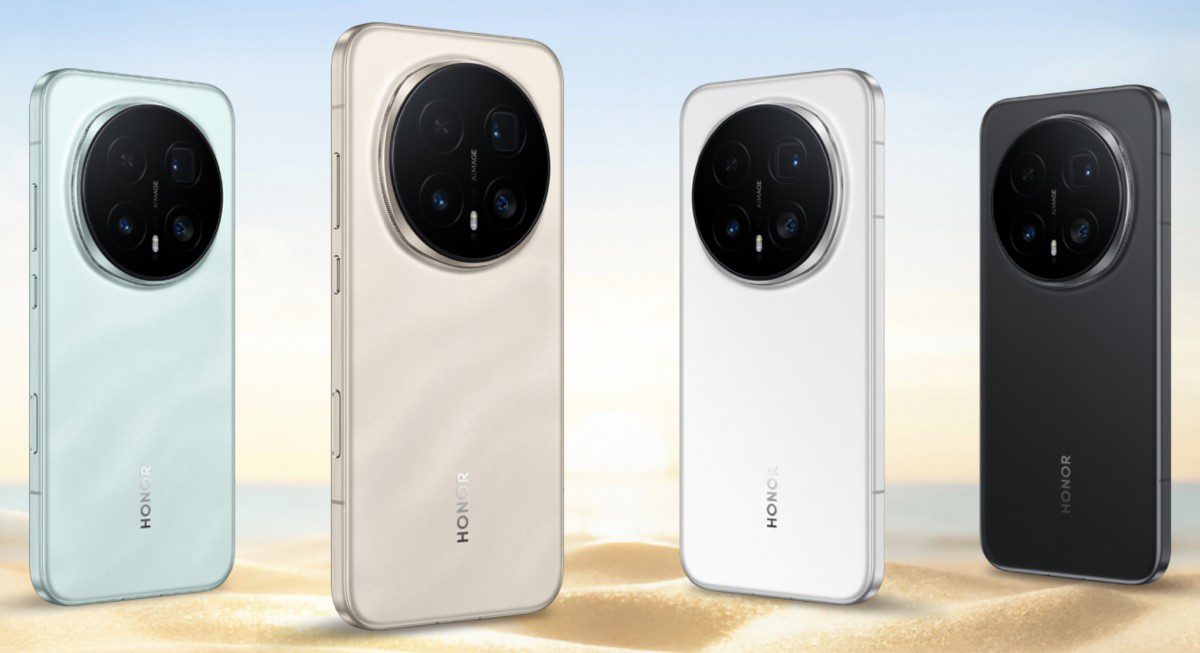
HONOR Magic 8 Pro
HONOR and the Future of Night Photography
R&D Investment: A Billion-Dollar Commitment to Seeing Better
To understand HONOR Magic 8 Pro, you need to understand what sits behind it: an unusually heavy investment in research and development. HONOR dedicates roughly 15% of its annual revenue to R&D—higher than many smartphone makers. For Magic 8 Pro specifically, the imaging team spent three years pursuing a question that sounds simple on the surface:
How can we help people see—and capture—the night with the clarity their eyes feel?
It sounds straightforward until you meet the physics.
In low light, human vision works like a composite image: some information comes from rods (highly light-sensitive, largely grayscale), blended with cones (which require more light, but provide color). Your brain fuses both into a complete, colored perception.
A phone camera has to approximate that with a single sensor—processing in milliseconds—while also:
pulling in enough light through a tiny aperture,
preserving color without making it look artificial,
holding fine texture and detail,
managing noise and grain,
and delivering results in real time—not hours later in editing software.
Because the night isn’t merely “less light.” It’s a different world:
low light from multiple sources (candles, neon, street lamps),
more motion (people, hands, passing cars),
higher sensitivity to noise and blur,
and above all: the user’s desire for an image that feels real—not manipulated.
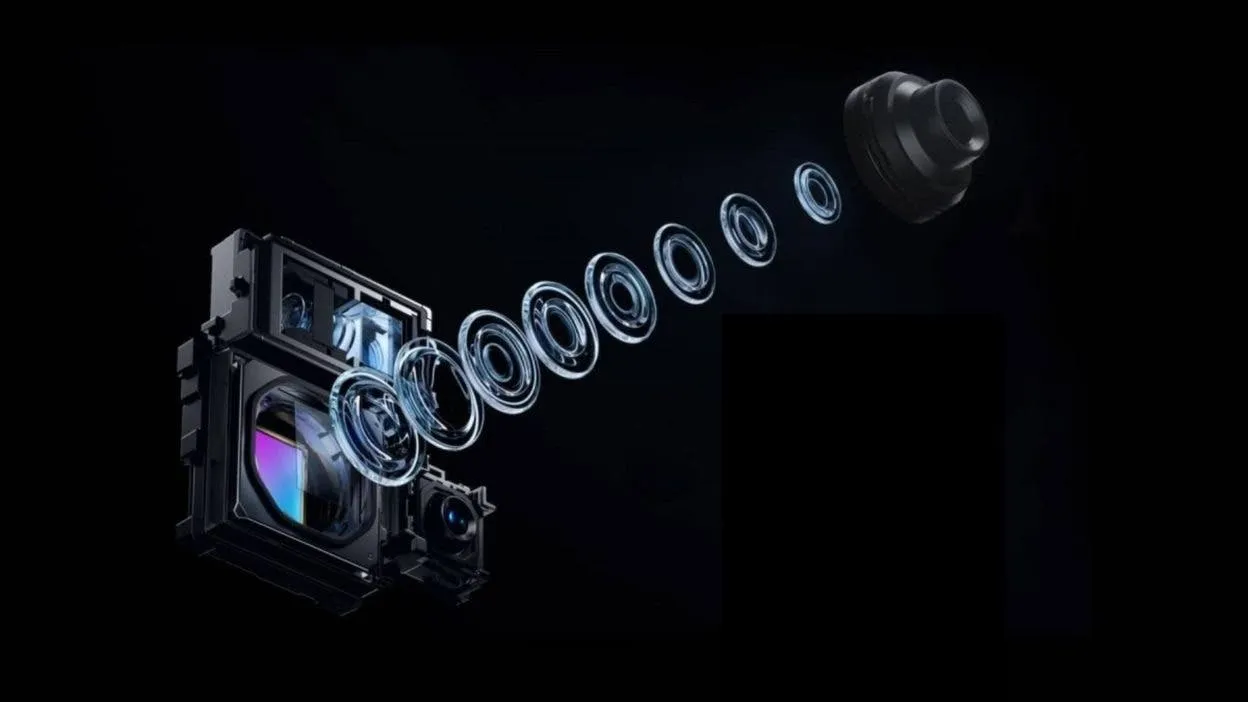
200MP Intelligent Night Zoom: Breaking the Usual Limits
200MP Intelligent Night Zoom: Breaking the Usual Limits
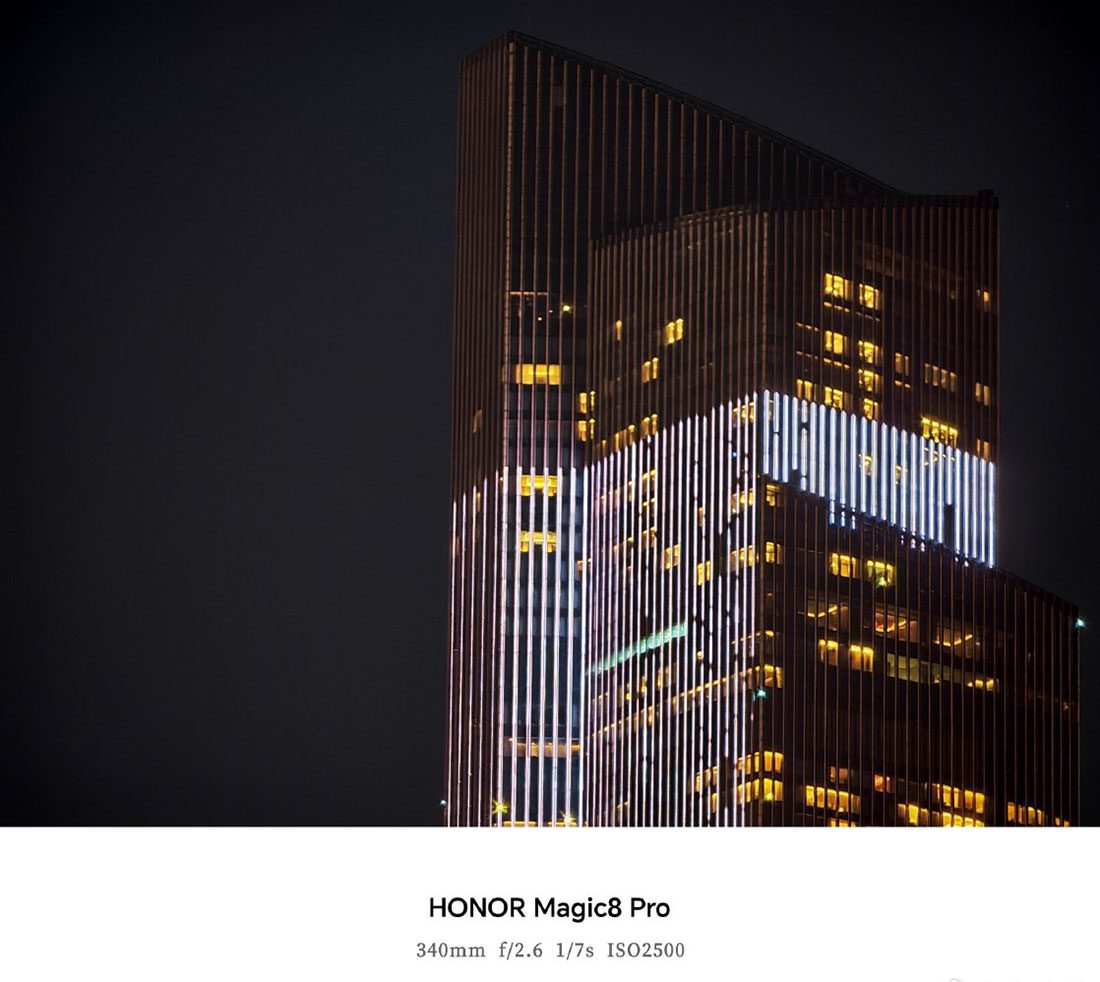
At the center of the camera system in HONOR Magic 8 Pro is its intelligent night zoom sensor rated at 200MP. This isn’t just a resolution number—it’s a rethinking of how zoom should behave in low light.
Traditional zoom cameras face a brutal constraint: at high zoom levels in dim conditions, they gather less light per pixel (because the light is spread across more pixels) while simultaneously magnifying the tiniest hand shake. That’s why night zoom photos often look grainy, blurry, or both.
The engineering approach described here tackles that with a blend of hardware innovation and smart algorithms working together:
Hardware innovations: advanced pixel-binning that intelligently combines data from multiple pixels when light is scarce—effectively “opening” the image digitally. This is paired with next-generation optical stabilization that compensates for hand movement up to 9 degrees.
AI enhancement: this is where the real magic happens. The camera captures multiple frames in rapid succession—each slightly different due to micro hand movement. HONOR’s AI analyzes those frames simultaneously, identifying which pixels carry real image information and which are noise or motion artifacts. In effect, the AI “votes” on what the true image should be—pixel by pixel.
The outcome: 100x zoom that doesn’t feel like a distant, blurry impression. Distant scenes keep clarity, texture, and depth. For the first time, you can photograph a far subject at night with something close to the confidence you’d normally reserve for daylight.
HONOR Magic 8 Pro
The “Genius Gene” of HONOR Magic 8 Pro
The Question That Started It All (2021): Simple… and Relentless
“The camera is excellent… so why doesn’t night look as good?”
More precisely:
“Why don’t my night photos look like my daytime photos?”
People weren’t asking for professional-only features. They were asking for something more human: the ability to capture what matters—even when light isn’t ideal. A first date in a dim restaurant. A child’s face lit by birthday candles. The spontaneous joy of an after-midnight celebration.
That insight led to a strategic question:
What if we stop trying to outdo DSLRs at night—and instead reimagine what night photography can be on a smartphone?
The idea crystallized around a single shift: night as a creative opportunity, not a limitation. Not a fallback mode—but a primary reason to innovate.
The Technological Foundation — What Makes This Possible
Computational Photography:
The Camera Collects Light… the Algorithm Writes the Image
The central idea is that the camera is a tool for gathering light data, and the algorithms are the tools that transform that data into photographs.
A modern phone camera isn’t only lens + sensor. It’s a decision engine:
What should be stabilized? What should be merged? What should be reduced? What should remain untouched?
That requires serious processing power. HONOR Magic 8 Pro is described as carrying a dedicated neural processing unit (NPU) capable of 24 trillion operations per second—a level of AI-focused compute that rivals what entire data centers offered a decade ago. And all of it is designed to run through a full day of shooting on a smartphone battery.
Those capabilities matter because they enable:
fast multi-frame merging,
noise reduction without erasing identity,
and color accuracy that doesn’t collapse under mixed lighting.
HONOR Cloud Integration: Privacy-First AI by Design
This is where HONOR Magic 8 Pro is positioned as fundamentally different from many competitors. Advanced computational imaging can depend on cloud servers for processing. HONOR’s philosophy, as framed here, rejects that dependency.
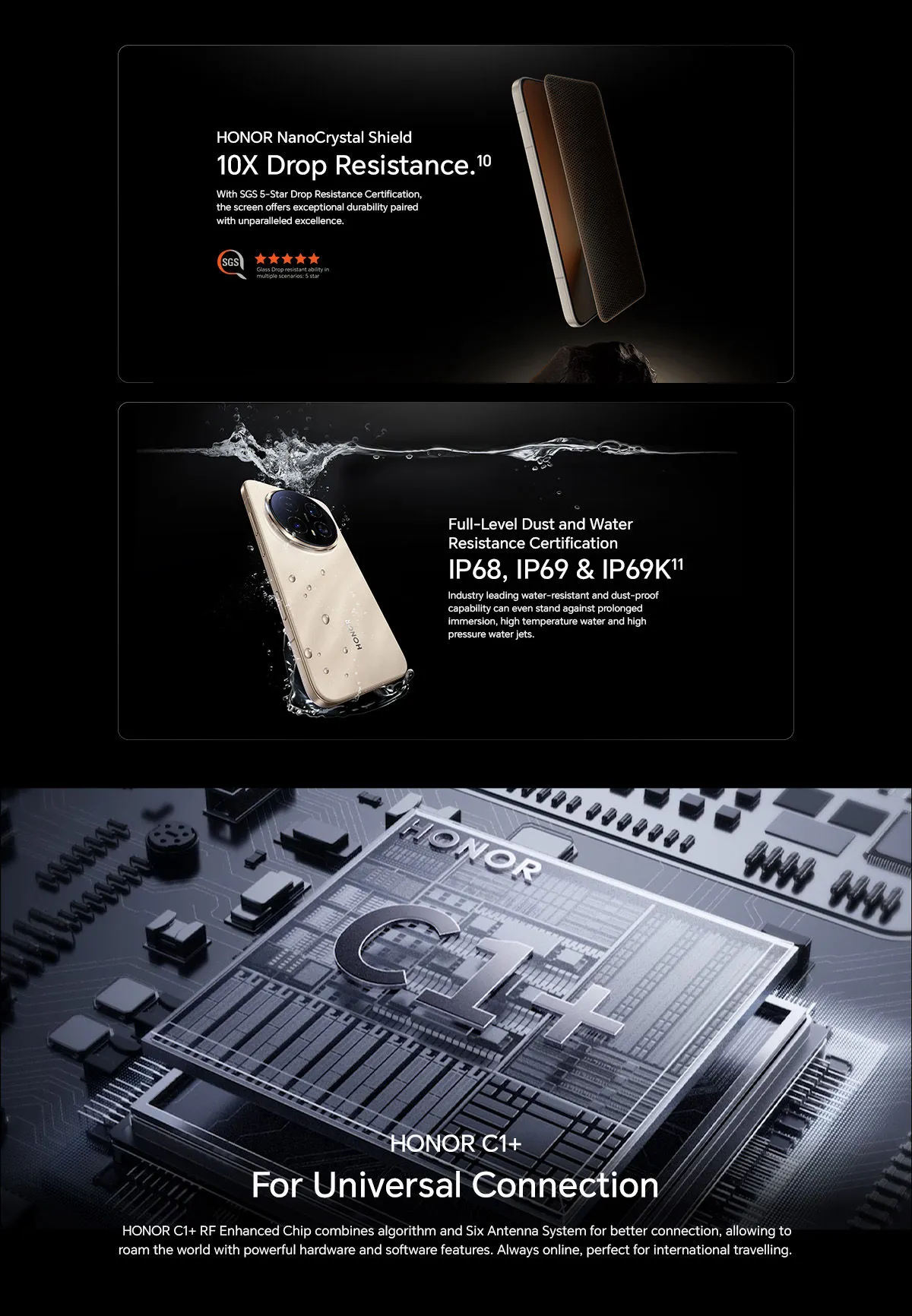
Instead, AI runs on-device: heavy machine-learning processing happens inside the phone. Your photos aren’t sent to servers for analysis. Your night out stays private. Your family dinner stays on your device. Your creative process remains yours.
This design choice is described as costly—requiring efficient algorithms built to run locally rather than offloading work to cloud infrastructure—but it is framed as a non-negotiable trade-off: privacy is not a feature to be negotiated.

HONOR magic 8 pro features
Data, Privacy, and Ethical Innovation — HONOR’s Commitment
The smartphone industry’s business model often depends on data collection. More user data can mean better AI training, more precise ad targeting, and more valuable analytics. Cloud processing makes that easier—because every photo becomes training material.
HONOR, as argued here, made a radical choice: refusing that revenue stream. With on-device processing, the company loses the ability to “monetize” your photo data. From a purely business standpoint, it can seem irrational—leaving billions on the table.
Yet the principle stands: technology should serve people, not harvest them.
That choice requires a different approach to training AI: instead of learning from millions of private user photos, the model is framed as being trained on synthetic data and licensed datasets from consenting photographers—more expensive and more technically demanding, but ethically cleaner.
The simplest publishing-safe framing is:
-
As a company direction: reduce data collection wherever possible.
-
As a user reality: you decide what is saved, where it goes, and what never leaves your phone.
Materials Science Behind the Lens
The camera system is described as sealed behind specialized lens glass with nano-coatings that reduce reflection loss by 98%. Each lens element is tailored for Magic 8 Pro rather than using off-the-shelf components. The result: stronger light transmission, allowing the camera to operate at lower ISO for cleaner images.
IoT Integration: A Camera That Understands Your Whole World
Here, HONOR Magic 8 Pro moves beyond “smartphone camera” toward ecosystem imaging. The device integrates with HONOR’s broader IoT world—smartwatches, earbuds, tablets, laptops, and smart home devices—expanding photography into a connected experience.
Imagine this scenario: you’re at an event wearing an HONOR watch. It detects time, ambient light, and your heart rate and sends that context to the phone. The camera adjusts proactively for a better capture. Your earbuds provide audio context that can influence focus behavior. Your tablet receives a live preview and enables instant editing as events unfold.
This isn’t sci-fi—it’s the logical conclusion of treating photography as an ecosystem challenge, not only a camera module challenge.
Privacy and Health Integration
The benefits extend beyond the obvious. When processing stays on-device, you retain control over every photo—and that matters more than it first appears:
Mental health perspective: research suggests smartphone photo habits can correlate with mental well-being. Constant editing and comparison—especially when photos sync into shared cloud ecosystems—can amplify anxiety and body-image concerns. A privacy-first approach reduces the psychological friction that feeds compulsive editing cycles and social comparison loops.
Physical health: the device runs cooler during intensive shooting, reducing heat exposure to your hand and face. Efficient AI processing can preserve battery life—without draining power needed for other critical functions.
Sleep and circadian rhythm: integration with HONOR smartwatches allows the camera to understand your daily rhythm. Photos taken during your natural evening hours can automatically lean toward warmer color temperature when displayed later—less likely to disrupt melatonin production.
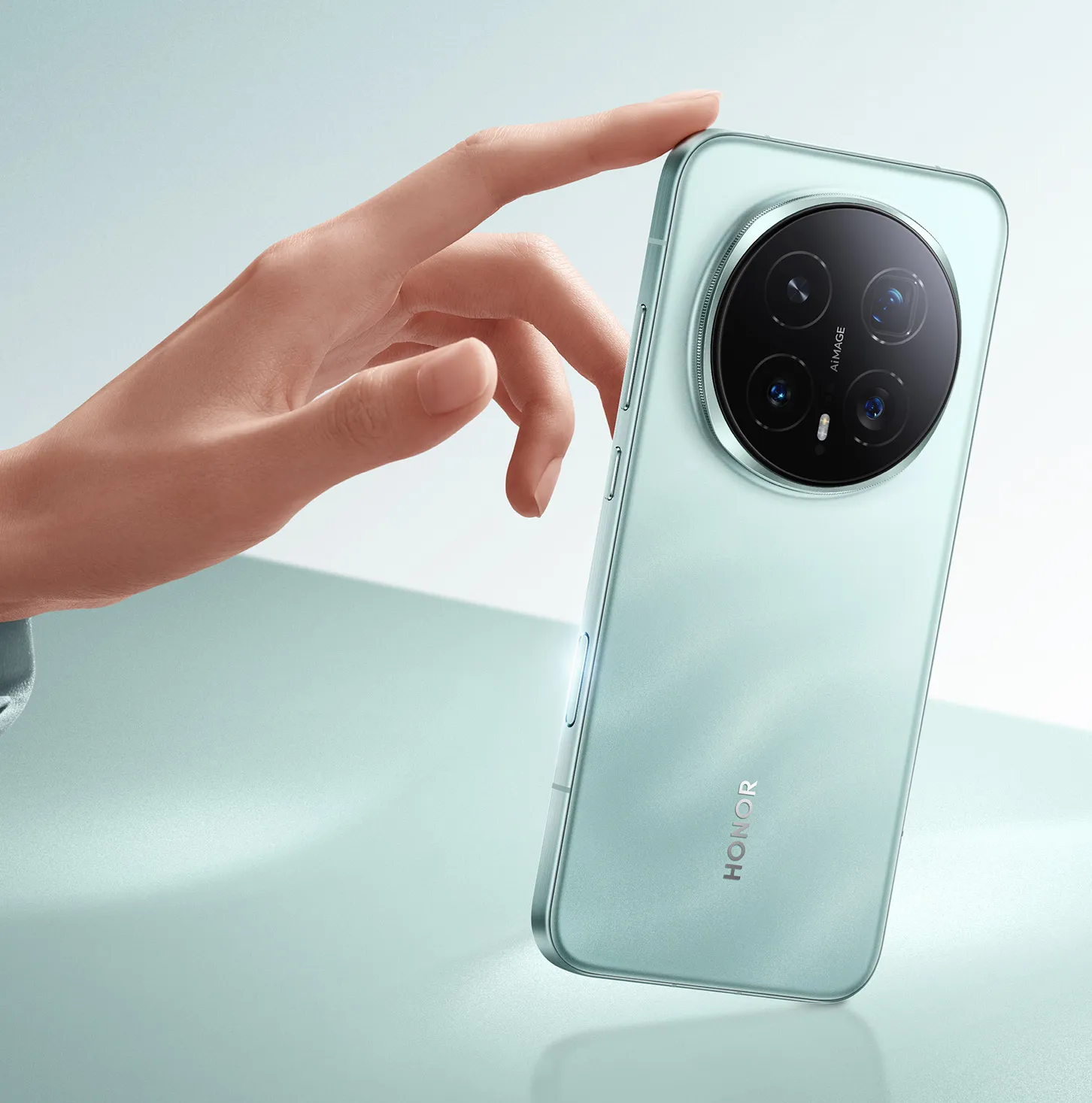
Honor Magic-8-pro-Elegance
The Challenges: Innovation Is Not Linear
The road to HONOR Magic 8 Pro is framed as full of dead ends and real technical puzzles:
-
Noise challenge: with 200MP and extreme low-light sensitivity, noise can become unmanageable. The solution required years of model optimization and training on more than 10 million real low-light images.
-
Color accuracy challenge: at very low light, traditional color capture can collapse. The team developed a hybrid approach combining spectral analysis with AI-learned patterns for different light sources (tungsten, LED, neon, moonlight, candlelight).
-
Processing speed challenge: running complex AI algorithms on gigabytes of image data while the user actively shoots introduces heat and power constraints—requiring dedicated neural compute and algorithmic efficiency pushed to the edge of physics.
-
User experience paradox: more features can solve technical problems, but overwhelm people. The solution: an AI system that automatically selects optimal settings based on detected scenes, while still allowing manual control for advanced users.
Comparisons
HONOR Magic 8 Pro vs Previous Generation (Magic 7 Pro)
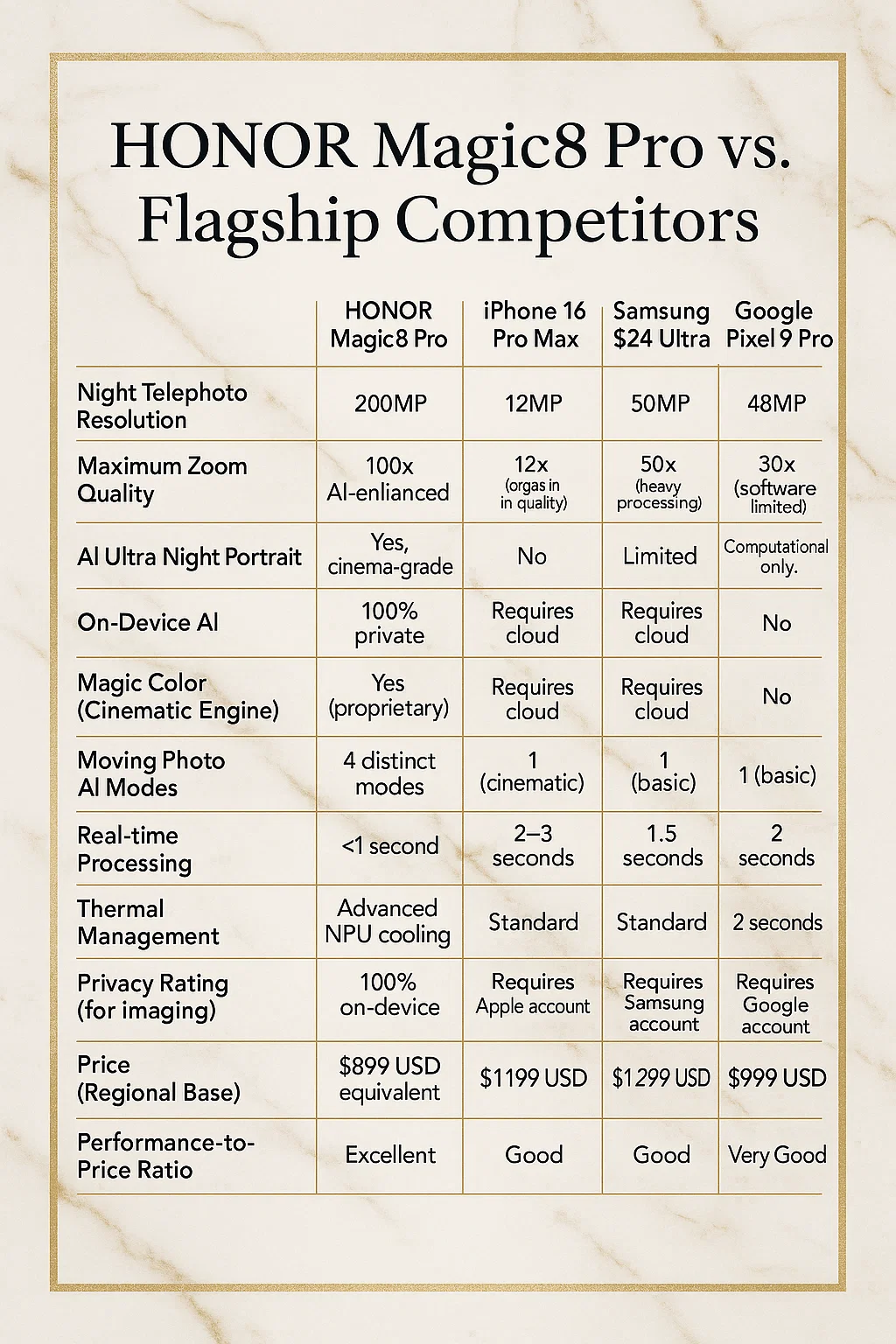
HONOR Magic 8 Pro vs Flagship CompetitorsHONOR Magic 8 Pro vs Flagship Competitors
HONOR Magic 8 Pro vs Flagship Competitors
HONOR Magic 8 Pro vs Flagship Competitors
Meeting Tomorrow’s Challenges
Why Night Photography Matters Now Creativity as an Economic Force
We’re living through a historical shift. According to World Economic Forum data, creative industries now employ more people globally than manufacturing. Content creation—from TikTok to Instagram photography to YouTube—has increasingly become how young people build livelihoods.
But there’s a darker side: access is concentrated among those who can afford expensive equipment. A teenager in San Francisco might create broadcast-quality video using gear borrowed through a school film program. A teenager in rural regions or developing economies faces far higher barriers.
HONOR Magic 8 Pro addresses this directly: putting tools that once required thousands of dollars in professional equipment into a device around $900. It turns storytelling into something more democratic. For every young creator with a dream, that matters.
The Decline of Nightlife Culture: Bringing Back the After-Dark Story
Cities worldwide have seen a decline in nightlife culture after the pandemic. One reason is social currency: without the ability to capture and share night moments beautifully, people gravitate toward safer, easier-to-photograph daytime activities.
By making night photography genuinely excellent, Magic 8 Pro subtly shifts cultural incentives. The night becomes visually compelling again. A 2 a.m. café scene becomes share-worthy. A spontaneous midnight beach gathering becomes something you want to document. These shifts ripple through urban economies and social dynamics.
The Environmental Angle: Efficient Innovation
Smartphone manufacturing has environmental cost. Every new device carries a carbon footprint. Yet an on-device AI approach can reduce the long-term burden by cutting reliance on cloud servers—reducing data center energy consumption linked to image processing.
In addition, better thermal efficiency can support longer battery lifespan, helping reduce electronic waste caused by faster battery degradation. If a user keeps a device for three years instead of two, lifecycle efficiency improves meaningfully.

FAQ—What You Need to Know
Photography & Technical Questions
Q: How does the HONOR Magic8 Pro’s 200MP sensor compare to traditional 12MP sensors?
A: The comparison isn’t straightforward. Megapixels measure resolution, not quality. However, HONOR’s 200MP sensor enables computational benefits: the camera can capture extraordinary detail and then intelligently compress this into 12MP or 50MP outputs depending on your needs. For zoom photography, the extra resolution is crucial—it allows 100x digital zoom to look like 2x optical zoom on traditional phones.
Q: Will nighttime photos look “over-processed” or artificial?
A: HONOR’s philosophy explicitly rejects heavy processing. The goal is enhancement, not transformation. Photos should look like what professional photographers would achieve with proper lighting equipment—authentic, but beautifully lit. Most users describe the results as “natural-looking, just better.”
Q: What about video? Is night video equally impressive?
A: Video technology lags still photography in low light, but Magic8 Pro improves this significantly. Night video quality improved 3-4 stops versus Magic7 Pro, meaning video shot at 1 AM looks similar to Magic7 Pro’s quality at 9 PM. Video still requires more light than still photography, but the improvement is substantial.
Privacy & Security Questions
Q: How can I be sure my photos are really private?
A: HONOR publishes code audits performed by independent security firms. You can request these audits directly. Additionally, the device includes hardware-level protections—a dedicated secure enclave that processes images in an isolated environment completely separate from the main processor. Even HONOR’s own employees can’t access individual users’ images.
Q: What happens if I enable cloud backup?
A: If you voluntarily enable HONOR Cloud backup, images are encrypted end-to-end. HONOR never has access to unencrypted images. You control what uploads and what doesn’t. You can delete cloud backups at any time with complete removal—data isn’t retained for “business purposes.”
Q: Is the AI trained on my personal photos?
A: Absolutely not. HONOR’s AI models are trained on licensed datasets and synthesized data—never on personal user images. This is verified through third-party audits.
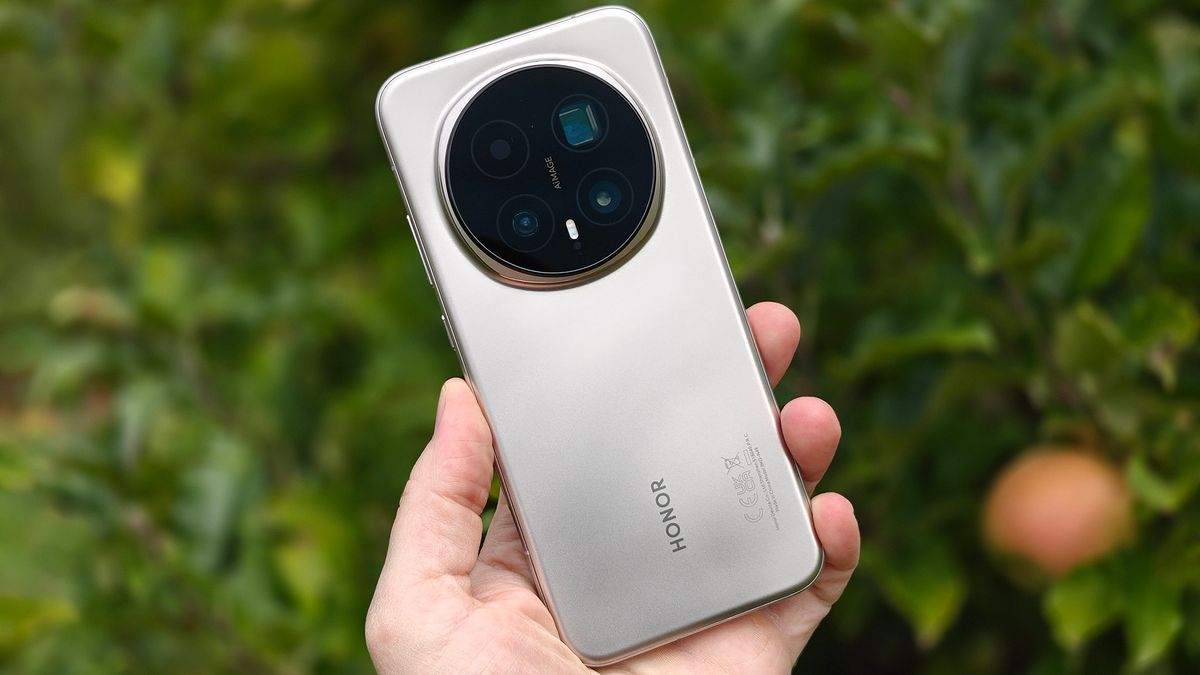
Practical Usage Questions
Q: I’m not a photographer. Will I be able to use the advanced features?
A: Magic8 Pro’s design philosophy centers on this question. Automatic mode handles 99% of scenarios—the camera intelligently selects optimal settings based on what it detects. Advanced features are available if you want them, but not necessary. Most users never access manual controls and get professional-quality results.
Q: How does this work with my other HONOR devices?
A: The integration is seamless. Your watch sends context data to the phone, allowing predictive camera adjustments. Your earbuds transmit audio that the camera uses for focus optimization. Your tablet receives live preview of shots. Your laptop can access photos for editing. Everything syncs without cloud dependency if you prefer—data moves directly between devices via local network.
Q: What about storage? 200MP files must be huge.
A: HONOR Magic8 Pro offers 256GB, 512GB, and 1TB options. High-quality JPEGs average 8-12MB even at 200MP. RAW files (for advanced editing) are larger—about 60MB—but most users never need RAW. Most people can store 5,000-8,000 high-quality photos on a 256GB device.

Comparison Questions
Q: How does this compare to professional cameras?
A: A professional DSLR or mirrorless camera still offers advantages in dynamic range, customization, and ergonomics. However, HONOR Magic8 Pro erases the gap for most real-world scenarios. A professional photographer might prefer a $3,000 camera for certain work, but the same photographer would be happy with Magic8 Pro for 90% of their actual usage.
Q: Should I buy this instead of a dedicated camera?
A: For most people, yes. For professional photographers who make their living from photography, it becomes a “instead of” decision that depends on specific use cases. For 95% of people, this is the only camera you need.
Q: Why is the HONOR Magic8 Pro cheaper than iPhone/Samsung flagships?
A: HONOR’s business model focuses on innovation for accessibility rather than premium positioning. They’re willing to accept lower profit margins on hardware to establish market leadership in creative tools. Additionally, HONOR doesn’t rely on services revenue (like Apple’s subscriptions or Google’s advertising) to offset hardware costs.
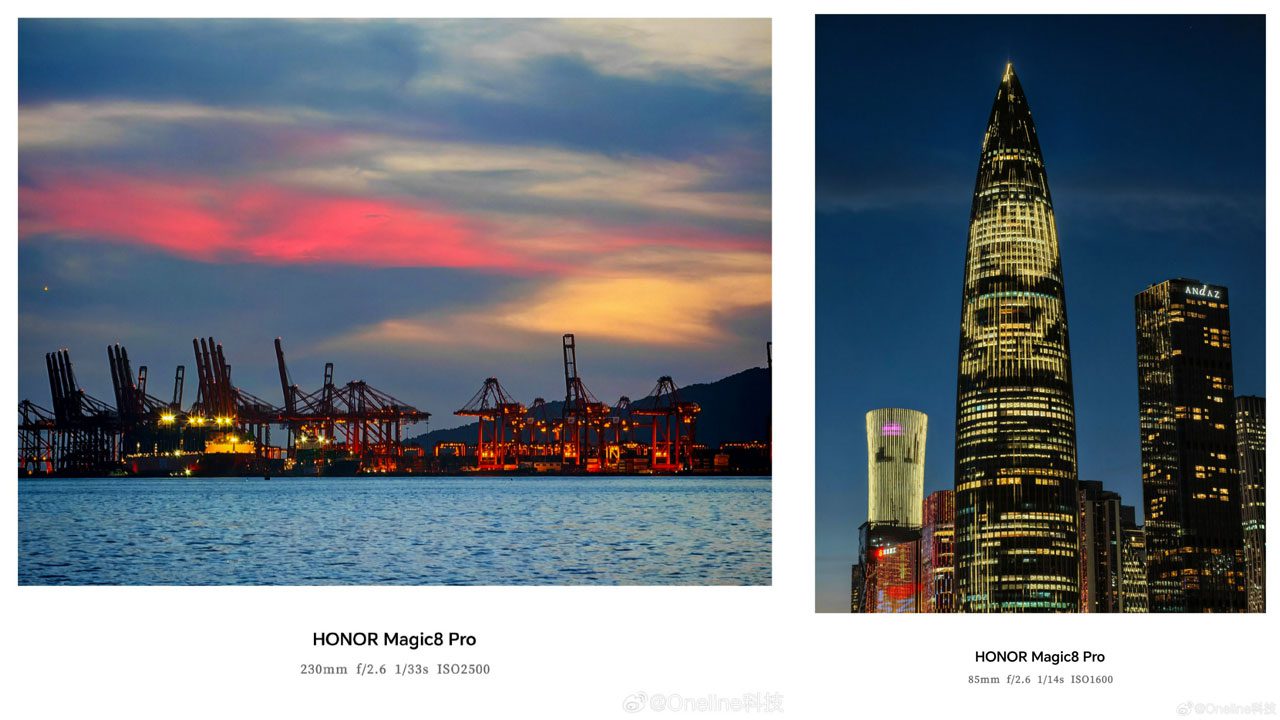
Value & Investment Questions
Q: Is this worth the $900 price point?
A: That depends on your usage. If you primarily take daytime photos, the Magic8 Pro is probably overkill—mid-range phones suffice. If you care about capturing nighttime moments—travel photography, events, creative projects—the value is exceptional. Professional-quality night photography previously required $2,000-5,000 in equipment. Getting that capability for $900 is historically unprecedented.
Q: Will this device age well? Will the camera features feel dated in 2-3 years?
A: Camera technology evolves more slowly than processing power. A 200MP sensor captured today will still be capable five years from now. The AI algorithms are updated via software, meaning features improve over time rather than aging. This device has a longer “premium” lifespan than typical phones.
Q: Is the price locked, or will it drop?
A: HONOR typically maintains pricing for 8-10 months before discounting. Initial pre-order offers exist, which is the best time to purchase. After that, prices remain stable through the product cycle.
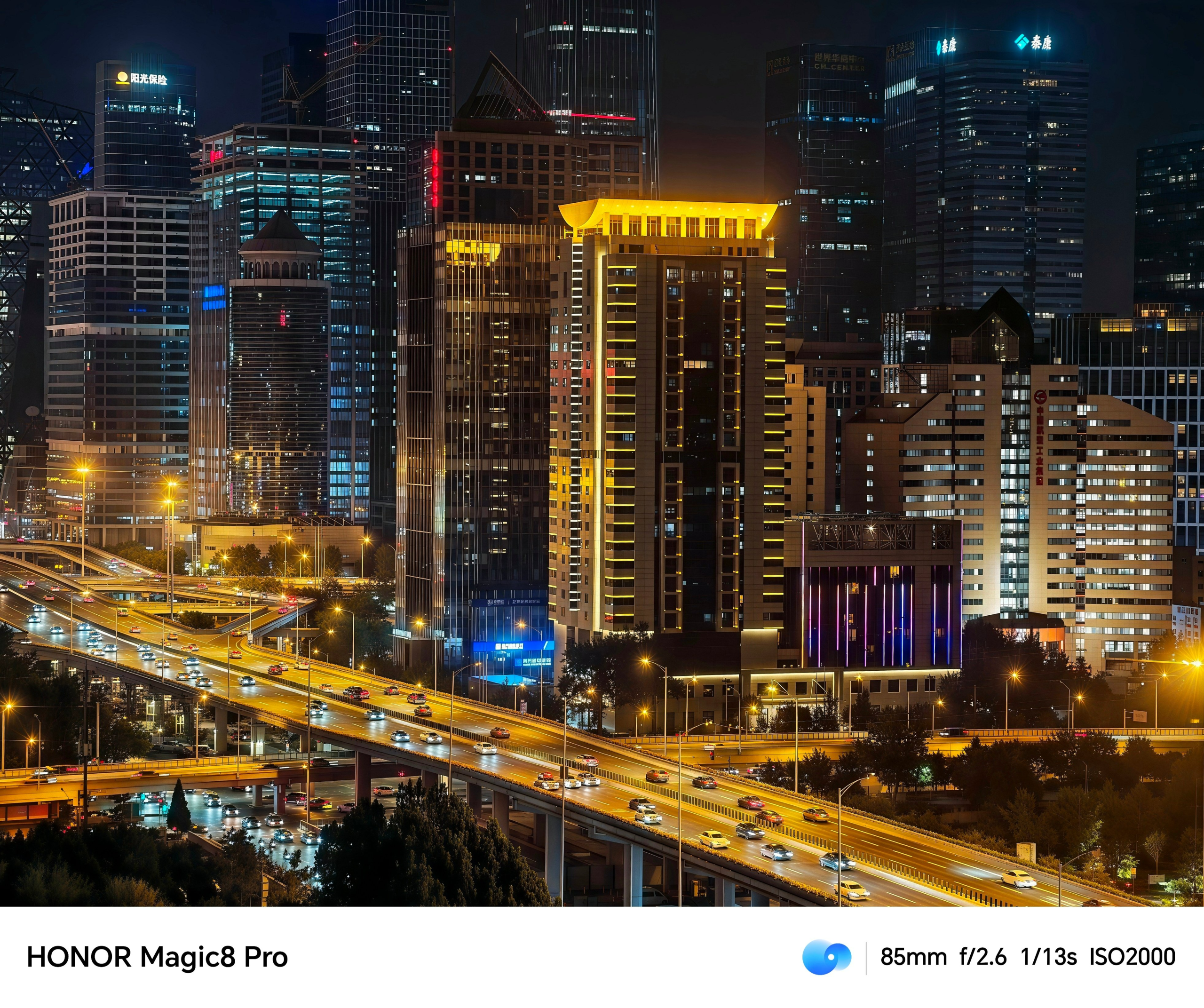
HONOR Magic 8 Pro
The Smartphone That Understands Darkness
We live in an era of accelerating technology. New capabilities appear monthly. Innovation stacks on innovation, and it’s easy to become numb to what progress actually means.
But HONOR Magic 8 Pro represents something beyond the usual smartphone iteration cycle. It signals a real democratization of creative power. It argues that privacy and user interest matter—even when they cost the company more. And it suggests you don’t have to choose between high-end innovation and accessible pricing.
Devices like this often become platforms for what comes next: improved algorithms, deeper zoom experiences, and smarter editing tools.
Most importantly, it honors a simple truth: the most meaningful moments in human life rarely happen under perfect conditions. They happen under starlight, in soft shadows, in intimate low-lit spaces, in the instant magic of unplanned life. For the first time, ordinary people can capture those moments with a level of beauty and clarity that used to belong only to professionals.
This is not a celebration of megapixels.
It’s a celebration of something more human: that our most important moments don’t need a studio to deserve being kept.
